
How UV Marble Sheets Are Redefining Sustainable Interior Design Without Compromising Luxury
Table of Contents
- Environmental Credentials Beyond Carbon
- Water Stewardship Advantages
- Indoor Environmental Quality Considerations
- Circular Economy Principles
- Transportation Emissions Reduction
- Social Sustainability Dimensions
- Life Cycle Assessment Alignment
- No Aesthetic Compromise
- Operational Sustainability
- Alignment with Green Building Certifications
- The New Luxury Paradigm
Architect Elena Rossi faced an ethical dilemma while designing Milan's first carbon-neutral boutique hotel. Her client demanded the timeless elegance of Carrara marble throughout guest bathrooms and lobby features—a material responsible for approximately 138 kg CO₂e per square meter when accounting for quarrying, processing, and global transportation. Yet sustainability commitments prohibited such carbon-intensive specifications. Her resolution—specifying UV marble sheets with 35% post-consumer recycled content and manufacturing facilities powered by renewable energy—delivered identical visual impact while reducing embodied carbon by 76%. This case exemplifies a quiet revolution transforming how designers reconcile aesthetic aspirations with planetary boundaries.
1. Environmental Credentials Beyond Carbon
The environmental credentials of UV marble sheetsextend far beyond carbon metrics. Traditional marble extraction generates approximately 1.8 tons of waste rock per usable ton of finished slabs—a ratio improving only marginally despite technological advances. Quarries in Italy's Apuan Alps region face mounting regulatory pressure as communities demand remediation of landscape scars visible from space. Conversely, Uv Marble Sheet production utilizes calcium carbonate predominantly sourced as byproduct from paper manufacturing and flue gas desulfurization processes—transforming industrial waste streams into valuable building materials. A manufacturer recently achieved Cradle to Cradle Silver certification by incorporating 42% recovered calcium powder while implementing closed-loop water systems reducing freshwater consumption by 89% versus industry averages.
2. Water Stewardship Advantages
Water stewardship represents another critical differentiator. Natural stone processing consumes 150–250 liters of water per square meter for cutting, polishing, and cooling—water often contaminated with stone particulates requiring treatment before discharge. UV marble sheet extrusion lines operate with near-zero process water requirements; the primary water usage occurs during facility sanitation rather than material transformation. This advantage proves decisive in water-stressed regions like California and Australia where building codes increasingly mandate water impact assessments for major renovations. A Sydney-based developer qualified for BASIX sustainability points by specifying UV marble sheets throughout a 148-unit apartment tower's common areas—points that would have been unattainable using water-intensive natural stone.
3. Indoor Environmental Quality Considerations
Indoor environmental quality considerations further strengthen the sustainability case. Concerns about radon emissions from certain granite varieties occasionally extend to marble specifications despite generally low radioactivity levels. UV marble sheets eliminate this concern entirely as polymer-calcium composites contain no naturally occurring radioactive materials. Additionally, the UV curing process produces negligible volatile organic compounds compared to solvent-based coatings requiring days of off-gassing before occupancy. Testing confirmed VOC emissions below 5 μg/m³ after 24 hours—well beneath California Section 01350 requirements for classroom and healthcare environments. This performance enabled their specification in Singapore's new pediatric clinic network where air quality standards exceed typical commercial requirements.
4. Circular Economy Principles
Circular economy principles increasingly influence material selection criteria. Natural marble's end-of-life options remain limited: demolition typically sends slabs to landfills or downcycles them into aggregate where aesthetic value vanishes permanently. UV marble sheets present more promising pathways. A Dutch recycling specialist developed mechanical separation processes recovering PVC polymers and calcium fractions from post-demolition panels—materials reintroduced into new production batches at 15–20% replacement ratios without performance degradation. While full circularity remains aspirational, this partial recyclability represents meaningful progress toward waste elimination goals embedded in EU Green Deal construction policies.
5. Transportation Emissions Reduction
Transportation emissions constitute another overlooked environmental factor. A single shipping container carries approximately 2,800 square meters of 6mm-thick UV marble sheets versus only 420 square meters of 20mm natural marble slabs—the weight differential enabling 85% more coverage per container. When a developer shipped materials for a 12-hotel portfolio across Southeast Asia, logistics analysis revealed UV marble sheets reduced container requirements by seven shipments versus natural stone—eliminating approximately 18.7 metric tons of CO₂e from maritime transport alone. These savings compound when considering reduced structural reinforcement needs in buildings (lighter wall loads enable smaller foundations and steel frames) and lower installation energy consumption.
6. Social Sustainability Dimensions
Social sustainability dimensions warrant consideration too. Marble quarrying employs labor-intensive processes with documented occupational safety challenges in certain regions. UV marble sheet manufacturing occurs in controlled factory environments adhering to ISO 45001 occupational health standards—with automation reducing repetitive strain injuries common in stone fabrication workshops. Fair labor advocates increasingly reference these conditions when advising institutional clients on ethical material sourcing. A university's Sustainable Building Advisory Committee now includes manufacturing working conditions in its material evaluation framework—a policy shift potentially influencing billions in public construction spending.
7. Life Cycle Assessment Alignment
Life cycle assessment methodologies continue evolving to capture these multidimensional impacts. The latest impact estimator tool now incorporates transportation density factors and end-of-life scenarios—metrics where UV marble sheets consistently outperform natural stone across North American and European regional analyses. When a Portland-based architecture firm compared specifications for a net-zero community center, UV marble sheets scored 42% better on comprehensive environmental impact metrics despite identical visual outcomes—a finding that convinced the client to approve the specification despite initial aesthetic reservations.
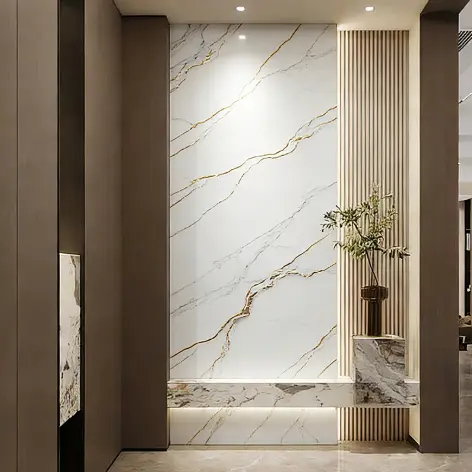
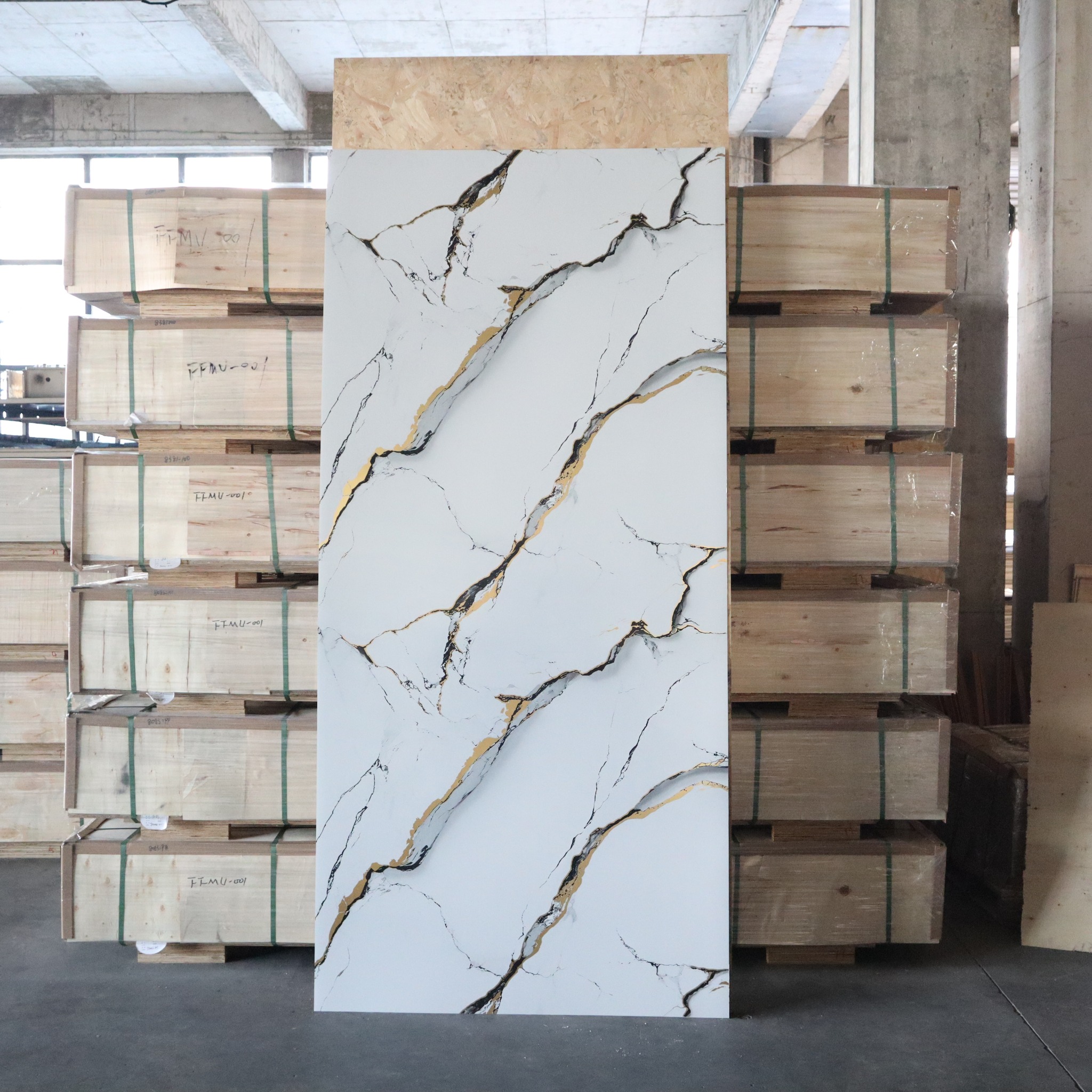
Critically, these environmental advantages no longer require aesthetic compromise. Advances in digital printing now replicate rare marbles like Bardiglio Nuvolato and Portoro with vein continuity across multiple panels—enabling book-matching effects previously exclusive to expensive natural slabs. Texture replication technologies create subtle surface variations mimicking crystalline structures under raking light. During material selection workshops, designers increasingly conduct side-by-side comparisons under multiple lighting conditions before acknowledging perceptual differences require trained observation to detect.
The sustainability narrative extends to operational phases too. Natural marble's porosity necessitates periodic sealing with solvent-based impregnators containing VOCs—maintenance creating recurring environmental burdens. UV marble sheets' non-porous surfaces eliminate this requirement while resisting staining from common substances like wine, coffee, and cosmetics. Hotel chains report maintenance staff spend 68% less time addressing wall surface issues in rooms featuring these panels versus natural stone—a reduction translating to lower chemical consumption and labor energy use over building lifetimes.
10. Alignment with Green Building Certifications
As green building certifications evolve beyond basic compliance toward regenerative design principles, material choices carry amplified significance. The Living Building Challenge's Materials Petal now prohibits materials contributing to habitat destruction—a criterion effectively excluding newly quarried stone from certain project types. Similarly, LEED v5 draft credits reward products with verified recycled content and transparent supply chains—attributes increasingly documented through Environmental Product Declarations for leading UV marble sheet manufacturers.
Forward-thinking designers recognize sustainability as integral to luxury rather than antithetical. When Copenhagen's luxury hotel group 108 Hospitality specified UV marble sheets for its new flagship property, marketing materials highlighted the environmental story as a premium differentiator attracting conscious travelers willing to pay 12% rate premiums for verifiably sustainable accommodations. This alignment of ethics and aesthetics represents the emerging luxury paradigm—one where material choices reflect values as much as visual preferences.
The green vein running through contemporary interior design isn't merely metaphorical—it's a tangible pathway toward built environments that honor both human aspirations for beauty and planetary boundaries requiring respect. UV marble sheets exemplify how material innovation can dissolve false dichotomies between sustainability and sophistication, proving that responsible design need not sacrifice sensory delight. As climate imperatives intensify and generational values shift toward conscious consumption, these composite surfaces may well define the next era of interior architecture—not as compromise solutions, but as conscientious choices elevating spaces while lightening footprints.