



PVC Marble Sheet Cost Trends: Material Prices, Manufacturing Factors, and Market Outlook
- Introduction: Recent Developments in PVC Marble Sheet Pricing
- Product Background and Industry Context
- Global Price Levels and Observed Market Ranges
- Price Evolution from 2020 to 2025
- Cost Structure of PVC Marble Sheets
- Manufacturing Factors Affecting Pricing
- Logistics and Trade-Related Cost Considerations
- Demand Patterns and Application-Based Pricing Differences
- Current Market Sentiment and Pricing Expectations
- Market Outlook
- Conclusion
1. Introduction: Recent Developments in Pvc Marble Sheet Pricing
In recent years, pricing for PVC marble sheetshas attracted increased attention from participants across the interior decoration and Building Materials industry. Following a period of cost volatility driven by raw material shortages, logistics disruptions, and energy price fluctuations, market conditions have gradually moved toward greater stability.
PVC marble sheets are now widely used in residential, commercial, and institutional interior projects due to their decorative appearance, relatively low weight, and ease of installation. As demand continues across renovation and new construction sectors, understanding cost structures and pricing behavior has become increasingly relevant for manufacturers, distributors, and project planners monitoring market trends.
This article reviews recent pricing dynamics, examines key cost components, and outlines current market conditions shaping PVC marble sheet pricing globally.
2. Product Background and Industry Context
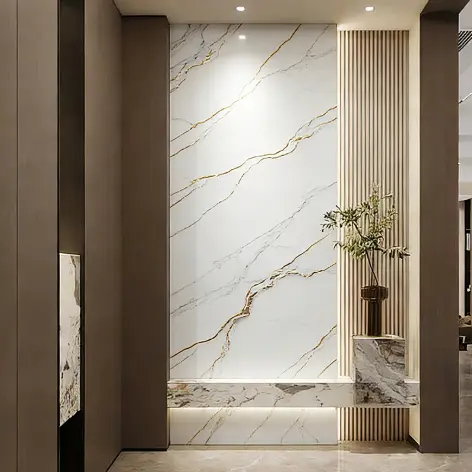
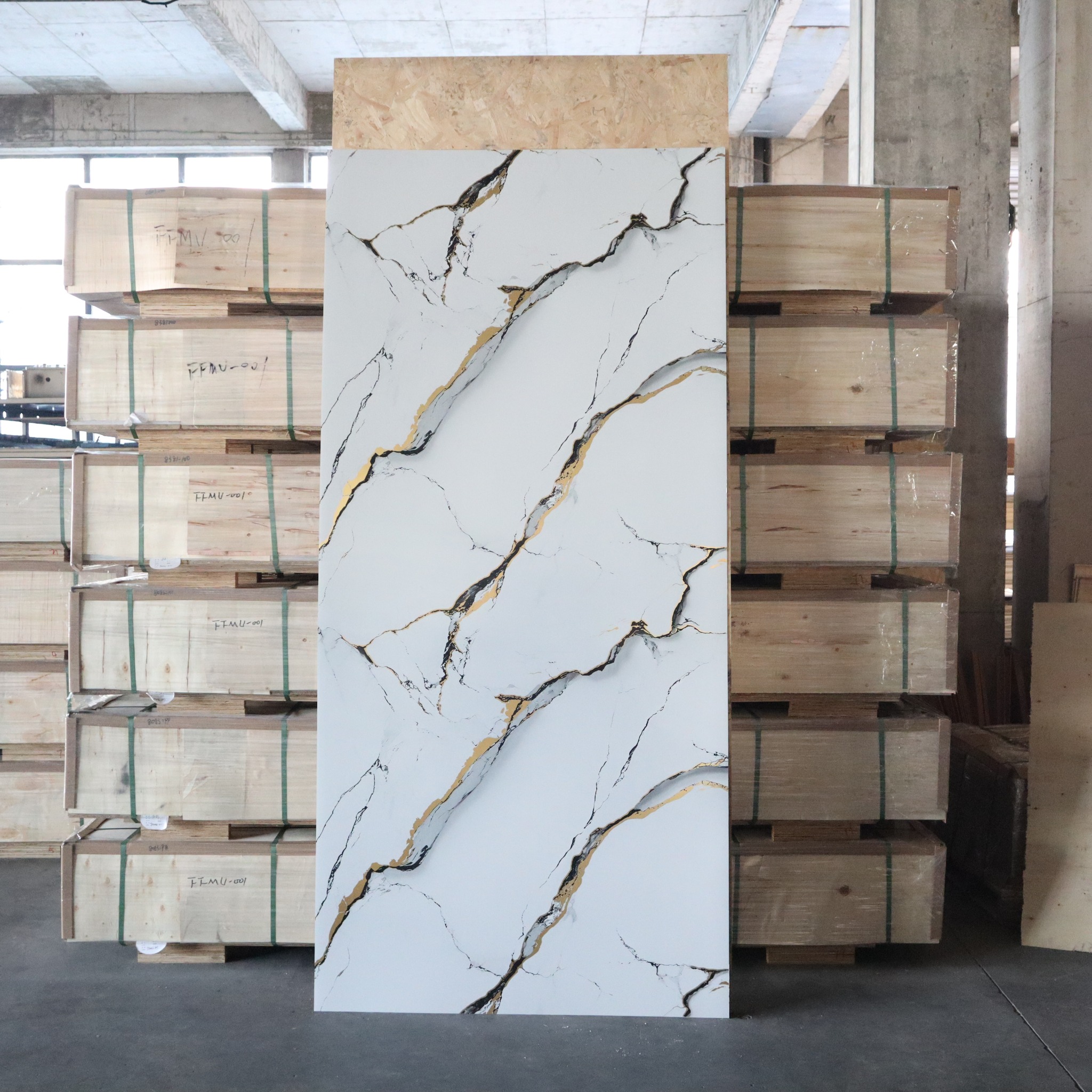
PVC marble sheets are decorative wall and ceiling panels produced primarily from polyvinyl chloride (PVC) combined with mineral fillers. Decorative films featuring marble-style patterns are laminated onto the base, and surface treatments such as UV coatings are commonly applied to enhance wear resistance and visual consistency.
From an industry perspective, these panels are positioned between traditional stone materials and basic wall finishes. They are frequently specified in projects where design impact, installation speed, and cost predictability are important considerations. Their use has expanded steadily in hospitality interiors, residential developments, retail spaces, and commercial renovations.
As production capacity has increased globally, pricing differences between suppliers are increasingly influenced by manufacturing efficiency, formulation quality, and logistics management rather than appearance alone.
3. Global Price Levels and Observed Market Ranges
Market pricing for PVC marble sheets varies depending on thickness, surface treatment, production standards, and order volume. Based on recent industry observations, commonly reported wholesale or import-level price ranges include:
- Entry-level PVC marble sheets (approximately 2.5–3mm): USD 2.80 – 3.60 per square meter
- Standard UV-coated decorative panels: USD 3.40 – 4.20 per square meter
- Enhanced-performance sheets with additional functional features: USD 4.00 – 5.20 per square meter
These figures represent general market ranges rather than fixed benchmarks. Actual transaction prices may differ depending on contract terms, packaging requirements, and logistics conditions at the time of shipment.
4. Price Evolution from 2020 to 2025
4.1 2020–2021: Disruption and Cost Pressure
The early part of the decade was marked by significant supply chain disruption. Restrictions on manufacturing operations, reduced availability of PVC resin, and sharply increased freight rates contributed to higher production and export costs. During this period, price volatility was common, and long-term pricing predictability was limited.
4.2 2022: Gradual Market Adjustment
As global manufacturing capacity recovered and logistics bottlenecks eased, pricing pressure began to moderate. Increased output from raw material suppliers and improved container availability supported a more balanced market environment. Competition among panel manufacturers intensified, contributing to greater price transparency.
4.3 2023: Energy Costs and Operational Sensitivity
Energy prices emerged as a key variable influencing production costs, particularly for extrusion and surface treatment processes. While average prices remained relatively stable, cost sensitivity increased, leading manufacturers to focus on efficiency improvements and energy management.
4.4 2024–2025: Stabilization and Predictable Pricing
More recently, the market has entered a period of relative stability. Improved automation, optimized formulations, and normalized freight conditions have supported more consistent pricing. Buyers and suppliers alike have placed greater emphasis on supply reliability and long-term cooperation rather than short-term price fluctuations.
5. Cost Structure of PVC Marble Sheets
An understanding of internal cost composition provides useful context when evaluating pricing trends. Although formulations and production methods vary, a typical cost structure for PVC uv marble sheets includes the following components:
- PVC resin and chemical additives: approximately 38–45%
- Mineral fillers such as calcium carbonate: approximately 18–22%
- Decorative film, printing, and lamination: approximately 8–12%
- Energy consumption and labor: approximately 8–12%
- Packaging, handling, and internal logistics: approximately 6–10%
- Overhead and manufacturer margin: approximately 8–12%
PVC resin remains the most significant cost factor and is closely linked to broader petrochemical market movements. As a result, resin price stability plays a central role in overall pricing trends.
6. Manufacturing Factors Affecting Pricing
Several production-related variables continue to influence price differences across suppliers:
6.1 Material Formulation
Higher PVC content generally improves flexibility and durability but increases raw material costs. Lower-cost formulations may rely more heavily on fillers, which can affect performance characteristics over time.
6.2 Surface Treatment Technology
Advanced surface treatments such as UV coating, embossing, or scratch-resistant layers add to production cost but are often specified for projects requiring higher durability or visual consistency.
6.3 Automation and Production Scale
Manufacturers operating automated production lines tend to achieve more consistent output and lower unit labor costs, particularly for large-volume orders. This has become an increasingly important factor in competitive pricing.
7. Logistics and Trade-Related Cost Considerations
Beyond manufacturing, logistics remain a meaningful component of total cost. Export-grade packaging, container loading efficiency, freight rates, insurance, and documentation all influence final landed cost.
Improper packaging or inefficient loading can lead to surface damage during transport, increasing the risk of claims or replacement costs. As a result, logistics planning has become a greater focus in pricing discussions, particularly for long-distance shipments.
8. Demand Patterns and Application-Based Pricing Differences
PVC marble sheets are used across a wide range of interior applications, and pricing expectations vary accordingly:
- Residential interiors often prioritize cost control and design variety
- Commercial and office spaces tend to emphasize durability and consistent quality
- Hospitality and public projects typically require stable supply, uniform appearance, and compliance with performance standards
These differing requirements influence both product specification and acceptable price ranges in project planning.
9. Current Market Sentiment and Pricing Expectations
Industry feedback suggests that PVC marble sheet pricing is currently viewed as relatively stable compared with earlier years. While short-term fluctuations remain possible due to raw material or energy market movements, there is a general expectation of moderate and predictable pricing behavior.
Manufacturers are increasingly focused on cost optimization through process improvements rather than frequent price adjustments. At the same time, buyers appear to be placing greater value on consistency, specification clarity, and long-term supply reliability.
Looking ahead, several factors are expected to shape pricing dynamics:
- Continued stabilization of raw material supply
- Gradual adoption of more efficient manufacturing technologies
- Ongoing demand from renovation and interior upgrade projects
- Growing attention to environmental and performance standards
While the market may experience periodic adjustments, long-term pricing trends are expected to remain within relatively narrow ranges, supported by mature supply chains and established production capacity.
PVC marble sheet pricing has entered a phase characterized by greater stability and improved predictability. Following years of disruption and cost pressure, the current market reflects a balance between material costs, manufacturing efficiency, and logistics conditions.
As the interior decoration industry continues to evolve, PVC marble sheets remain a widely used solution, with pricing shaped by both global input costs and ongoing improvements in production practices. Monitoring these factors will remain important for industry participants seeking to understand market direction and cost behavior in the coming periods.