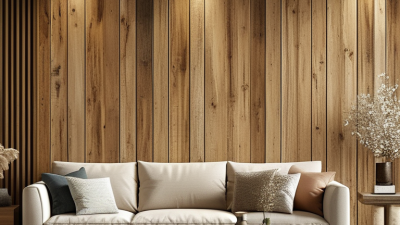
China’s wood-panel sector serves a wide range of interior projects, from hotel lobbies to compact apartment renovations. Yet “Wood Veneer Wall Panels” can describe products with very different cores, veneer grades, finishes, and installation systems. Buyers comparing Chinese manufacturers need more than attractive sample boards. They need clear specifications, consistent batch quality, and evidence behind environmental claims.
Industry data offers useful context. The UNEP and GlobalABC 2023 Global Status Report states that buildings and construction accounted for 37% of global energy- and process-related CO₂ emissions in 2022. That figure does not measure wall panels alone, but it shows why material choices deserve scrutiny. FAOSTAT’s Forestry Production and Trade database helps readers examine wood-based panel production and trade; it does not separately identify every decorative veneer product. That limitation matters.
This guide examines leading China-based suppliers through practical criteria: veneer sourcing, substrate options, finishing quality, customization, export experience, and quality documentation. Ask whether samples represent production batches. Check the core. Request details on adhesives, surface coatings, and relevant emissions testing. Look for credible chain-of-custody documentation where certified timber is claimed. A polished showroom panel can conceal uneven veneer matching or fragile edges. Some suppliers disclose these details well; others leave buyers guessing. That is worth questioning. The aim is not to crown a factory on marketing language, but to help project teams compare manufacturers with sharper questions and realistic expectations.

China’s manufacturing sector supplies wood veneer wall panels in standard and custom formats. Natural veneer displays genuine grain variation, while reconstructed veneer offers more consistent color and pattern. Both are commonly bonded to plywood, MDF, or other engineered cores. Choose the core for the room, not just the face. A showroom sample can look calmer than an entire wall.
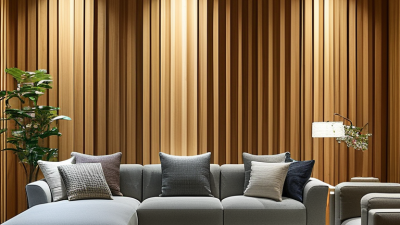
These panels suit hotel corridors, offices, reception areas, and residential feature walls. Slatted or grooved designs create distinct shadow lines; flat panels give a quieter finish. Before ordering, confirm panel dimensions, veneer species, face thickness, substrate, edge treatment, and installation method. Request a production sample and inspect it under the project’s actual lighting. Small color shifts happen.
For specifications, check total thickness, flatness, moisture content, and finish type, such as matte lacquer or oil. Veneer is not waterproof, so wet areas need careful detailing. Where fire performance or indoor-air emissions matter, request current test reports for the exact panel construction. Requirements vary by project and destination market. Clarify batch consistency and replacement availability, too. These details are easy to overlook; verbal assurances alone are not enough.
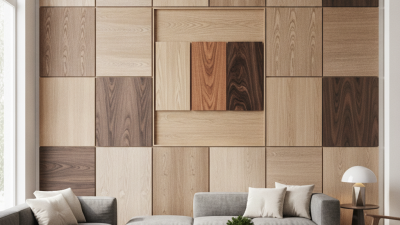
Wood veneer panels combine a real wood face with an engineered core. Common veneer faces measure about 0.3–0.6 mm thick. That is thin.
At this thickness, the substrate affects how the panel feels and performs. MDF offers a smooth, even base for painted or veneered surfaces. Plywood can provide useful strength and screw-holding, while particleboard is often selected for cost-sensitive interior applications. The right choice depends on panel size, fixing method, room conditions, and project requirements. There is no universal best core.
A thin face needs careful handling. Sanding too aggressively can expose the core, and uneven adhesive coverage may cause bubbles or dull patches. Good production checks include inspecting the face under raking light and confirming that the panel stays flat after conditioning. Backing the reverse side with a balancing layer can help reduce warping, especially on larger panels. It is tempting to choose veneer by grain pattern alone. That can be a mistake. Ask for details on face thickness, core composition, edge treatment, and moisture conditions before comparing samples. A small sample may look perfect, yet behave differently across a full-height wall. Specification is rarely glamorous, but it matters.
| Panel Component or Core | Typical Specification | Key Characteristics | Common Uses | Selection Considerations |
|---|---|---|---|---|
| Natural wood veneer face | Commonly about 0.3–0.6 mm thick; thickness varies by product and manufacturing method. | A thin real-wood surface layer. Grain, color, and figure can vary naturally between sheets. | Decorative wall panels, cabinetry, doors, and furniture surfaces. | Check veneer thickness, grain matching, finish, and whether exposed edges require edging or trim. |
| Plywood core | Cross-laminated wood-veneer plies; panel thickness is commonly selected to suit the installation and support system. | Alternating ply directions help provide dimensional stability and useful screw-holding performance. | Wall panels, joinery, and applications where a wood-based core is preferred. | Specify the appropriate grade and bonding class for the intended indoor or humid-service conditions. |
| Medium-density fibreboard (MDF) core | Made from wood fibres bonded under heat and pressure; available in a range of panel thicknesses. | Typically smooth and uniform, making it suitable for a consistent veneer surface and machined edges. | Interior wall cladding, decorative panels, and furniture components. | Standard MDF is not intended for prolonged wet exposure. Use a suitable moisture-resistant grade where specified. |
| Particleboard core | Made from wood particles bonded with resin; commonly supplied in several standard thicknesses. | Often economical and flat, but edge strength and screw-holding depend on the board grade and density. | Interior decorative panels and furniture components in dry conditions. | Protect cut edges from moisture and confirm the grade is suitable for the planned fixing method. |
| Blockboard core | A core of softwood strips or blocks between face layers; construction and thickness vary by product. | Can provide a lightweight, stiff panel for some larger components. | Doors, shelves, furniture panels, and selected interior wall applications. | Check core construction, flatness, and edge details; performance varies with the materials and lay-up used. |
| Balanced panel construction | Decorative veneer on the show face, with a suitable balancing layer or matching backer on the reverse. | Balanced construction helps reduce uneven movement caused by differences between the two panel faces. | Large wall panels, doors, and other components where flatness matters. | Confirm the back-face build-up and follow the panel supplier’s guidance for storage, acclimation, and fixing. |
Note: Specifications are general reference ranges, not a substitute for a product datasheet. Core grade, adhesive, veneer species, panel thickness, and service conditions can affect performance.
Veneer-panel production starts with sorting thin wood leaves by grain, color, and visible defects. Workers trim torn edges, arrange matching sheets, and apply adhesive evenly across the backing panel. In the hot press, temperature, pressure, and cycle time must suit the adhesive and panel thickness. There is no single setting for every veneer. A small mismatch can cause bubbles, weak bonds, or uneven surfaces.
Moisture needs close attention. The USDA Forest Products Laboratory’s 2021 Wood Handbook places wood’s fiber saturation point near 30% moisture content, though the value varies by species. Below this point, moisture changes can affect wood dimensions, so factories monitor panel conditioning before and after pressing. After pressing, panels are cooled, sanded, and finished with coatings suited to the intended use. Inspectors check thickness, veneer alignment, surface flaws, and bond integrity. Small details matter. A glossy face may look convincing while hiding a weak bond underneath. That is why visual inspection alone is not enough; reliable production also uses documented checks and suitable test methods for each batch.
China Top Wood Veneer Wall Panels Manufacturers
For wood veneer wall panels, the E1 figure deserves close attention: China’s GB 18580-2017 sets a formaldehyde emission limit of 0.124 mg/m³ for wood-based panels and finishing products, measured using a 1 m³ climate chamber. The veneer is only the visible layer. The substrate and adhesives can also affect emissions, so a polished surface alone says little about indoor-air performance. Small differences matter.
The World Health Organization’s Guidelines for Indoor Air Quality: Selected Pollutants (2010) recommend keeping formaldehyde below 0.1 mg/m³ over a 30-minute period. These values are not directly interchangeable: one is a product-emission test limit, the other an indoor-air guideline. That distinction is easy to miss. When reviewing supplier documentation, check that the report identifies the applicable GB standard, test method, panel construction, and tested production batch. A certificate for a similar panel may not represent the exact veneer-and-core combination being purchased. Ask for current, traceable test results, then confirm that installation and room ventilation match the intended use. Even careful paperwork cannot replace checking the actual product.
GB 18580-2017 sets a formaldehyde emission limit of 0.124 mg/m³ for wood-based panels and finishing products.
The chart shows the standard’s limit, not company-specific test results. Emissions are assessed using the 1 m³ climate chamber method.
China’s leading wood veneer wall panel suppliers should be assessed through verifiable systems, not polished catalogs alone. Check whether quality certificates cover the actual factory and product process, and confirm their validity directly. The FAO’s 2023 Forest Products: Facts and Figures report records 392 million cubic meters of wood-based panel production worldwide in 2022, down 3% from 2021. This broad category is not a veneer-panel forecast, but it highlights the value of stable material sourcing. Paperwork is only a start. Request recent test reports for emissions, bonding, and surface performance, matched to the panel specification and destination market.
Capacity claims deserve a production-floor check. Ask for monthly output, current order load, veneer-drying controls, and realistic lead times; compare these with sample and shipment records. UNEP’s 2024 Global Status Report for Buildings and Construction attributes 34% of global energy- and process-related CO₂ emissions in 2022 to buildings and construction. That makes documented material and emissions data useful, though a supplier’s claim still needs evidence. For customization, submit a marked-up drawing with dimensions, veneer species, grain direction, finish, edge details, and fire-performance needs. Request a pilot batch before approving volume. I would not treat one flawless sample as proof: color and grain can drift across batches. Ask how the factory records and corrects that variation.