What Is Bamboo Charcoal Wood Veneer Wall Paneling?
Wall Paneling Bamboo Charcoal Wood Veneer describes decorative interior panels that combine a bamboo-charcoal-based board or layer with a thin wood veneer surface. The charcoal component is not solid timber, and the visible grain comes from the veneer. Product construction varies by manufacturer, so the name alone does not confirm the panel’s core, thickness, finish, or installation method. Check the technical sheet before choosing a product.
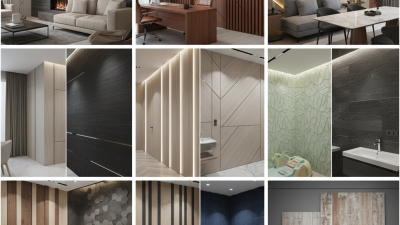
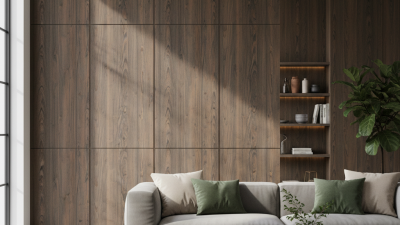
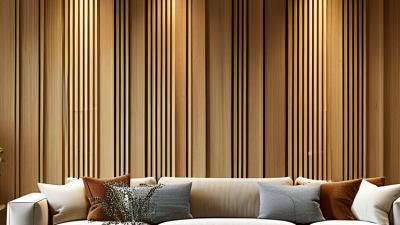
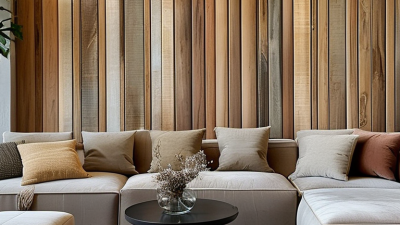
These panels are used to create feature walls in living rooms, offices, and other indoor spaces. A warm oak-like surface can soften a plain wall, while darker finishes can add contrast beside pale furniture. The panels may arrive as boards or interlocking pieces, and some require adhesive or framing. Follow the supplier’s instructions, especially around corners, sockets, and uneven surfaces. Small details matter.
Appearance is only part of the decision. Ask for information about emissions, fire performance, moisture limits, cleaning, and warranty terms; requirements and test methods can differ by region. A wood veneer may show natural variation, and its color can change with lighting or age. That is worth considering. Do not assume that bamboo charcoal automatically makes a panel waterproof, soundproof, or suitable for every room. Compare samples in the actual space, inspect the edges and finish, and confirm that the listed specifications match the intended use. One sample may not represent every batch perfectly. That uncertainty is real, but careful product checks make it easier to judge whether the panel suits the room.
Definition and Basic Structure of Bamboo Charcoal Wood Veneer Wall Paneling
Bamboo charcoal wood veneer wall paneling is an interior finish panel with a decorative wood-look surface and a composite core. The term “bamboo charcoal” usually describes charcoal powder incorporated into a board material; it does not mean the panel is solid charcoal or solid bamboo. The visible veneer may be natural wood or a printed, coated layer, depending on the product.
Its basic structure commonly has three parts: a surface finish, a supporting core, and a backing layer. The core may combine bamboo charcoal powder, wood fibers, binders, or other ingredients, pressed into a sheet. A thin veneer or decorative film covers the front, while the backing helps the panel sit against a wall. Exact recipes and thicknesses vary. The name can mislead. Check the product specification rather than assuming every panel has the same composition or performance.
Tips: Inspect a cut edge or sample to see the core and surface layers. Ask about panel thickness, installation requirements, and care instructions. A small sample under room lighting can reveal color shifts and surface texture. Also consider moisture and wall conditions before installation; a panel is not automatically suitable for every room.
Materials Used in Bamboo Charcoal Veneer Panels
What Is Bamboo Charcoal Wood Veneer Wall Paneling?
Materials Used in Bamboo Charcoal Veneer Panels
These panels are layered products, not solid bamboo boards. A typical construction pairs a bamboo-charcoal composite substrate with a thin decorative surface. The substrate may contain bamboo charcoal powder mixed with resin or other binders. Formulas differ, so “bamboo charcoal” does not describe one universal recipe. The facing may be natural wood veneer, while some panels use a printed decorative film instead. A clear coating can help resist everyday marks and moisture. There may also be adhesive layers and a balancing back layer.
Material choices affect weight, appearance, and installation. Natural veneer shows real grain, including small variations in color and pattern. Printed finishes tend to look more uniform. The core and adhesive matter too, especially in warm or humid rooms. Check the product’s technical sheet for its layer composition, recommended location, and emissions information. Do not assume every panel has the same durability or indoor-air performance. The naming can be confusing; I would verify the actual surface material before ordering.
Tips: Ask for a sample. View it in your room’s lighting, and inspect the cut edge to see the layers. Confirm whether the veneer is real wood or printed film. A small mismatch in tone can stand out across a full wall.
What Is Bamboo Charcoal Wood Veneer Wall Paneling?
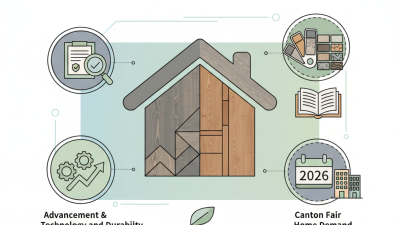
A simplified view of the common materials in a bamboo charcoal veneer panel.
The chart shows one example of each layer, not material percentages or thickness. Construction varies by product: panels commonly combine a decorative veneer or film, adhesive, a bamboo-charcoal-containing core, and a supporting substrate.
How Bamboo Charcoal Veneer Wall Panels Are Manufactured
Bamboo charcoal veneer wall panels are manufactured through several controlled steps, though recipes vary by producer. Bamboo is dried, heated in a low-oxygen kiln, and converted into charcoal. The charcoal is crushed and screened into a consistent powder. Moisture matters. The powder is blended with binders, formed into a core, and hot-pressed. A decorative veneer or film is then bonded to the surface, before panels are cooled, trimmed, and inspected for flatness and finish defects.
Feedstock choices affect the result. The FAO’s Global Forest Resources Assessment 2020 reports roughly 35 million hectares of bamboo forest worldwide; that figure describes bamboo forests, not material available for panel production. During production, uneven particle size or moisture can cause weak bonding, surface bubbles, or warped edges. The process is not perfectly uniform. Buyers should ask what the core contains and request test results for emissions and durability, rather than relying on the word “charcoal” alone. The WHO’s 2010 indoor-air guidelines set a formaldehyde guideline of 0.1 mg/m³ over 30 minutes. This is useful context, not proof that a specific panel meets it. A verified laboratory report is more informative.
What Is Bamboo Charcoal Wood Veneer Wall Paneling? - How Bamboo Charcoal Veneer Wall Panels Are Manufactured
| Dimension |
Description |
Manufacturing or Use Details |
| Product type |
An engineered interior wall panel made with a bamboo-charcoal-based core and a decorative surface. |
The surface may be a wood veneer, a printed decorative layer, or another finish. Construction varies by product. |
| Bamboo charcoal material |
Bamboo is heated in a low-oxygen environment to produce charcoal, which can then be processed into particles or powder. |
The charcoal is generally one ingredient in a composite core; the panel is not necessarily a solid piece of charcoal. |
| Core preparation |
Charcoal particles may be combined with binders and other formulation ingredients to create a workable panel material. |
The recipe, forming method, and core structure depend on the manufacturer and intended product specification. |
| Panel forming |
The prepared core material is shaped into sheets or boards. |
Depending on the process, forming may involve pressing, heating, or other consolidation steps. |
| Decorative wood veneer |
A thin layer of real wood applied to the panel surface for a natural grain and appearance. |
Veneer species, grain pattern, finish, and thickness vary. Some products described as “veneer” use a printed or synthetic surface instead. |
| Surface bonding |
The decorative layer is attached to the core with an adhesive or another bonding system. |
Consistent pressure and surface preparation help promote an even bond and reduce visible defects. |
| Finishing and sizing |
Panels may be trimmed, edge-finished, and given a protective surface coating. |
Final dimensions and edge details are product-specific; check the installation instructions before cutting or fitting. |
| Quality checks |
Inspection can cover dimensions, surface appearance, flatness, and adhesion. |
Moisture, emissions, and fire-performance properties should be confirmed from product-specific test reports where relevant. |
| Typical application |
Decorative interior wall cladding in suitable indoor spaces. |
Use the specified mounting system and follow guidance for substrate preparation, expansion gaps, and room conditions. |
| Selection considerations |
Check the actual core composition, surface material, finish, and intended installation environment. |
Do not assume that charcoal content alone makes a panel waterproof, fire-rated, or suitable for every room; verify the relevant documentation. |
Key Properties and Common Interior Applications
Bamboo charcoal wood veneer wall paneling combines a decorative wood-look surface with a panel core containing bamboo charcoal material. Construction varies by manufacturer, so buyers should check the product’s technical sheet rather than assume every panel has the same composition. Veneer patterns can range from pale, straight grain to darker, more pronounced textures. The finish may be matte or lightly reflective. Small details matter.
Panels are often chosen for feature walls in living rooms, bedrooms, offices, and reception areas. Their broad surfaces create a continuous look with fewer visible joints than narrow individual boards. In practice, the result depends on accurate measuring and a flat, dry substrate. A charcoal-containing core does not automatically prove that a panel purifies indoor air or controls odors; those claims require reliable product-specific testing. This point is easy to overlook.
For longer service life, keep panels away from persistent moisture and direct heat unless the product is rated for those conditions. Kitchens may suit them on a dry accent wall, but not beside a sink or cooktop without suitable protection. Clean the surface with a soft, slightly damp cloth, and follow the maker’s care instructions. Before installation, allow panels to adjust to the room and inspect color batches, since veneer shade can vary slightly. Even careful planning cannot make natural-looking variation disappear.
Panel Installation, Cleaning, and Maintenance
Before installing bamboo charcoal wood veneer wall paneling, check the product instructions. Panel cores and backing materials can differ. Store the panels flat in the room for the recommended acclimation period, away from damp floors and direct heat. Measure the wall, mark level guide lines, and test-fit each panel before applying adhesive or fasteners. Use a compatible adhesive on a clean, dry, sound surface. Leave the expansion gap specified in the instructions, especially near corners and ceilings. Measure twice. Even careful fitting can leave a seam slightly uneven, so inspect the layout in daylight before the adhesive sets.
After installation, remove dust with a soft microfiber cloth or a vacuum brush attachment. For smudges, use a slightly damp cloth with mild soap, then dry the surface promptly. Do not soak the veneer, scrub it with abrasives, or use bleach or solvent cleaners. Water can seep into seams, and some finishes mark easily. Check edges and joints every few months for lifting, swelling, or loose sections. A small gap is easier to address early; waiting can make repairs less tidy. Room humidity matters too. Keep indoor conditions reasonably stable, and consult the care instructions if the finish’s cleaning needs are unclear.