Leave Your Message
Get Instant Quote

2026 Best WPC Wood Wall Panel for Global Buyers

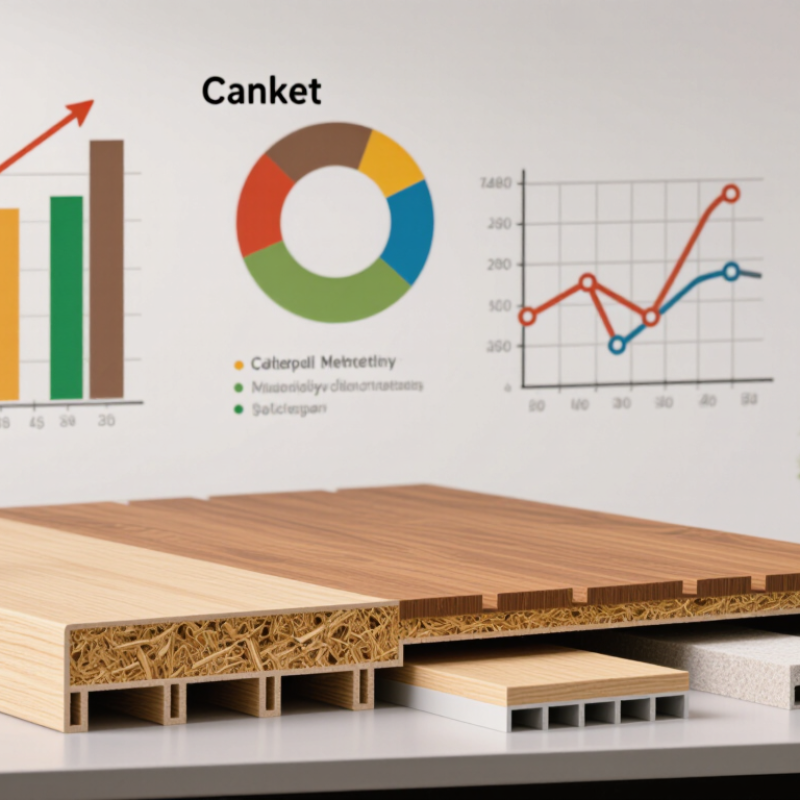
Global buyers are entering 2026 with sharper expectations for the Wpc Wood Wall Panel market. They want realistic durability, stable supply, and verified environmental claims. Grand View Research valued the global wood-plastic composites market at approximately USD 7.1 billion in 2023. Its forecast also indicates continued growth through 2030, although estimates differ by product category and region.

That difference matters. A decorative interior panel is not equal to an exterior rainscreen panel. Moisture, ultraviolet exposure, temperature changes, and installation quality can alter performance. The U.S. Department of Agriculture Forest Products Laboratory researcher Craig Clemons defined the material clearly: “Wood-plastic composites (WPCs) are composites made of wood fiber/wood flour and thermoplastics.” This definition remains useful for buyers comparing PVC, PE, and PP formulations.

This 2026 guide examines panel structure, surface finish, fire documentation, recycled content, and supplier reliability. Mordor Intelligence and Fortune Business Insights also project strong WPC market expansion, but their figures use different boundaries and research methods. Numbers need context.

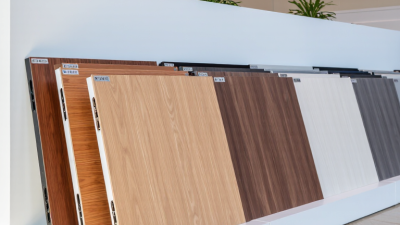
Real purchasing decisions happen beside a sample wall. The panel should feel rigid, show consistent embossing, and resist edge swelling after controlled moisture exposure. A low price may hide thinner cores, unstable pigments, or incomplete test records. That is the uncomfortable part.

No Wpc Wood Wall Panel suits every climate or building type. Buyers should request technical datasheets, batch information, installation guidance, and independent test evidence. They should also verify claims locally. Sustainability language is improving, but traceability remains uneven across global supply chains. This guide therefore treats performance data as essential, not decorative.
2026 Best WPC Wood Wall Panel for Global Buyers

WPC Wall Panels Defined: Wood–Polymer Ratios and ASTM D7031 Data

2026 Best WPC Wood Wall Panel for Global Buyers

WPC Wall Panels Defined: Wood–Polymer Ratios and ASTM D7031 Data

WPC wall panels combine wood flour or fiber with a thermoplastic polymer. The ratio shapes stiffness, moisture response, weight, and surface texture. A panel with 60% wood may look warmer and more natural. However, it can absorb more moisture if the formulation and sealing are weak. Higher polymer content often improves water resistance. It may also reduce the visual depth buyers expect from wood.

Ratio alone does not prove quality. It is only the starting point. In practical inspections, I check panel density, edge finish, screw holding, and dimensional change after moisture exposure. Small differences matter. A damp warehouse corner can reveal poor edge protection quickly. Some manufacturers discuss a 50:50 wood-to-polymer blend, while others use different proportions for climate and application needs. That assumption is too neat. Fillers, additives, processing temperature, and fiber size also affect performance.

ASTM D7031 provides a framework for evaluating wood-plastic composite products. Relevant data may include flexural strength, tensile behavior, water absorption, thickness swelling, and weathering response. Buyers should request test methods, conditioning details, sample dimensions, and laboratory identification. One impressive value is not enough. Results from one production batch may not represent another. Ask for recent data from the intended panel profile, not a similar product. Field performance still depends on installation gaps, ventilation, fasteners, and local humidity.
Material Performance: Density, Water Absorption, and ASTM D570 Results

2026 Best WPC Wood Wall Panel for Global Buyers

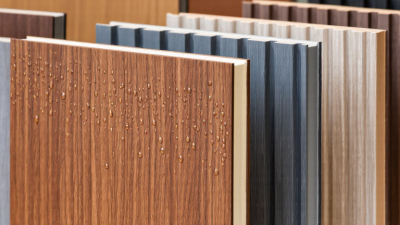
For global buyers, density is a practical starting point. Most wood-plastic composite wall panels measure about 1.1–1.4 g/cm³, based on published technical datasets. Higher density can improve impact resistance and screw retention. It may also increase shipping weight. That trade-off matters. The USDA Forest Products Laboratory reports that moisture movement remains a key concern in wood-based materials, even when polymers reduce absorption. In factory inspections, uneven core density often signals poor mixing or incomplete pressing.

ASTM D570 provides a repeatable water-absorption method, not a universal pass-or-fail limit. Samples are weighed, immersed, and reweighed after controlled periods. Published WPC studies commonly report 24-hour water absorption between 0.5% and 3%. Some formulations exceed 5% when wood content is high or edges remain unsealed. Small numbers matter here. A 2% gain can still cause visible edge swelling in thin panels.

Buyers should request density results, specimen dimensions, conditioning details, and the exact ASTM D570 immersion period. Without those details, percentages can mislead. One technical report may test sealed samples, while another exposes cut edges. The comparison becomes weak. Panel performance also depends on cap design, fastener spacing, temperature cycling, and installation drainage. ASTM data is useful, but field experience suggests it is only one checkpoint.

Fire Safety Benchmarks: ASTM E84, EN 13501-1, and Smoke Ratings

For global buyers, a WPC wood wall panel should be judged by tested fire performance, not appearance alone. ASTM E84 measures flame spread and smoke-developed index under a specific test setup. It does not prove fire resistance or safe performance in every building condition. A lower flame-spread index is preferable, but the report must match the panel’s thickness, surface finish, substrate, and installation method.

EN 13501-1 uses a different classification system. Panels may receive classes from A1 to F, with smoke ratings from s1 to s3. The s1 rating indicates limited smoke production, while s3 shows no defined limitation. Flaming droplets are also recorded as d0, d1, or d2. Check these details carefully. Small differences matter.

Smoke matters greatly.

An experienced buyer should request complete laboratory reports from an accredited testing body. Review the tested assembly, adhesive, joints, backing board, and ventilation conditions. A panel that performs well alone may behave differently over insulation or timber framing. Production batches also deserve attention, because resin content, fillers, and surface coatings can change results. A certificate alone is not enough.

Some technical documents remain unclear. That deserves questioning. Ask for the test date, standard version, specimen description, and classification scope. Compare the report with local building requirements before ordering large quantities. Fire safety is not a marketing phrase; it is a chain of evidence, installation control, and honest limitations.

2026 Best WPC Wood Wall Panel for Global Buyers - Fire Safety Benchmarks: ASTM E84, EN 13501-1, and Smoke Ratings

Evaluation Dimension Standard / Rating System Recognized Classification or Benchmark What the Result Measures Global Buyer Verification Point
Surface Flame Spread ASTM E84 / UL 723 Class A: FSI 0–25
Class B: FSI 26–75
Class C: FSI 76–200
Flame spread over the exposed surface during the tunnel test. A lower Flame Spread Index (FSI) indicates slower flame travel under the test conditions. Request the complete test report, including the tested panel thickness, substrate, surface finish, mounting method, and specimen orientation.
Smoke Development ASTM E84 / UL 723 SDI ≤ 450 is commonly associated with the ASTM Class A, B, and C ranges. Smoke Developed Index (SDI) produced during the same tunnel test. It is not a direct measurement of smoke toxicity or visibility in every building condition. Do not treat an ASTM E84 class as a complete smoke-toxicity assessment. Check local code requirements and any additional smoke testing requested by the project.
Reaction to Fire EN 13501-1 A1, A2, B, C, D, E, F
A1 is the highest reaction-to-fire class; F indicates no classification or failure to achieve Class E.
European classification based on ignitability, flame spread, heat release, smoke production, and flaming droplets, depending on the applicable class and test route. Ask for the classification report and confirm that the declared class applies to the exact WPC construction, including any air gap, adhesive, backing, or supporting substrate.
Smoke Production EN 13501-1 s1 = lowest smoke production
s2 = higher smoke production
s3 = no performance limit specified
Smoke production during the European SBI or relevant fire test procedure. The smoke suffix is reported together with the main reaction-to-fire class. Look for a complete designation such as B-s1,d0 or C-s2,d0. A main class without its smoke suffix is incomplete for many European specifications.
Flaming Droplets or Particles EN 13501-1 d0 = no flaming droplets or particles within the specified test period
d1 = limited flaming droplets or particles
d2 = no limit specified or failure to meet d1
Whether burning droplets or particles are produced during the relevant fire test and their potential contribution to fire spread below the specimen. For interior wall applications, buyers commonly prioritize classifications ending in d0, subject to the project’s local building regulations.
Ignitability EN ISO 11925-2 Often used as part of EN 13501-1 classification for Classes B, C, D, and E. Whether a specimen ignites under direct small-flame exposure and whether flame spread reaches the specified measurement point within the test period. Confirm the exposure time, specimen orientation, thickness, and whether the result covers the complete assembled wall system rather than an isolated decorative layer.
Single Burning Item Test EN 13823 / SBI Used to support several EN 13501-1 classes, including heat release, smoke growth, and flaming-droplet assessment. Fire behavior of a construction product exposed to a burner in a corner configuration, providing data used for European reaction-to-fire classification. For slatted or profiled WPC panels, verify whether the tested assembly reflects the actual joint spacing, cavity, backing board, insulation, and installation profile.
Combustible Polymer Content Material composition review No universal pass/fail rating based only on the wood-to-polymer ratio. Wood fibers, polymer matrix, pigments, coatings, and additives can influence ignition, heat release, flame spread, and smoke generation. Use composition information only as a screening factor. Fire classification must be supported by testing of the finished product or complete wall assembly.
Installation Configuration Product test scope and local code Results are configuration-dependent. Open cavities, ventilation gaps, insulation, substrates, fasteners, adhesives, panel orientation, and joints can change fire performance. Require installation instructions that match the fire-test configuration. A panel tested alone may not represent the performance of the installed wall system.
ASTM-to-EN Comparison Cross-market technical review No direct one-to-one conversion ASTM E84 primarily reports flame spread and smoke developed indices, while EN 13501-1 uses a different test package and classification structure. Do not advertise “ASTM Class A equals EN B-s1,d0.” Request the applicable test report for the destination market and building application.
Minimum Buyer Documentation Technical compliance package Test report + classification report + installation scope Evidence that the tested product identity, thickness, finish, backing, fixing method, and production specification correspond to the offered WPC wall panel. Check report number, laboratory accreditation, test date, specimen description, validity or scope, and any limitations before approving the material.
Important: Fire ratings are not universal properties of every WPC panel. Final acceptance depends on the exact product construction, thickness, surface treatment, installation method, building type, and regulations in the destination country. ASTM E84 and EN 13501-1 results should be reviewed as separate standards unless an authority having jurisdiction confirms otherwise.

Technical reference basis: ASTM E84 / UL 723 classification ranges, EN 13501-1 reaction-to-fire classes, EN 13823 SBI, and EN ISO 11925-2 ignitability principles. Always verify the current edition and local regulatory requirements before specification.

Outdoor Durability: UV Exposure, Color Change, and ISO 4892-3 Tests

2026 Best WPC Wood Wall Panel for Global Buyers

Outdoor Durability: UV Exposure, Color Change, and ISO 4892-3 Tests

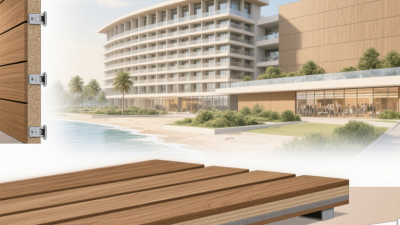
For outdoor WPC wall panels, sunlight is a daily stress test. UV exposure can fade pigments, dry surfaces, and reveal uneven color changes. High-quality panels should be evaluated under ISO 4892-3 testing, which simulates sunlight, moisture, and temperature cycles. This test offers useful evidence, but it cannot copy every climate perfectly. Coastal air, dust, snow, and installation direction also affect long-term appearance.

Color stability deserves more than a showroom inspection. Ask for test duration, irradiance settings, moisture cycles, and measured color change values. A panel may look stable after several months, yet show visible fading after repeated summer exposure. Professional buyers should compare samples before and after testing. Check the surface closely. Small changes matter.

Tips: Request a UV test report from an independent laboratory. Install a sample outdoors for one season before placing a large order. Choose lighter colors when strong sunlight is expected, because dark tones often show fading more clearly. Keep ventilation behind the panels, and follow the manufacturer’s spacing guidance. Maintenance also matters; dust can create uneven heating and misleading color differences. No panel is perfect. Real weather is less controlled than a laboratory, so purchasing decisions should include both test data and practical field observation.

2026 Buyer Comparison: Price per m², MOQ, Lead Time, and Warranty

For global buyers, WPC wall-panel pricing usually falls between US$8 and US$25 per m² on an ex-works basis. Thickness, surface texture, recycled content, and packaging can shift the quote sharply. Grand View Research valued the global wood-plastic composites market at approximately US$7.1 billion in 2023, with continued growth expected through 2030. That growth does not guarantee stable panel prices. Resin costs and freight still matter.

A practical purchasing comparison should record MOQ beside price. Standard projects often start at 100–500 m², while custom colors or molds may require 1,000 m² or more. Typical production takes 15–35 days after deposit and artwork approval. Add another 20–45 days for sea transport, depending on the destination. These figures are useful, but not promises. Port congestion can disrupt even a carefully planned schedule.

Warranty terms commonly range from five to ten years against cracking, delamination, or severe color failure. Read the exclusions carefully. Outdoor exposure, poor ventilation, incorrect installation, and harsh cleaning chemicals may void coverage. Fortune Business Insights identifies construction and decorative applications as important WPC demand areas, yet its market data does not replace factory inspection. Ask for a recent batch sample, thickness measurement, fire-test documentation, and a written claim process. A lower quote may exclude trims, fasteners, or protective film. I have seen buyers compare only the panel price, then pay more for missing accessories and rework.