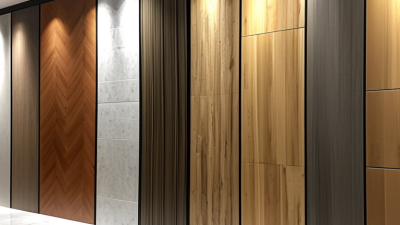
Global construction is under pressure to reduce emissions without sacrificing durability, speed, or visual quality. The 2023 Global Status Report for Buildings and Construction, published by UNEP and the Global Alliance for Buildings and Construction, states that buildings consume about 34% of global energy and create roughly 37% of energy and process-related carbon emissions. These figures make material selection more significant than decoration alone. A Wood Wpc Wall Panel can support this transition when its recycled content, resin composition, transport distance, and service life are properly verified.
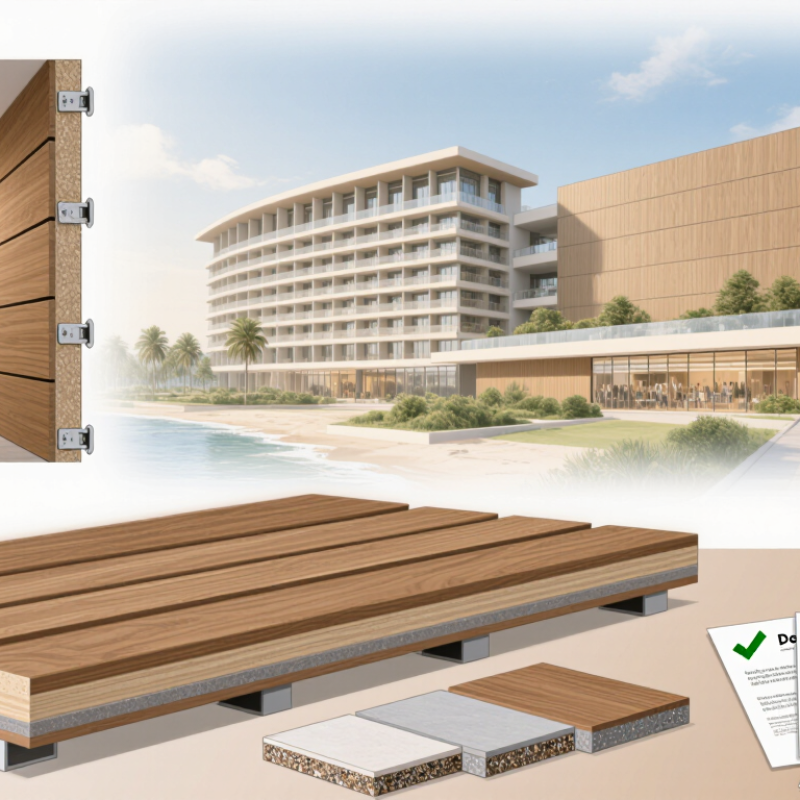
For international projects, practical performance matters. In a coastal hotel, panels must resist humid air, repeated cleaning, and accidental impact from luggage carts. In a retail corridor, concealed clips can shorten installation time and simplify future replacement. WPC surfaces also provide consistent grain patterns, which can reduce visible variation across large walls. However, no material is universally suitable. Fire classification, thermal expansion, moisture exposure, and local building codes require project-specific testing. The environmental benefit also depends on documented product data, not attractive marketing claims. ISO 14025 and EN 15804 provide recognized frameworks for environmental product declarations, while responsible wood sourcing can be assessed through certification systems such as FSC or PEFC.
That distinction matters. A lower-maintenance wall may reduce replacement waste, but its full lifecycle impact still depends on manufacturing and disposal. Project teams should request test reports, technical datasheets, warranty terms, and installation guidance before approval. The choice may not be perfect. It should be transparent, measurable, and suitable for the building’s actual climate and use.
Why Choose Wood WPC Wall Panels for Global Projects?
Wood WPC panels typically contain 50–70% wood fiber, with the remainder mainly polymer and additives. This ratio affects density, texture, moisture response, screw holding, and dimensional movement. Higher wood content can create a warmer, timber-like surface. More polymer may improve moisture resistance, but it can also increase thermal expansion. The final performance depends on the full formulation and manufacturing control.
During humid coastal installations, I inspect panel edges, joints, and ventilation gaps before judging performance. A 3-millimeter joint can matter when sunlight heats a dark facade. Panels should acclimatize near the work area when permitted by the supplier. Installers also need corrosion-resistant fixings in salty air. WPC is not maintenance-free. Dust gathers in grooves, while poor drainage can stain lower sections. That detail is easy to overlook.
For international specifications, request test reports for water absorption, fire behavior, UV exposure, and mechanical strength. Fire classifications vary by product and local regulation. Never assume one certificate applies everywhere. Check samples under daylight, especially when color consistency matters across multiple buildings. I have seen attractive samples hide slight variation between production runs. That experience is worth admitting. A panel can look convincing indoors yet behave differently on a ventilated exterior wall. Reliable decisions require composition data, climate testing, installation guidance, and qualified local workmanship.
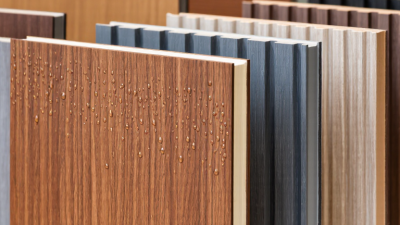
Wood–plastic composite wall panels typically contain approximately 50–70% wood fiber, with polymer making up most of the remaining base material. The balance between wood fiber and polymer can be adjusted to influence appearance, rigidity, moisture resistance, and processing performance.
Typical wood-fiber and polymer proportions are shown on a 100% base-material basis; additives, pigments, and processing aids are not included.
Fire performance deserves more than attractive specifications. ASTM E84 Class A requires a flame-spread index from 0 to 25. This rating indicates limited flame travel across a tested surface. It does not mean the panel is fireproof. NFPA reported 1,388,500 fires in the United States during 2023, with approximately 4,470 civilian fire deaths. These figures show why material selection needs evidence, not optimistic wording. For international projects, request the complete ASTM E84 report, including specimen details, conditioning, and test date. A certificate without testing scope can create false confidence.
WPC wall panels can support durable interiors when the core, surface layer, and installation system are evaluated together. ASTM E84 measures flame spread and smoke development under controlled conditions. Real buildings include corners, joints, cavities, wiring, and changing ventilation. Those details may alter fire behavior. A Class A result is reassuring, but it is not a magic shield. It also does not replace local code review or project-specific fire engineering. The International Code Council’s International Building Code remains a key reference for wall finishes, interior applications, and required assemblies. Requirements can differ by occupancy and region.
Tips: Ask for independent test evidence. Confirm smoke-developed results, substrate conditions, and installation limits. Check expansion gaps in humid climates. Specify noncombustible backing where required. Keep a sample on site. Small installation mistakes can matter. A stronger specification may cost more, yet replacing unsafe finishes costs far more.
Why Choose Wood WPC Wall Panels for Global Projects?
EN 15534 testing offers a practical way to assess wood-plastic composite wall panels before international installation. It examines moisture-related behavior, dimensional changes, and selected durability properties under controlled conditions. This matters in coastal cities, humid warehouses, and regions with sharp temperature changes. A panel may look stable in a showroom but react differently after repeated wetting and drying.
Moisture resistance helps reduce swelling, warping, and surface movement around joints. Dimensional stability is equally important because small changes can affect alignment, fasteners, and visible seams. Durability testing provides useful evidence about performance during expected service conditions. However, no test completely reproduces every building environment. Site exposure, ventilation, installation quality, and maintenance still influence results. That limitation deserves attention.
Tips: Request the complete EN 15534 test scope, not only a pass statement. Check specimen thickness, conditioning cycles, moisture values, and reported dimensional changes. Compare those results with your project’s climate and fixing system. Leave suitable expansion gaps. It is a small detail, but often a costly one to ignore. Inspect early installations after seasonal changes, then adjust the specification if real conditions reveal weaknesses.
| Performance Area | Test Property | Typical Test Basis | Reported Unit | What the Result Shows | Global Project Relevance |
|---|---|---|---|---|---|
| Moisture Resistance | Water absorption by mass | EN 15534-1; commonly linked to EN 317 immersion procedures | % | Increase in specimen mass after water exposure compared with the dry reference mass. | Helps assess suitability for humid climates, exterior wall zones, and coastal environments. |
| Thickness swelling after water exposure | EN 15534-1; commonly linked to EN 317 measurement principles | % | Change in thickness between the conditioned dry state and the water-exposed state. | Important for joint design, clip systems, reveals, and visual surface alignment. | |
| Water-exposed mass and thickness retention | EN 15534-1 product test programme | % change | Comparison of dry and wet measurements recorded under the same laboratory conditions. | Supports consistent specification across rainy, monsoon, and high-humidity regions. | |
| Dimensional Stability | Length change caused by moisture conditioning | EN 15534-1 dimensional-change procedures | % | Expansion or contraction along the length after controlled moisture exposure. | Used to calculate movement gaps and reduce buckling or open-joint risk. |
| Width and thickness change | EN 15534-1 dimensional measurements | mm or % | Measured change in cross-sectional dimensions after conditioning or exposure. | Relevant to façade detailing, panel overlap, corner trims, and fixing tolerances. | |
| Linear thermal expansion | EN 15534-1 thermal dimensional assessment | mm/m·°C | Change in profile length associated with temperature variation. | Supports expansion-joint calculations in regions with large day–night or seasonal temperature ranges. | |
| Mechanical Durability | Flexural strength in the dry condition | EN 15534-1 mechanical testing framework | MPa | Maximum bending stress sustained by the specimen before failure. | Helps verify panel stiffness, support spacing, and resistance to handling loads. |
| Flexural modulus | EN 15534-1 mechanical testing framework | MPa | Measure of stiffness during bending; higher values indicate lower elastic deflection under the same load. | Useful for selecting fixing intervals and controlling façade surface flatness. | |
| Wet-to-dry strength retention | EN 15534-1 conditioning and mechanical comparison | % | Flexural performance after moisture exposure expressed as a percentage of the dry reference value. | Indicates how reliably the panel performs after repeated wet conditions. | |
| Service Durability | Resistance to fungal decay or biological attack | Applicable EN 15534-1 test programme and relevant biological durability method | Mass loss (%) or durability rating | Records biological deterioration under the selected exposure and test conditions. | Supports material selection for shaded, ventilated, or persistently damp exterior locations. |
| Surface colour change after artificial weathering | EN ISO 4892-2 or EN ISO 4892-3, when specified in the project test plan | ΔE* | Instrumental difference between the initial colour and the weathered colour. | Provides a consistent appearance-control reference for international façade projects. | |
| Surface condition after weathering | Project-specific weathering exposure and visual assessment | Visual rating | Documents cracking, flaking, blistering, fibre exposure, or other visible surface changes. | Helps define maintenance expectations and façade inspection criteria. | |
| Installation Reliability | Profile tolerance and dimensional accuracy | EN 15534 product-part requirements and manufacturer technical documentation | mm | Compares measured width, thickness, length, and geometry with declared tolerances. | Improves interchangeability of panels, trims, clips, and subframe components across project locations. |
| Fastener and fixing-zone performance | Project-specific mechanical verification | N or kN | Records resistance of the panel or fixing area to pull-out, shear, or local load, where applicable. | Supports wind-load design, façade engineering, and local installation requirements. |
Why Choose Wood WPC Wall Panels for Global Projects?
ISO 14040 frames life-cycle assessment around defined boundaries, transparent data, and measurable impacts. For WPC wall panels, the comparison should cover raw materials, extrusion, transport, installation, cleaning, replacement, and disposal. The UNEP 2023 Global Status Report states that buildings and construction produced 37% of global energy-related and process CO2 emissions in 2022. Material choices matter.
A project team should report carbon in kilograms of CO2e per square metre, not vague “eco-friendly” claims. A panel made near the site may reduce transport emissions, while recycled polymer content can lower material impacts. However, recycling rates and electricity mixes vary widely. The numbers are not universal. ISO 14044 also requires sensitivity analysis, which is often overlooked in early specifications.
Maintenance records add practical evidence. They should show cleaning frequency, coating requirements, damaged-panel replacement, and labor hours across the service period. A durable surface may reduce intervention, but service life depends on UV exposure, humidity, salt, impact, and installation quality. ISO 15686 recommends service-life planning rather than unsupported lifetime promises. In field reviews, poorly detailed joints can shorten performance despite strong panel test results. That is a hard lesson. For global projects, compare total carbon, maintenance events, and expected replacement years using the same functional unit. That makes the decision more reliable.
For global projects, wood-plastic composite (WPC) wall panels must satisfy more than appearance or moisture resistance. Fire performance is often the decisive gate. EN 13501-1 classifies construction products by reaction to fire, including smoke and flaming droplets. A project may require A2-s1,d0 or B-s1,d0, depending on occupancy, location, and national rules. The classification belongs to a tested assembly, not merely a material label. Details matter.
In North American projects, ASTM E84 commonly measures flame-spread and smoke-developed indices for interior wall and ceiling surfaces. ASTM E2768 may apply when extended flame exposure is specified. These methods do not automatically equal European classes. Request current, traceable reports showing panel thickness, backing board, adhesive, joint design, and mounting method. Changing one layer can change the result. That is easy to miss.
Local building codes still control acceptance. Authorities may request façade-cavity protection, combustibility evidence, or project-specific engineering. The UNEP and GlobalABC Global Status Report for Buildings and Construction 2023 found that buildings and construction accounted for 37% of global energy- and process-related emissions in 2022, plus 34% of global energy demand. This pressure supports lower-impact materials, but environmental claims cannot replace fire documentation. WPC formulations also vary, especially polymer content and recycled feedstock. Even good specifications leave gaps. Experienced teams should compare test scopes with installed details before procurement and keep records accessible on site.