

A Revolutionary Force in Tranquil Spaces: Exploring the Superior Craftsmanship and Performance Advantages of Acoustic Wall Panels
A Revolutionary Force in Tranquil Spaces: Exploring the Superior Craftsmanship and Performance Advantages of Acoustic Wall Panels
In the field of modern architecture and interior design, people's requirements for spatial environments have long surpassed mere aesthetics and practicality. Acoustic comfort—that is, the "tranquility" and "clarity" of a space—is becoming an important benchmark for measuring quality. Noise pollution not only interferes with focus and tranquility in work and life but also directly affects physical and mental health and work efficiency. Against this backdrop, premium reclaimed wood acoustic panels, as an innovative wall material that combines acoustic performance, natural aesthetics, and environmentally friendly processes, are increasingly favored by designers, architects, and end-users. This article will delve into the entire production process of wood strip acoustic panels, from the selection of raw materials to the exquisite craftsmanship, detailing its core characteristics, and conducting a multi-dimensional objective comparison with other common types of Wall Panels on the market, revealing its irreplaceable unique value.
- Ingenious Craftsmanship: Exploring the Production Process of Wood Strip Acoustic Panels
The production of wood strip acoustic panels is a precise dialogue between natural materials and modern technology, a process that blends the delicacy of traditional woodworking with the rigor of cutting-edge acoustic engineering technology.
1. Raw Material Selection and Pre-treatment:
Production begins with rigorous selection of raw materials. Sustainablely sourced timber with moderate growth cycles, uniform wood quality, and clear grain is preferred, such as high-quality poplar, birch, oak, or certified recycled wood. After debarking and cutting, the logs are processed into strips of specific dimensions. These strips then undergo strict drying to control the moisture content within a scientifically defined range, ensuring dimensional stability and preventing cracking or warping due to humidity changes. This stage is crucial for guaranteeing the product's basic quality and durability.
2. Core Sound-Absorbing Structure Forming:
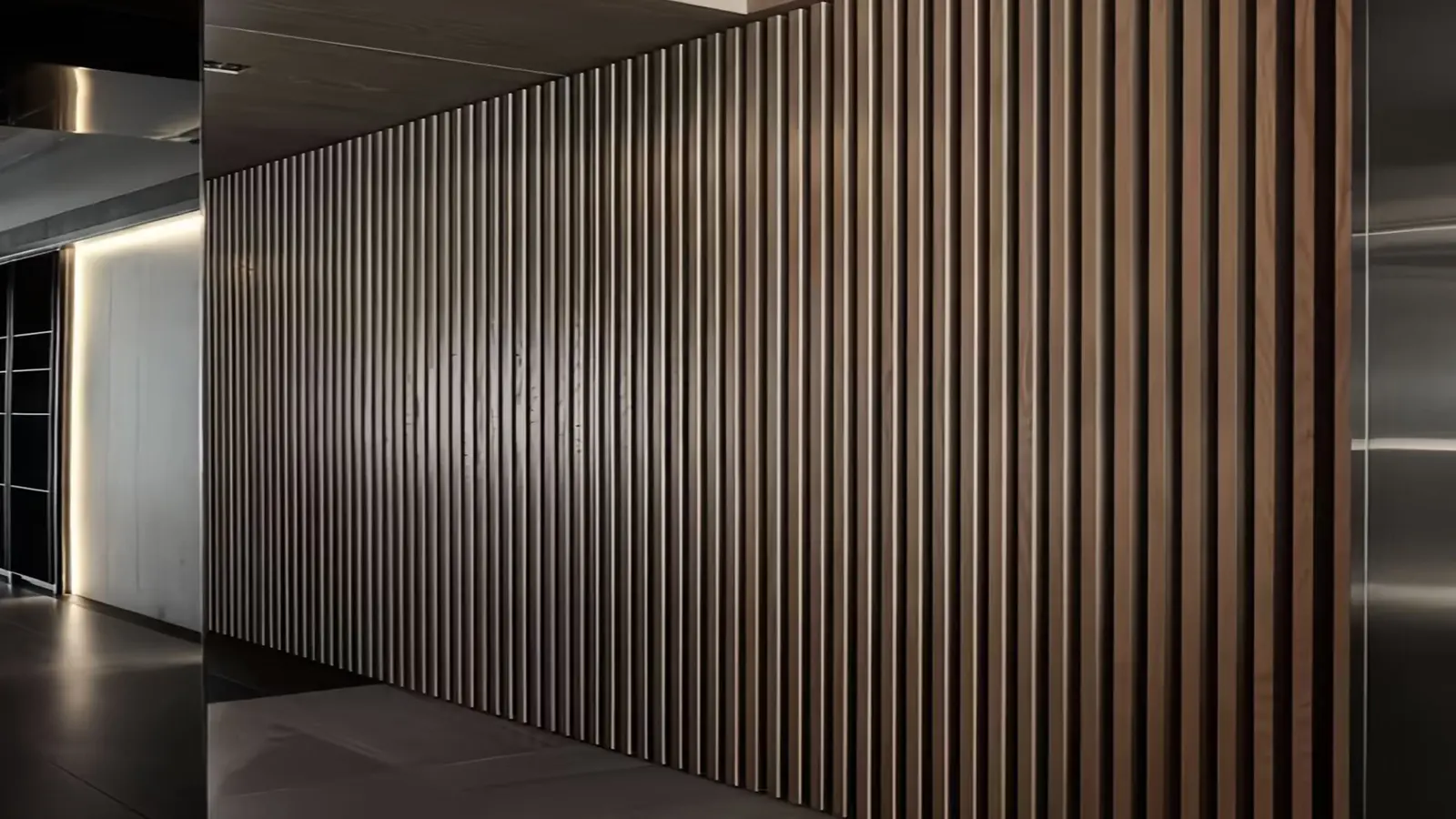
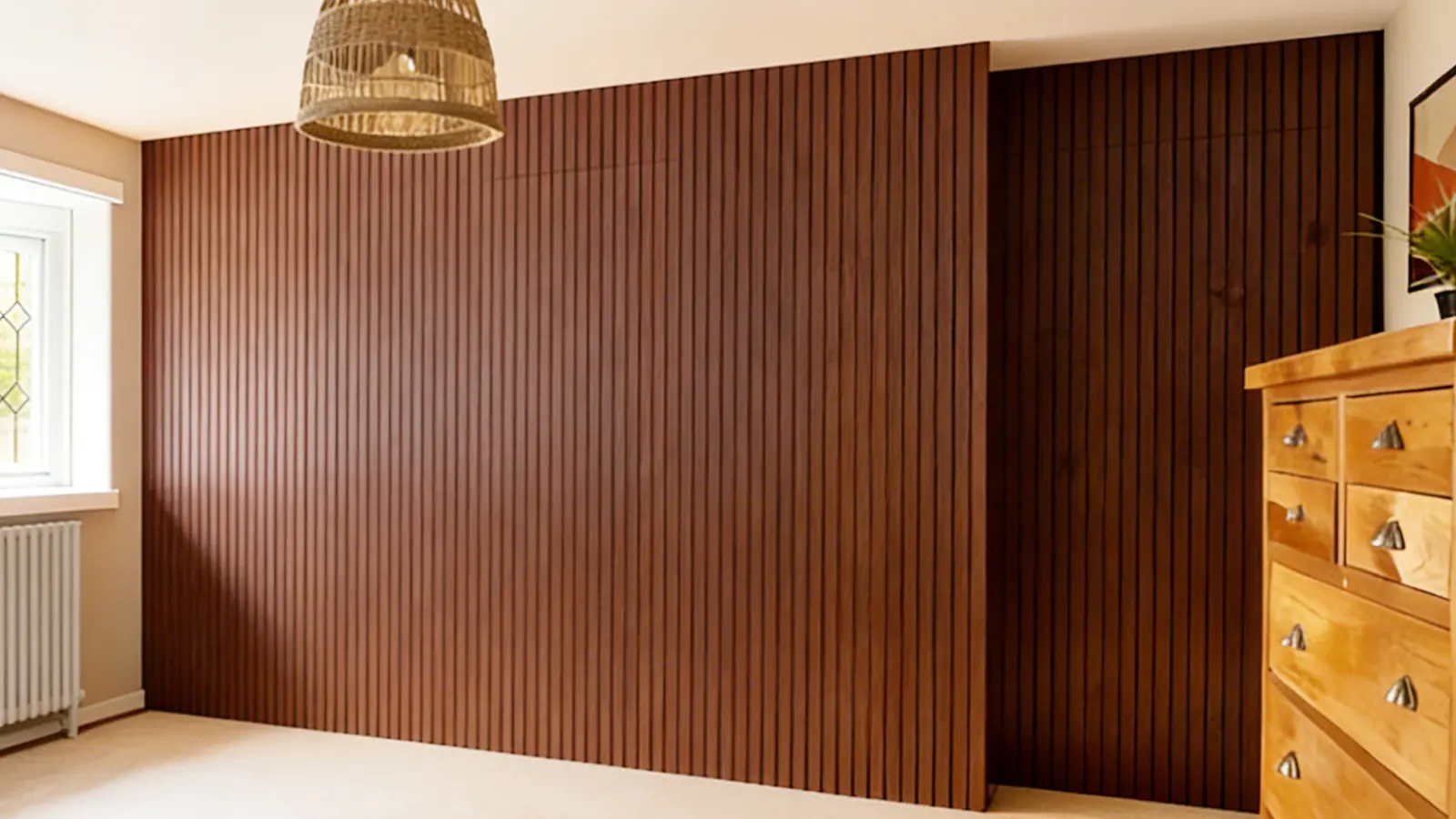
This is the core difference between acoustic slat wood panelsand ordinary decorative Wood Panels. The treated wood strips are fixed parallel to the back panel (such as a high-density substrate) at specific intervals (e.g., groove width) using high-precision equipment, forming a classic slotted resonant sound-absorbing structure. The width and depth of the slots, as well as the thickness of the wood strips themselves, undergo rigorous acoustic calculations and testing to achieve optimal sound absorption for specific frequency ranges of noise (especially mid-to-low frequencies). Some high-end products also fill the back cavity or between the wood strips with environmentally friendly sound-absorbing cotton (such as glass wool, rock wool, or polyester fiber cotton). Through the principle of energy dissipation via friction of porous materials, this further enhances the sound absorption performance across the entire frequency range, forming a composite sound absorption mechanism of "resonance + porous materials."
3. Surface Treatment and Coating:
The finished board surface undergoes meticulous surface treatment, including sanding to create a smooth feel and highlight the natural wood grain. This is followed by coating, using environmentally friendly paints for staining and topcoating. This not only provides the wood strip acoustic panels with a rich selection of colors to match diverse design styles, but more importantly, it provides a protective layer, enhancing their wear resistance, stain resistance, moisture resistance, and UV resistance, extending their service life. Advanced UV curing technology ensures a durable and environmentally friendly paint film.
4. Quality Inspection and Packaging:
Each finished melamine acoustic panels undergoes rigorous testing, including sound absorption coefficient testing, formaldehyde emission testing, dimensional accuracy inspection, and surface quality assessment. This ensures that its acoustic performance, environmental protection level, and physical indicators meet or exceed national standards and industry specifications. Finally, impact- and moisture-proof packaging is used to ensure the product arrives at the project site intact.
- Exceptional Performance: Comprehensive Analysis of the Characteristics of Wood Strip Acoustic Panels
Based on the aforementioned superior craftsmanship, wood strip acoustic panels exhibit multiple outstanding characteristics:
1. Highly Efficient Sound Absorption and Noise Reduction:
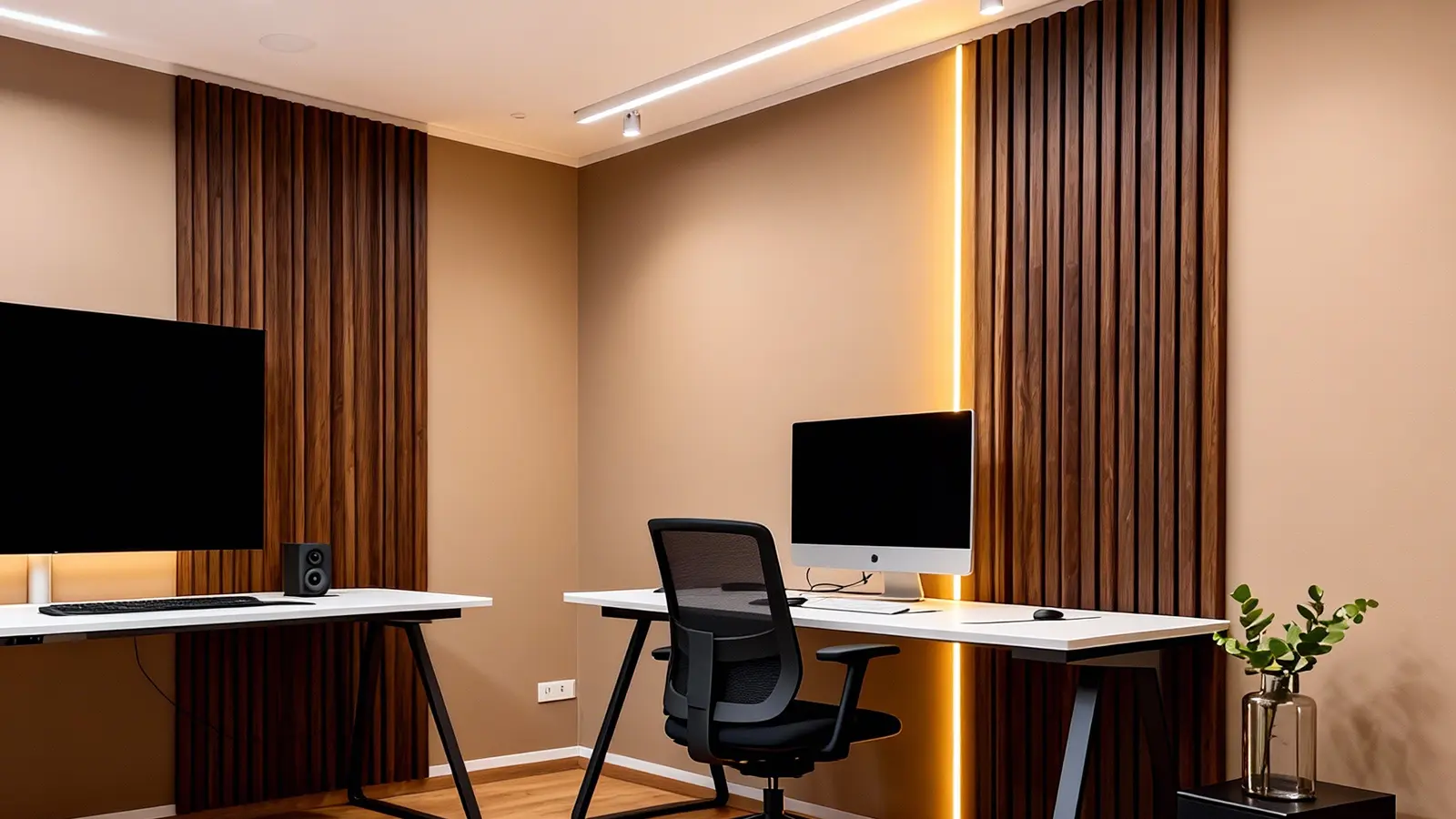
Its core value lies in its superior acoustic performance. Through scientific gap design and possible filling materials, it effectively absorbs reflected sound, reduces reverberation time, significantly improves speech intelligibility, and reduces noise interference. This is crucial for places requiring a quiet or clear auditory environment, such as offices, conference rooms, schools, hospitals, theaters, restaurants, and residences.
2. Natural Aesthetics and Strong Decorative Value:
The natural texture and warm feel of wood give the space a natural, warm, and high-end feel. The linear texture formed by the arrangement of wood strips is highly design-oriented, stretching the visual sense of space and creating rhythm and harmony. A rich selection of wood species, colors, and surface treatment options allows it to seamlessly integrate into various design styles, from classic to modern minimalism.
3. Environmentally Friendly and Healthy, a Safe Choice:
Using premium sustainable wood and low-VOC (volatile organic compound) and heavy metal-free environmentally friendly paints, the product ensures formaldehyde emissions meet the high standards of E0 or E1, protecting indoor air quality and the health of residents. Some products even have a micro-humidity adjustment function.
4. Easy Installation and Simple Maintenance:
Modular design, typically equipped with a concealed mounting system (such as joist hanging, adhesive, or nailing), allows for quick installation, is relatively forgiving of the substrate wall, and is easy to disassemble and maintain. The dense surface only requires daily cleaning with a soft cloth or vacuum cleaner.
5. Durable and Stable, Long-lasting:
Strict drying treatment and surface protection processes give the product excellent dimensional stability and resistance to physical impact, making it less prone to deformation and cracking, and ensuring a long service life.
- Choosing the Best: A Deep Comparison of Wood Strip Acoustic Panels with Other Wall Panels
To more clearly define wood strip acoustic panels, we compare them with several common wall panels:
1. VS Traditional Solid Wood Wall Panels/Wall Coverings:
✅ Acoustic Performance: Traditional solid wood panels primarily serve a decorative and protective function. Their dense surface offers negligible sound absorption, and may even exacerbate reverberation due to sound reflection from their smooth surface. Polyester acoustic panels have an overwhelming advantage in acoustic performance.
✅ Aesthetics: Both possess the natural beauty of wood. However, the linear arrangement of wood strips in wood strip acoustic panels provides a stronger sense of modern design and rhythm.
✅ Cost and Environmental Protection: Pure solid wood panels are expensive and consume a large amount of wood. Wood strip acoustic panels often use fast-growing timber or composite material bases, making them more sustainable and generally offering better value for money.
2. VS Fabric/Upholstered Wall Panels:
✅ Acoustic Performance: Fabric upholstered wall panels also have good sound absorption properties, based on a similar principle. However, wood slat acoustic panels offer different acoustic characteristics (a higher proportion of resonant sound absorption) and a more robust, structured appearance.
✅ Durability and Hygiene: Fabric upholstery easily attracts dust and stains, making cleaning difficult, and may also have flame retardant issues. Wood slat acoustic panels have a smooth surface, are easy to clean, more wear-resistant and scratch-resistant, and offer better hygiene.
✅ Style Adaptability: Fabric upholstery leans towards a soft and warm style; wood slat acoustic panels are more suitable for commercial or high-end residential spaces that require a sense of texture, lines, and modernity.
3. VS PVC/Metal Wall Panels:
✅ Environmental Protection and Health: PVC may contain plasticizers, raising questions about its environmental friendliness; metal panels have a cold feel. Wood slat acoustic panels are made from natural materials, are environmentally friendly and healthy, and have a warm touch.
✅ Acoustic Performance: PVC and metal panels have virtually no sound absorption function; instead, they easily generate sound reflection and impact noise. Wood slat acoustic panels have a clear advantage in creating a quiet environment.
✅ Aesthetic Value: The natural beauty and uniqueness of wood grain are unmatched by artificially imitated PVC finishes or cold metal.
- Conclusion
In conclusion, studio acoustic panels are far more than just simple wall decoration materials. They represent a design philosophy that deeply integrates functionality, aesthetics, and sustainable development. Through precise acoustic design, rigorous production processes, and reverence for natural materials, they successfully imbue spaces with tranquility, enhancing both physical and psychological comfort. Compared to various wall panels, they demonstrate a balanced and outstanding competitiveness in terms of appearance, acoustic performance, environmental health, and overall cost-effectiveness. As people's demands for high-quality indoor environments continue to rise, wood strip acoustic panels will undoubtedly become an indispensable element in future space design, contributing to the creation of more peaceful, healthy, and inspiring living and working environments.