Choosing Bamboo Charcoal Wood Veneer for global projects requires more than attractive photographs and sustainability claims. It demands evidence. This material can create warm, textured interiors while supporting responsible design goals. Its deep surface tone resembles smoked timber, yet its production and performance require careful evaluation. Project teams should review substrate compatibility, moisture resistance, formaldehyde emissions, fire performance, and cleaning requirements before approval.
Dr. Walter Liese, a widely respected bamboo scientist, often emphasized, “Bamboo is a grass, not a tree.” That simple observation matters. Bamboo grows differently from hardwood, so its processing, structure, and durability cannot be judged through timber assumptions. Bamboo Charcoal Wood Veneer may offer visual consistency across walls, doors, furniture, and hospitality spaces. However, results depend on adhesive quality, pressing methods, finishing systems, and installation accuracy. Small errors show quickly under strong lighting.
Experience from international projects also reveals an uncomfortable truth: no veneer suits every climate or building type. A product that performs well in a dry showroom may react differently in a humid coastal hotel. Samples should be tested under realistic conditions. Ask for technical data, batch information, safety documentation, and independent verification where available. Supplier communication matters, especially when specifications cross languages and standards.
The strongest choice is not always the darkest finish or lowest price. It is the material supported by transparent testing, skilled installation, and honest limitations. Bamboo Charcoal Wood Veneer can be a compelling global solution, but confidence should be earned, not assumed.
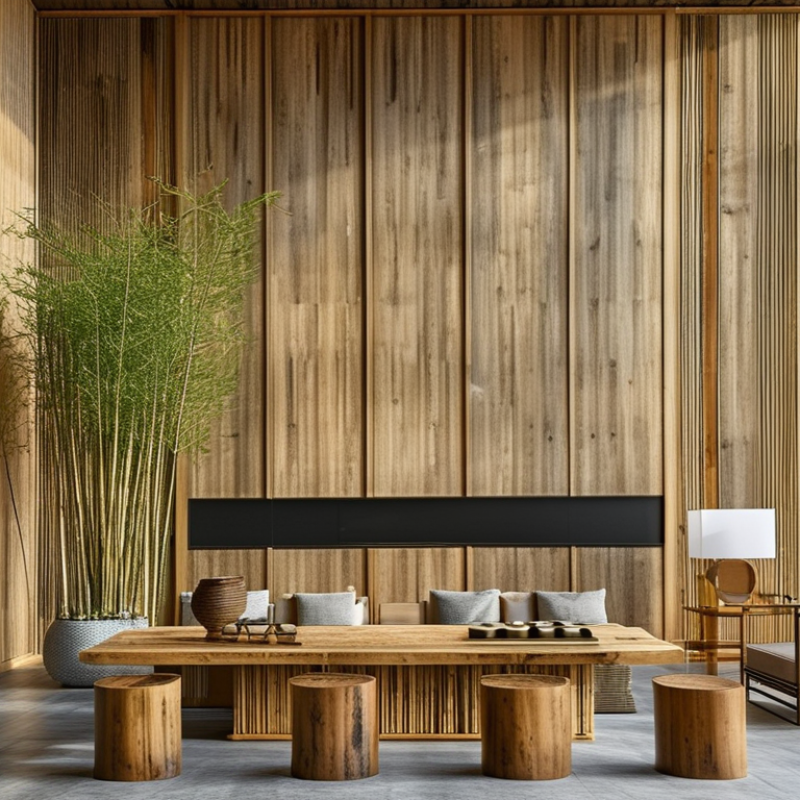
Bamboo charcoal wood veneer suits global projects because it combines a warm surface with a renewable material story. Bamboo can reach harvestable maturity in roughly three to five years, depending on species, climate, and cultivation practices. Many hardwoods require several decades before replacement becomes possible. This shorter growth cycle can support more frequent regeneration when managed responsibly.
In practical material reviews, the dark, softly textured veneer creates depth on wall panels, cabinet fronts, and hospitality interiors. Carbonization gives bamboo its charcoal tone and may improve dimensional stability, but performance still depends on manufacturing quality and installation conditions. Samples should be checked under daylight, warm lighting, and close touch. Small color differences can become obvious across a large wall.
It is not a perfect green answer. Harvesting must protect soil, water, and future growth. Adhesives, backing materials, transport distance, and factory energy also affect the project’s environmental profile. A responsible specification should request traceable sourcing, emissions information, moisture guidance, and maintenance data. The three-to-five-year cycle is valuable, but it should never replace careful verification. Real sustainability is measured beyond the attractive surface.
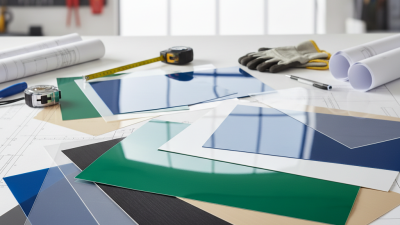
Bamboo charcoal is produced by heating mature bamboo between 600 and 1,000°C in a low-oxygen environment. This controlled carbonization removes much of the volatile material and leaves a stable carbon-rich framework. Temperature matters greatly. Lower temperatures may leave more organic compounds, while higher temperatures can improve carbonization but consume more energy. The exact result depends on bamboo species, moisture, heating time, and kiln control.
Its porous structure is the main technical attraction. Inside the charcoal, countless small channels create a large internal surface area. These pores can support moisture buffering and odor adsorption under suitable conditions. However, performance is not automatic. Pores may become blocked by dust, coatings, or adhesive during veneer production. The surface can also feel more brittle if the material is over-carbonized.
It looks simple. It is not.
For global projects, manufacturers should verify density, moisture content, surface strength, and formaldehyde emissions from the complete panel system. Samples should face heat, humidity, and abrasion testing before approval. Practical inspections often reveal uneven color or small cracks between batches. That imperfection deserves attention, not concealment. Clear technical records, repeatable production controls, and region-specific installation guidance make bamboo charcoal veneer more dependable for interior applications.
Bamboo charcoal wood veneer can suit global interiors when appearance, weight, and surface protection matter. Its deep tone creates a calm visual effect on doors, wall panels, furniture, and hospitality interiors. However, veneer thickness needs careful review. A 0.2 mm layer is light and economical, but it requires a very smooth, stable substrate. Small surface defects may become visible after pressing.
A 0.4 mm veneer offers a practical balance for many decorative applications. It provides more handling strength during cutting and installation. The 0.6 mm option feels more substantial and allows limited sanding or adjustment. It may also reduce the risk of edge damage on frequently touched panels. Thickness alone does not guarantee quality. Fiber direction, moisture content, adhesive selection, and pressing temperature also affect performance. Specifications can vary between suppliers, so project teams should request test samples and technical data.
Tips: Confirm the finished thickness, not only the nominal veneer layer. Check both faces under natural light. Test bonding on the actual substrate. Measure moisture before installation. A rushed sample review can create expensive rework. I have seen attractive veneers fail because the panel core moved. That detail deserves more attention. When exporting materials, confirm packaging, climate exposure, and local fire requirements with qualified professionals.
Bamboo charcoal wood veneer can support global interior projects when indoor-air performance is treated as a design requirement, not a late-stage document. The key reference is the E1 formaldehyde limit, with emissions below 0.124 mg/m³ under controlled testing conditions. This figure helps architects compare panels, substrates, and adhesive systems before installation.
In project reviews, I look beyond the veneer surface. The backing board, glue, edge treatment, and room ventilation can all affect formaldehyde results. A panel may meet E1 requirements in a laboratory, yet the finished wall can perform differently. Request current test reports from an accredited laboratory, and check whether the tested construction matches the specified product. Small differences matter. A dense cabinet interior has less air movement than an open feature wall.
Site conditions deserve equal attention. New panels should be stored dry, protected from direct heat, and allowed to acclimatize before cutting. After installation, measured ventilation can help clear residual odors and emissions. Temperature and humidity should also be recorded during inspections. This is practical, but not flawless. Test data cannot predict every room, and bamboo charcoal content alone does not prove low formaldehyde performance. Careful material selection, verified documentation, and honest follow-up measurements create a more reliable basis for international projects.
Why Choose Bamboo Charcoal Wood Veneer for Global Projects?
Global projects need more than an attractive surface. Bamboo charcoal wood veneer should be assessed against fire, moisture, durability, and documented ISO testing criteria. Its layered construction can support stable interior finishes, but performance depends on the substrate, adhesive, coating, and installation environment. Appearance alone proves very little.
Fire testing should match the destination market and intended use. Check reaction-to-fire classifications, smoke data, and test conditions. Do not treat a decorative veneer as fireproof. In humid areas, examine water absorption, edge sealing, dimensional movement, and mold resistance. A sample may look stable after one week, yet fail after repeated humidity cycles. That detail is often missed.
Durability testing should reflect real contact, cleaning, abrasion, and impact. High-traffic walls need stronger evidence than private rooms. Request ISO-based test reports from competent laboratories, including sample thickness, conditioning, test date, and pass criteria. Verify that the tested assembly matches the proposed project. Small differences matter. In practice, project teams sometimes compare isolated material data with complete wall performance, which creates false confidence. I would also review installation records and maintenance instructions before approval. No testing program removes every uncertainty, especially when climate, transport, and workmanship vary across regions.