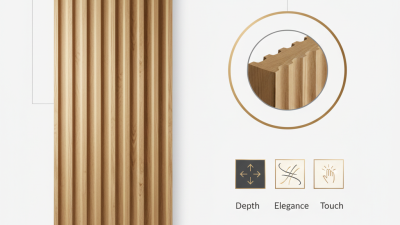
A fluted wall can add rhythm, texture, and depth without changing a room’s footprint. But “fluted” describes a profile, not one single material. The right choice depends on the room, the desired finish, and how much upkeep feels reasonable. Small details matter.
Architect Frank Lloyd Wright’s design principle, “Form and function should be one, joined in a spiritual union,” offers a useful lens for comparing these panels. It is a broader design idea, not a statement specifically about fluted panels. Still, it helps explain why a beautiful surface should also suit its setting. A softly grooved oak panel may bring warmth to a living room, while moisture-resistant PVC or wood-plastic composite can be more practical in damp areas. MDF offers a smooth, paintable face. Acoustic panels, often backed with felt, can help soften sound as well as decorate a wall.
The categories can overlap. That is not always convenient. Some products imitate wood closely; others make their grooves the main feature. Solid timber can age attractively, yet it may need more care. Painted MDF is easy to coordinate, though edge damage can be noticeable. Installation, groove spacing, panel thickness, and cleaning needs deserve attention before choosing. A sample in daylight can reveal more than a glossy product image.
This guide compares the top types of Fluted Wall Panel, from natural wood to engineered and acoustic options. It also considers where each performs well, what trade-offs to expect, and which details are worth checking before purchase. No panel is perfect for every room. That is worth remembering.
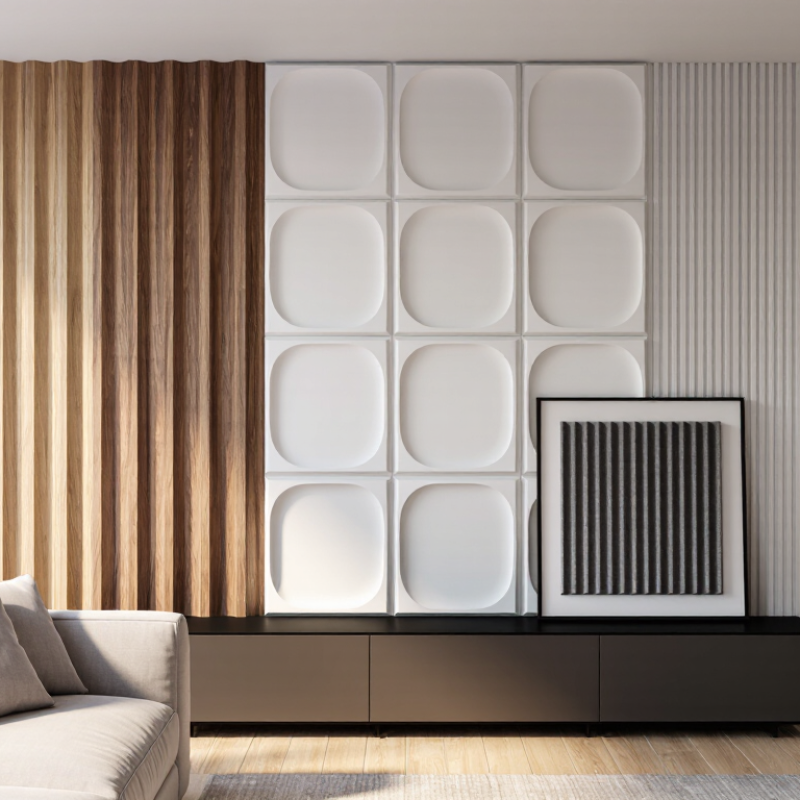
MDF-core panels are common indoors because they machine into crisp, even grooves and take paint or veneer well. Their smooth faces suit bedrooms and living rooms. Keep them away from persistent damp unless the product is specifically rated for that setting; swollen edges can be difficult to repair.
Solid-wood and plywood-core panels offer a more natural look. Veneered plywood is usually lighter than solid timber, while solid wood shows real grain and can vary from one board to the next. That variation is part of its appeal. It can also mean more careful matching during installation. Check the panel thickness and fixing method before ordering, especially around corners and outlets.
PVC and wood-plastic composite cores resist moisture better than many untreated wood products, making them useful in some kitchens or covered areas. Performance still depends on the panel’s construction and installation.
Acoustic panels often use a felt or fiber core, with narrow slats mounted across the face. They can soften room echo, but they are not a substitute for full soundproofing. A small sample helps. Compare its weight, edge finish, and groove depth with the wall conditions; I would not judge a panel by color alone.
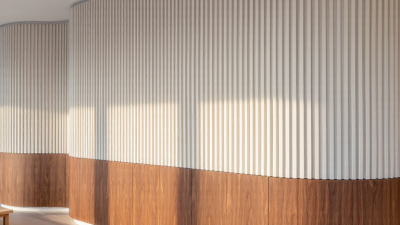
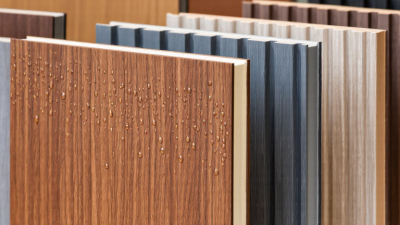
Solid-wood fluted panels are carved from timber, so each groove reveals natural grain and color variation. The ribs create clear shadows in side light. Small dents can often be sanded or repaired, though matching the finish takes care. Solid wood also responds to indoor humidity, so installation details matter.
Wood veneer panels use a thin layer of real wood over a supporting core. They can offer a consistent fluted profile with less visible variation between sections. The core influences panel stability and durability; veneer itself does not guarantee either. The USDA Forest Products Laboratory’s 2021 Wood Handbook reports typical shrinkage from green to oven-dry of about 3–12% tangentially and 1–7% radially, with variation by species. These figures are not a prediction of indoor movement, but they explain why moisture control matters. Veneer panels still need suitable edge protection.
Tips: Ask about the core material, veneer thickness, and finish before ordering. Acclimate panels in the installation room, and check that the wall is flat. A beautiful sample can mislead. Inspect several pieces together.
Typical hardwood shrinkage from green to oven-dry, by grain direction
Solid-wood fluted panels can respond to humidity changes as the wood expands and contracts across the grain. Wood-veneer panels use a thin wood face over an engineered core, which can help limit movement. Actual performance varies with species, construction, and indoor conditions.
MDF is a common core for fluted wall panels because its fine, uniform fibers allow crisp grooves and smooth paint finishes. It is also easy to cut on site. But MDF is not waterproof; exposed edges can swell when they absorb moisture. Veneered or laminated faces add visual warmth, while high-density fiberboard can hold finer details. Particleboard is usually less suitable for deep, sharply machined flutes because its coarse core may show.
Indoor air quality deserves attention. The U.S. Environmental Protection Agency’s TSCA Title VI limits formaldehyde emissions from MDF to 0.11 parts per million, and thin MDF to 0.13 parts per million. Ask for compliant-product documentation, rather than relying on a surface finish alone. The USDA Forest Products Laboratory’s Wood Handbook places solid wood’s fiber-saturation point near 30% moisture content; this is not an MDF specification, but it underlines why damp walls and unsealed edges need care. A tidy face can hide a vulnerable core.
Tips: Acclimate panels in the room, check the wall for dampness, and seal cut edges before installation. Use a small offcut to test paint or adhesive. Details matter. Even careful measuring may not prevent slight shade differences between batches.
| Panel type | How it is made | Typical fluted-panel characteristics | Main advantages | Points to consider | Common applications |
|---|---|---|---|---|---|
| MDF | Wood fibers are combined with resin and pressed into a uniform panel. | Can be machined into consistent grooves and profiles; commonly supplied primed, painted, veneered, or laminated. | Smooth, even surface; suitable for detailed machining and painted finishes. | Standard MDF can swell if exposed to moisture. Use an appropriate moisture-resistant grade where conditions require it, and seal cut edges. | Interior feature walls, living areas, bedrooms, and dry commercial interiors. |
| Plywood | Thin wood veneers are bonded in layers, generally with adjacent grain directions crossing. | Flutes may be machined into the face or formed as part of a faced panel; appearance depends on the face veneer and finish. | Layered construction can provide good strength and dimensional stability; veneer faces show natural wood grain. | Core voids and veneer quality vary by grade. Exposed edges may need finishing, and moisture performance depends on panel type and adhesive. | Interior walls where a wood-grain look, a robust substrate, or visible plywood edges are desired. |
| HDF | Wood fibers are compressed into a denser fiberboard than typical MDF. | Its dense, smooth face can support crisp machined detail and thin decorative surface layers. | Hard, smooth surface can be useful where a fine finish or precise profile is needed. | Often heavier than lower-density fiberboard; like other wood-fiber panels, it is not inherently waterproof. | Decorative interior panels and applications requiring a dense, smooth face. |
| Particleboard | Wood particles are bonded with resin under heat and pressure. | Usually used as a substrate for a decorative facing; the quality of the facing and edge treatment strongly affects the finished look. | Can be a practical substrate for faced interior panels. | Edges can be more vulnerable to chipping and moisture-related swelling than a sealed decorative surface suggests. Check fixing requirements and panel grade. | Interior decorative applications in dry, controlled environments. |
| OSB | Large wood strands are arranged in layers and bonded with resin under heat and pressure. | More often used as a backing or design-forward panel than for fine, deeply machined flutes; its strand pattern remains visible. | Distinctive strand texture and a structural panel format can suit utilitarian or contemporary interiors. | The coarse surface is less suited to a smooth painted finish, and machined edges may expose strands. Select a suitable panel grade for the intended environment. | Accent walls, workshop-style interiors, and installations where the strand texture is intentional. |
Note: Flute depth, spacing, panel thickness, surface finish, and moisture performance vary by product and specification. Follow the panel maker’s installation guidance and use panels rated for the intended interior conditions.
In bathrooms, laundry rooms, and damp basements, the panel surface is only part of the moisture story. PVC fluted panels have a nonporous face and are generally easy to wipe clean. WPC panels combine wood fibers and plastic, but their moisture tolerance varies by formulation. That distinction matters. Check the product’s water-absorption data, installation instructions, and suitability for the exact room—not just the material name.
The U.S. Environmental Protection Agency’s A Brief Guide to Mold, Moisture and Your Home notes that mold can grow on damp materials within 24 to 48 hours. Small gaps count. Seal cut edges as specified, and make sure water cannot sit behind the panels or enter through joints.
Grand View Research valued the global wood-plastic composites market at USD 6.26 billion in 2022 and projected an 11.4% compound annual growth rate from 2023 to 2030. That signals growing interest, not proof that every WPC panel suits wet rooms. I would not call either material foolproof: poor ventilation and careless detailing can undermine a moisture-resistant finish.
Metal fluted panels bring crisp shadow lines to lobbies, corridors, and retail interiors. Their hard surfaces resist everyday scuffs, but bare metal reflects sound rather than absorbing it. For acoustic performance, look for perforated or slotted faces paired with a tested absorptive backing. Ask for results measured under ASTM C423, including the mounting condition; the same panel can perform differently with another cavity or substrate.
There is a catch. Acoustic panels reduce room reverberation, but they do not automatically block noise passing through walls. The ANSI/ASA S12.60 classroom acoustics standard sets a 35 dBA background-noise limit for core learning spaces, a useful reference when specifying quiet rooms. The World Health Organization’s 2018 Environmental Noise Guidelines recommend road-traffic exposure below 53 dB Lden and 45 dB Lnight; these are outdoor exposure targets, not product ratings. For a meeting room or classroom, compare measured absorption data with the room’s needs, then confirm the complete wall assembly. A catalog image rarely shows the whole acoustic story.