Leave Your Message
China’s Uv Pvc Marble Sheet market is expanding with interior renovation, commercial fit-outs, and lightweight wall decoration. Grand View Research valued the global PVC market at approximately USD 45.26 billion in 2022. Its report also projected steady growth through 2030. Fortune Business Insights has identified artificial marble as another growing surface-material segment. These figures support stronger demand for decorative panels, but they do not make every supplier equally dependable.
“Design is the first signal of human intention,” said William McDonough, a recognized sustainable-design authority. His observation applies directly to wall-panel selection. A realistic marble pattern, smooth UV coating, stable substrate, and clean edge finish influence both appearance and service life. In practical projects, buyers should inspect gloss consistency under white lighting. They should also check thickness tolerance, surface adhesion, scratch resistance, and formaldehyde test documentation.
This guide reviews China’s top 10 Uv Pvc Marble Sheet manufacturers through a buyer-focused lens. Production capacity matters. So do formulation control, printing accuracy, export experience, packaging, and after-sales support. Factory photographs can look impressive. They are not enough. Independent test reports and traceable samples provide stronger evidence. Some rankings may change as factories upgrade equipment or enter new markets. That uncertainty deserves attention. No list is perfect. Careful verification remains necessary before placing a large order.
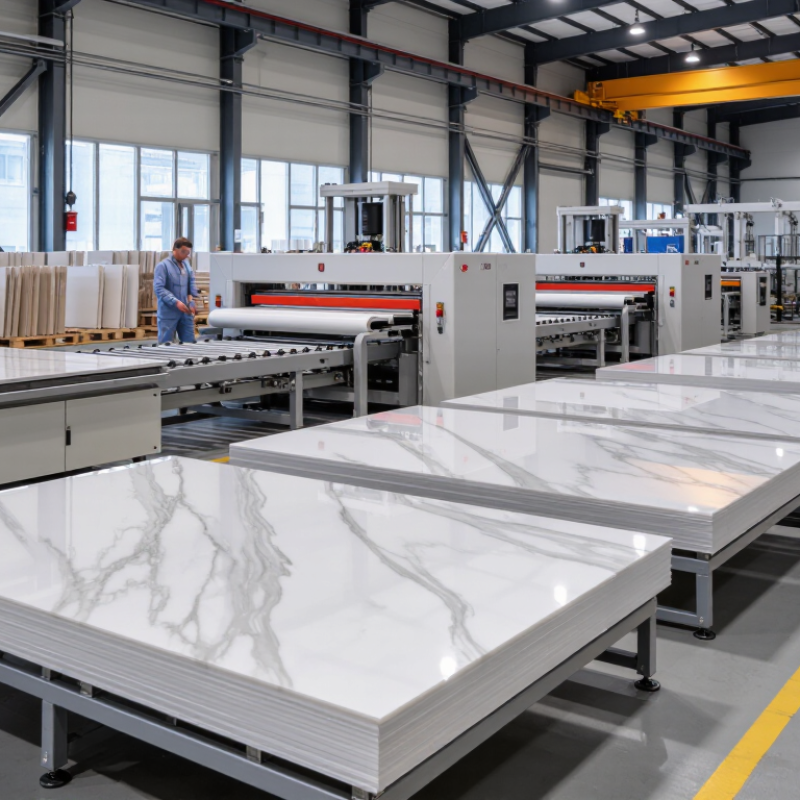
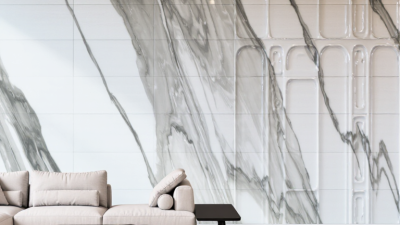
UV PVC marble sheets are decorative wall panels made from a PVC base, a printed marble design, and a UV-cured protective coating. The UV layer is hardened with ultraviolet light during production. It improves surface gloss, color stability, and resistance to everyday moisture.
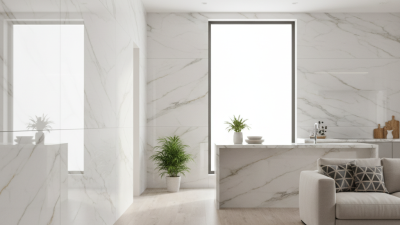
They resemble stone but remain much lighter and easier to cut. A standard panel can be carried by one installer and trimmed with common tools. In bathrooms, kitchens, hotels, and retail interiors, these sheets can cover large wall areas with fewer joints. Their smooth surfaces also make routine cleaning relatively simple. However, they are not natural marble. They cannot reproduce every stone texture, depth, or cool mineral feel.
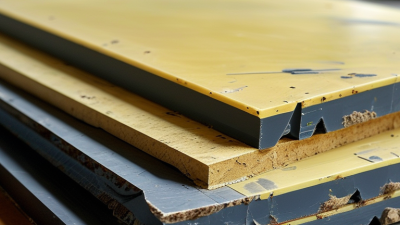
Practical installation still needs care. The wall should be dry, flat, and free from dust before adhesive is applied. Uneven walls may create visible shadows beneath glossy panels. That detail is often underestimated. Seams require accurate alignment and suitable sealant, especially near sinks or showers. During product checks, examine thickness consistency, backing strength, print clarity, coating adhesion, and corner protection. Fire performance, odor, and dimensional stability can vary between manufacturers, so test reports should support every claim. A lower price may hide weaker backing or a thinner protective layer. Even experienced installers sometimes overlook that risk. UV PVC marble sheets offer efficient visual renovation, but their performance depends on material quality and workmanship.
| Product Dimension | Typical Specification or Fact | Practical Importance |
|---|---|---|
| Basic Definition | UV PVC marble sheets are decorative wall and ceiling panels made primarily from polyvinyl chloride, with a printed marble pattern and a UV-cured protective surface coating. | They provide a marble-like appearance without the weight, porosity, and installation complexity of natural stone. |
| Common Panel Size | Common commercial formats include approximately 1,220 mm × 2,440 mm, although manufacturers may offer custom widths and lengths. | Large panels reduce the number of joints and can speed up interior wall installation. |
| Typical Thickness | Frequently available thicknesses range from about 2.5 mm to 5 mm, with thicker constructions generally offering greater rigidity. | Thickness should be selected according to wall flatness, impact exposure, fixing method, and required appearance. |
| Surface Finish | Available finishes commonly include high-gloss, polished, matte, textured, and stone-effect surfaces. | Glossy finishes emphasize visual depth, while matte or textured finishes can reduce visible reflections and fingerprints. |
| Decorative Layer | A printed or laminated layer reproduces marble colors, veining, and stone-inspired patterns. | Pattern consistency, print resolution, and vein alignment strongly affect the finished visual quality. |
| UV Protective Coating | The UV-cured top layer is hardened using ultraviolet light during production and is designed to improve surface durability and finish retention. | It helps protect the decorative surface from routine abrasion, stains, and everyday cleaning, subject to the product specification. |
| Water Resistance | PVC is inherently resistant to water, and the finished panel surface is generally non-porous when the edges and joints are properly sealed. | These properties make the panels suitable for many humid interior areas, but they do not automatically make every installation fully waterproof. |
| Weight Advantage | Plastic-based panels are typically much lighter than solid natural marble or other stone slabs of comparable surface area. | Lower weight can simplify handling, transportation, cutting, and installation on suitable substrates. |
| Installation Methods | Typical installation methods include compatible construction adhesive, mechanical fixing, or a combination of adhesive and trim profiles. | The substrate should be clean, dry, stable, and sufficiently flat; the adhesive must be compatible with PVC panels. |
| Cutting and Fabrication | Panels can generally be cut with suitable carbide-tipped saws, fine-tooth blades, or other tools recommended by the supplier. | Accurate cutting reduces chipping, edge damage, material waste, and visible gaps around openings. |
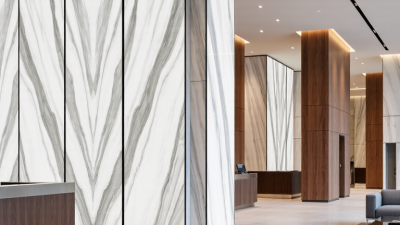
| Typical Applications | Common uses include feature walls, living rooms, hotel interiors, retail spaces, office decoration, reception areas, and residential wall cladding. | Application suitability depends on impact, heat, moisture, ventilation, and local building requirements. |
| Cleaning and Maintenance | Routine cleaning normally uses a soft cloth or sponge with mild soapy water. Abrasive powders, harsh solvents, and sharp scraping tools should be avoided. | Proper cleaning helps preserve the gloss, print layer, and protective coating. |
| Fire Performance | Fire behavior varies by formulation, thickness, additives, and construction. Fire ratings must be confirmed through product-specific test reports. | Do not assume that a PVC marble sheet is fire-rated without checking the applicable standard and certification. |
| Temperature Considerations | PVC panels can expand or contract with temperature changes and may be affected by prolonged exposure to high heat. | Expansion gaps, suitable trims, and separation from high-temperature sources may be required. |
| Quality Inspection Points | Important checks include thickness tolerance, flatness, color consistency, print clarity, surface hardness, adhesion of layers, and edge condition. | Pre-installation inspection helps identify defects before panels are cut or fixed. |
| Environmental Consideration | PVC products should be evaluated using supplier documentation covering recycled content, emissions, production controls, and end-of-life handling. | Environmental performance depends on the complete product lifecycle rather than on the material name alone. |
| Best Selection Criteria | Compare panel construction, thickness, surface finish, dimensions, test documentation, color consistency, warranty terms, packaging, and technical support. | A reliable comparison should consider both the purchase price and the expected installation and maintenance requirements. |
| Important Note | Actual dimensions, performance ratings, installation requirements, and available finishes vary by manufacturer and product series. Always request the current technical data sheet and test documents before purchase or specification. | |