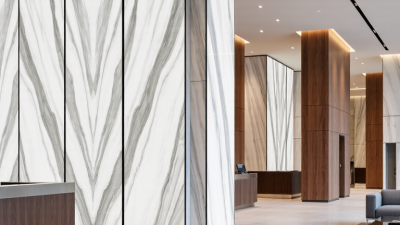
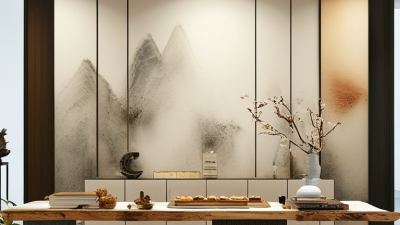
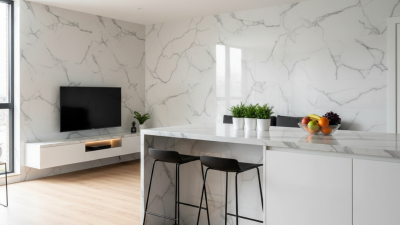
Choosing the China best PVC UV Marble Sheet supplier takes more than comparing catalog photos. A Pvc Uv Marble Sheet can look convincing online, yet its surface finish, core quality, and dimensions matter more once it reaches a project site. Small details count. Check the stated thickness, panel flatness, edge finish, and UV coating before placing a large order. Ask how the supplier controls color consistency across production batches. A sample under ordinary room lighting may reveal differences that a bright showroom image hides.
Reliable suppliers should explain their specifications clearly and provide current product data, sample options, and packaging details. Ask whether the sheets are intended for walls, ceilings, or another application; installation requirements can vary. It is sensible to request close-up images of corners and surfaces, then compare them with a physical sample. Look for straightforward answers about lead times, customization, and quality checks. A polished catalog is not proof. Nor is the lowest quote automatically the best value. I would still verify each claim against the sample and written specification, because product descriptions can leave out useful details. Supplier selection is not always tidy. Comparing several manufacturers on the same criteria can help buyers judge quality, communication, and consistency with fewer surprises. This guide outlines what to check when evaluating Chinese suppliers and deciding which one fits your project.
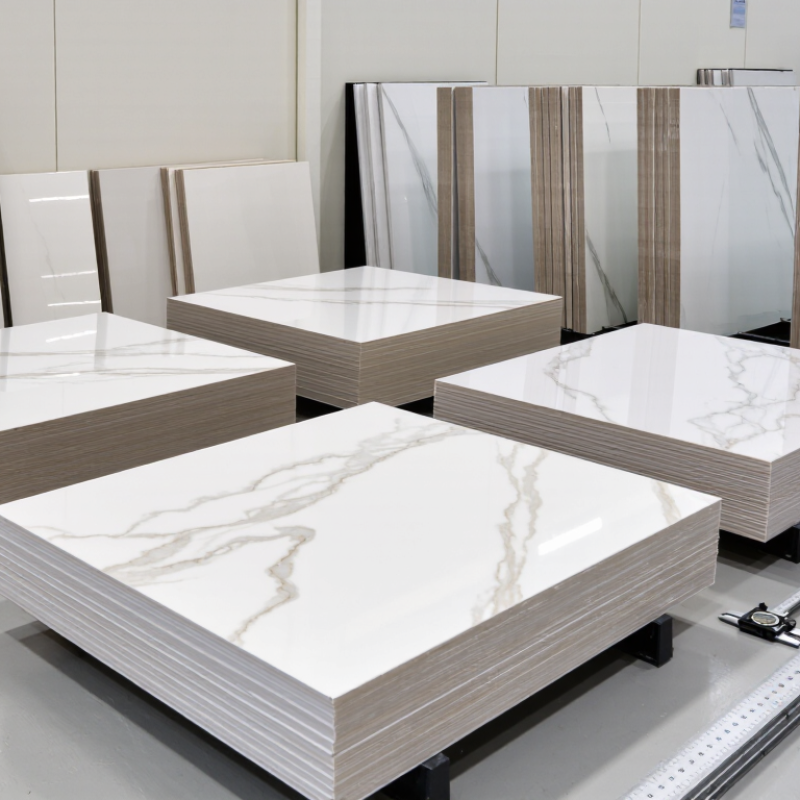
PVC UV marble sheets are decorative wall panels designed to bring a stone-like appearance to interior spaces. Most combine a PVC-based core, a printed marble pattern, and a UV-cured surface coating. The coating can improve surface resistance, though performance varies by product. They are lighter and easier to cut than many stone slabs. Not real marble.
Common applications include apartment feature walls, shop interiors, reception areas, and selected kitchen or bathroom walls. Their smooth faces are simple to wipe, so everyday splashes and dust are usually manageable. However, “water-resistant” does not mean every joint is waterproof. Around sinks or other wet areas, careful sealing matters.
Installation results depend on the wall beneath the panels. It should be clean, dry, and reasonably flat; bumps can show through or weaken adhesion. Fitters typically measure, trim, apply suitable adhesive, and finish edges with profiles or sealant. Keep panels away from direct heat unless the product specifications allow it. A marble look can be convincing, but it is still a printed finish, and scratches or uneven seams may become noticeable under bright lighting. Check thickness, surface-care guidance, and test data before choosing sheets for a specific room.

Production starts with PVC resin, mineral filler, stabilizers, pigments, and processing aids. After mixing, the compound is heated and shaped into a flat sheet, often through extrusion. Rollers control thickness and surface smoothness. Operators check for bubbles, uneven edges, and color shifts. Small flaws matter. A printed marble pattern is then applied, either directly or through a decorative film, depending on the production line. The surface receives a UV-curable coating. Ultraviolet lamps harden it quickly, creating a glossy, wipe-clean finish. The result depends on more than appearance: coating adhesion, sheet flatness, and consistent thickness affect installation and service life.
China’s manufacturing scale sits within a substantial PVC industry. Grand View Research valued the global PVC market at USD 72.3 billion in 2023 and projected a 4.2% compound annual growth rate from 2024 to 2030. This is market context, not proof that every sheet meets the same standard. Buyers should request thickness and coating specifications, test samples, and batch inspection records. A bright gloss can hide weak bonding.
That part deserves a closer look. Ask how the supplier checks UV coating adhesion and whether the sample matches the production batch.
For PVC UV marble sheets, compare documented performance rather than relying on glossy sample boards. Supplier claims matter less than repeatable measurements. Ask for a specification sheet listing thickness, length, width, and allowable tolerances. Check whether the stated thickness includes the UV coating. A caliper and a few sheets from different cartons can reveal variation. Small differences matter.
UV coating quality needs clear evidence. Ask how the supplier tests coating adhesion, surface hardness, scratch resistance, and color stability. Request dated test reports that identify the tested material and method. Independent laboratory results are useful, but confirm they match the exact sheet construction you are buying. A report for a similar product is not enough. Inspect samples under bright, angled light for pinholes, uneven gloss, and visible pattern shifts.
A quality management certificate, such as ISO 9001, can indicate controlled processes, but it does not certify every sheet. Ask how production batches are labeled and how defects are handled. For interior projects, confirm that the supplier can provide relevant emissions or fire-test documentation when your project requires it. Requirements vary by location and application. Some variation in printed marble patterns is normal; the supplier should explain acceptable limits in writing. I would not judge a factory by one perfect sample alone. Check a production batch, too.
Plastics Europe’s Plastics—The Fast Facts 2024 reports global plastics production reached 413.8 million tonnes in 2023. That scale makes supplier checks important, but it does not prove a decorative sheet is durable. Ask for the factory’s quality-control records and confirm that certificates match the actual production site and product. A PDF alone is not enough.
Request samples from a normal production run, not only a showroom piece. Check thickness at several points, inspect edges for chips, and compare the printed marble pattern across sheets. Ask for independent test results covering coating adhesion and accelerated weathering, with the exposure method stated, such as ISO 4892-2. Confirm the report identifies the tested product and batch. A polished sample can still mislead. I would also ask how the supplier handles rejected lots; answers may be less tidy than the brochure.
Tips: Keep one approved sample as a reference. Record thickness, gloss, and color readings, then compare them with the delivered batch. If a supplier will not explain a test result clearly, pause before ordering.
Choosing a PVC UV marble sheet supplier means checking more than surface gloss. Ask for measured sheet thickness, PVC core composition, coating structure, and tolerance ranges. Request samples from different production batches, not only a showroom panel. Small details matter.
The Grand View Research report on the global PVC market valued it at approximately US$60.18 billion in 2023 and forecasts about 4% annual growth through 2030. This broad market figure is not a quality rating for marble sheets. It does show why buyers should verify capacity and quality controls, rather than relying on market growth claims. Ask suppliers for production records, inspection criteria, and a clear process for handling defects. Ask for proof.
For UV performance, request test results that identify the method, exposure conditions, and changes in color or surface adhesion. ASTM G154 describes fluorescent UV exposure testing for nonmetallic materials; a test reference alone does not prove long-term service life. Confirm that results apply to the offered product. Check packaging, lead times, replacement terms, and installation guidance too. Even a detailed checklist can miss site conditions, so compare the supplier’s recommendations with your project’s lighting, humidity, and cleaning routine. A polished sample is useful, but it cannot answer every question.
| Evaluation factor | Suggested weight | What to assess | Practical screening benchmark | How to verify |
|---|---|---|---|---|
| Product quality and consistency | 25% | Surface finish, color consistency, flatness, edge quality, thickness, and resistance to scratching or delamination. | Request samples from the intended production specification. Agree on measurable tolerances for thickness, dimensions, color, and surface defects before placing an order. | Compare approved samples with pre-shipment samples; review inspection records and test the product using methods relevant to the intended application. |
| Product specifications and compliance | 20% | Whether the sheet construction, declared performance, and supporting documents match the project’s local building and safety requirements. | Require documentation for the exact product construction and thickness. Fire-performance requirements vary by jurisdiction and application; do not assume one rating applies to every sheet. | Check test reports for product identity, specimen thickness, test method, issuing laboratory, and report date. Confirm local requirements with the project’s designer or authority. |
| Technical transparency | 15% | Clarity about sheet thickness, size, core material, UV coating, finish, installation conditions, and care instructions. | Require a written specification sheet that identifies the product structure and the exact options being quoted. Common sheet formats vary by producer and should be confirmed rather than assumed. | Match the quotation, technical sheet, sample label, and purchase order. Ask for written guidance on cutting, adhesive compatibility, and substrate preparation. |
| Customization capability | 10% | Available colors, patterns, gloss levels, surface textures, dimensions, and ability to reproduce an approved design. | Confirm minimum order quantities, setup charges, sample lead time, and whether custom designs require a separate color or finish approval. | Approve a dated, signed reference sample and specify acceptable variation in the purchase agreement. |
| Production capacity and lead time | 10% | Ability to meet the required volume and schedule, including production, inspection, packing, and dispatch. | Ask for a realistic production schedule and the quantity available per production run. Build in time for sampling, transport, customs clearance, and possible inspection. | Request a written delivery plan and progress updates. For large or time-sensitive orders, consider an independent pre-shipment inspection. |
| Total landed cost | 10% | Unit price plus packaging, tooling or setup, inland transport, freight, insurance, duties, taxes, and potential wastage. | Compare quotations using the same specification, order quantity, delivery terms, and destination. A low unit price alone does not establish the lowest project cost. | Request an itemized quotation and confirm the named delivery location and applicable Incoterms® rule and version in the contract. |
| Packaging and shipping protection | 5% | Protection against scratches, edge damage, moisture exposure, and movement during handling and transit. | Agree on protective layers, corner and edge protection, pallet or crate requirements, stacking limits, and package labels based on the shipping route. | Review packing photos before dispatch and document packaging requirements in the order. Check local import and wood-packaging rules where applicable. |
| Communication and after-sales support | 5% | Response quality, complaint handling, replacement or credit procedures, and availability of installation guidance. | Confirm the response contact, claim window, evidence required for damage or defects, and the agreed remedy before production begins. | Record the agreed process in writing and retain samples, inspection records, packing photos, and delivery documents. |
| Scoring suggestion: Rate each factor from 1 (weak evidence) to 5 (strong evidence), multiply by its suggested weight, and compare suppliers against the same project specification. These are buyer evaluation guidelines, not universal product standards or guaranteed performance thresholds. | ||||