
What Materials Are UV Marble Panels Made From? A Complete Breakdown for Professional Buyers
Table of Contents
- Why Material Knowledge Matters in the Decorative Panel Industry
- Defining UV Marble Panels
- Layered Construction of UV Marble Panels
- Optional Performance Additives
- How Materials Influence Real-World Performance
- UV Marble Panels vs Natural Marble: Material Perspective
- Common Industry Misunderstandings
- Why Transparency Matters for Buyers
- Final Thoughts
1. Why Material Knowledge Matters in the Decorative Panel Industry
In modern interior construction, decorative Wall Panels have shifted from purely aesthetic products to performance-driven building materials. Among them,UV marble panels have gained significant traction in commercial and residential projects due to their visual appeal, ease of installation, and competitive pricing.
Yet despite their popularity, many buyers still lack a clear understanding of the actual materials used to manufacture UV marble panels. This knowledge gap often leads to incorrect product comparisons, unrealistic expectations, or sourcing mistakes.
For distributors, importers, contractors, and developers, understanding material composition is essential because it directly influences:
- Durability and service life
- Fire and safety compliance
- Environmental and VOC performance
- Surface wear resistance
- Installation stability
- Long-term customer satisfaction
This article explains, in practical terms, what UV marble panels are truly made of, how each layer contributes to performance, and why material transparency is critical for professional procurement.
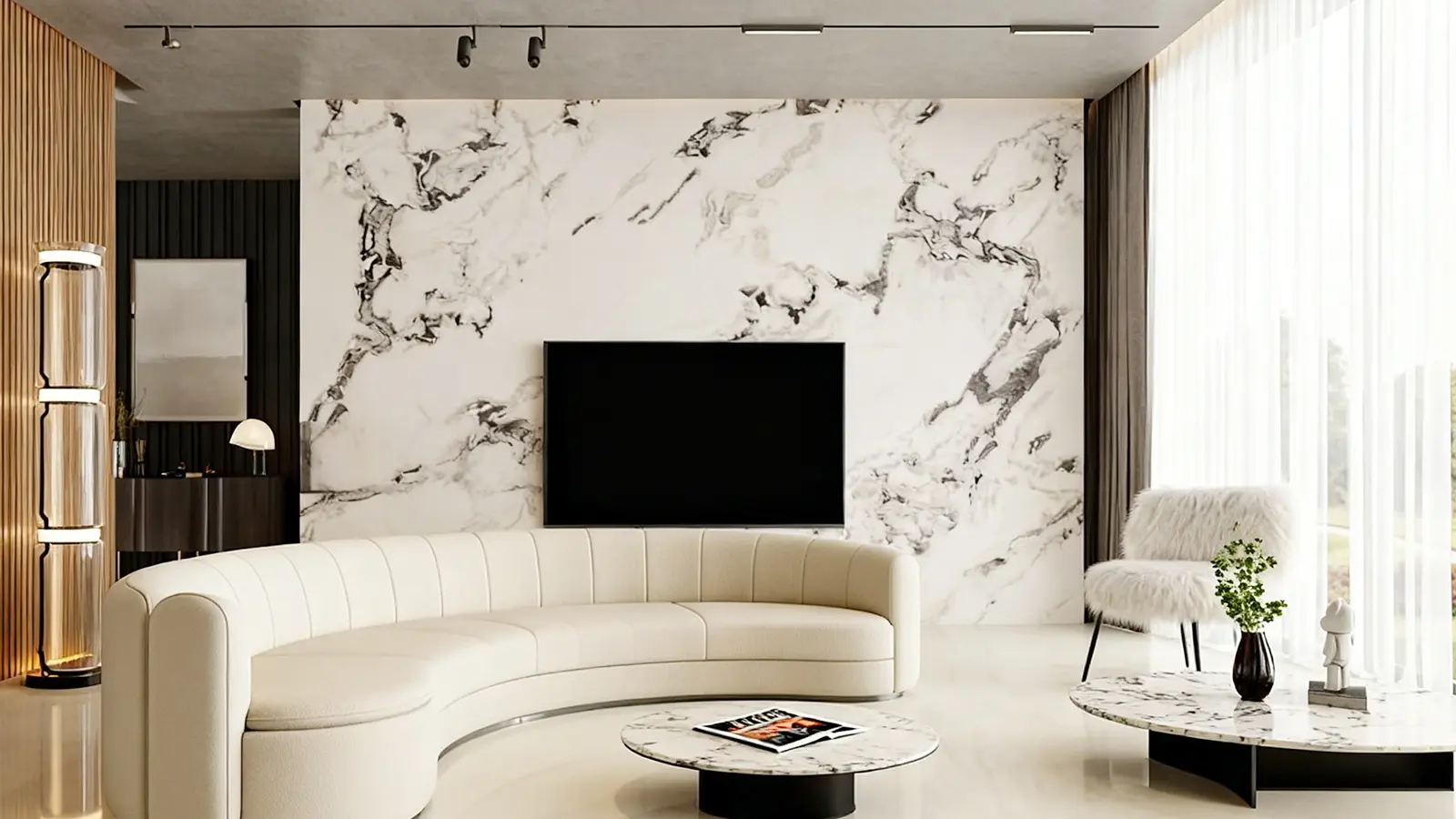
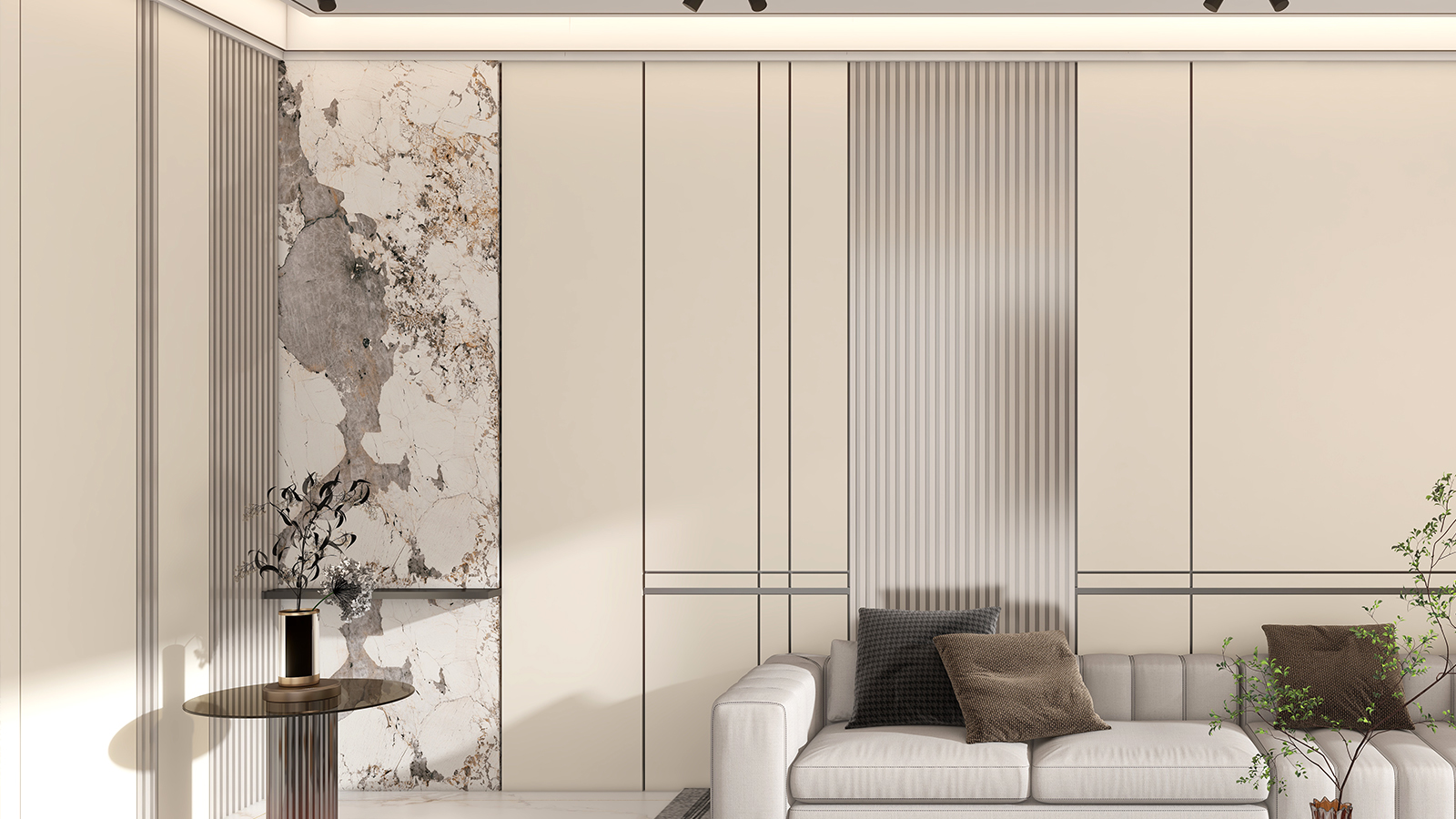
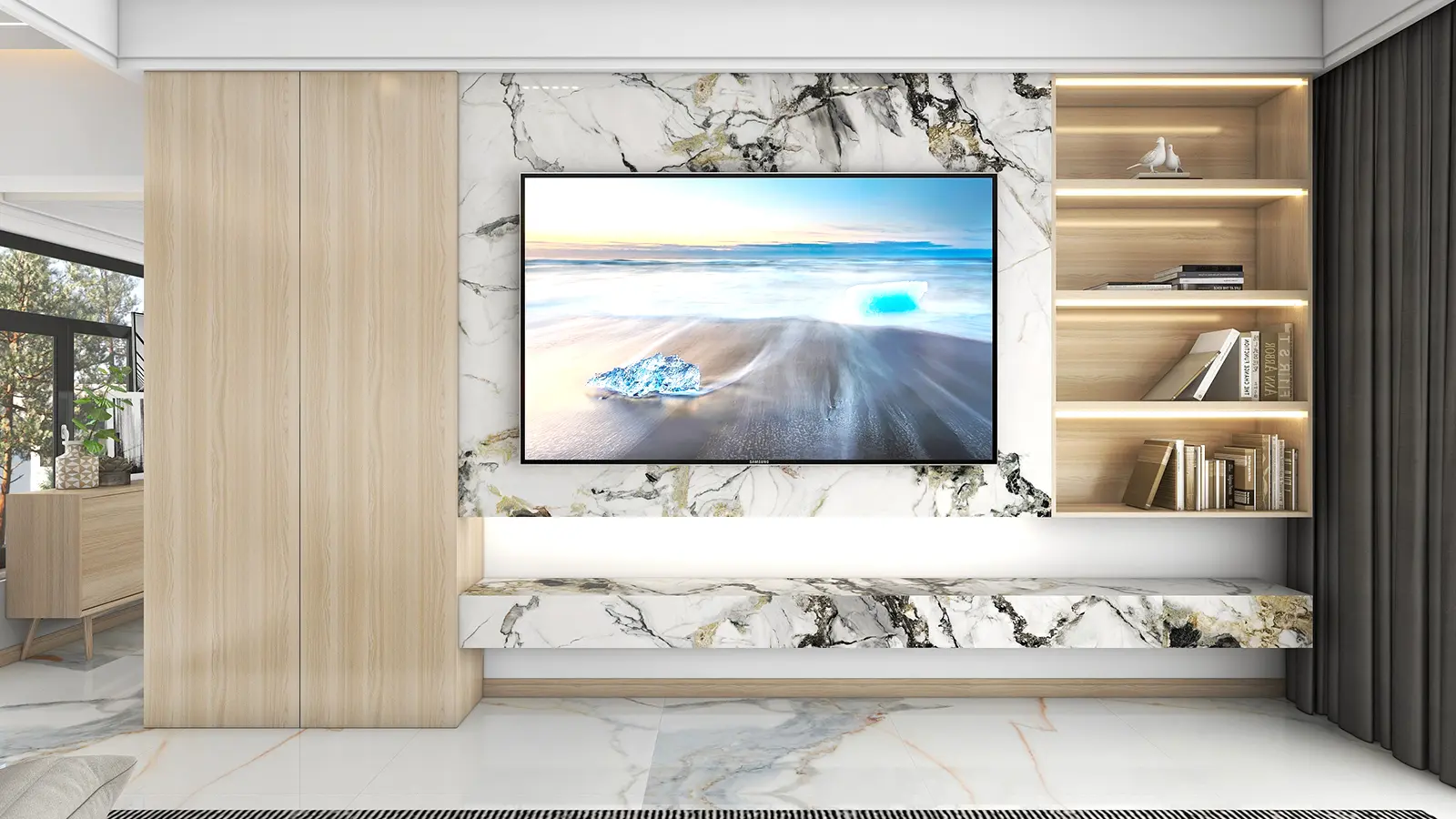
UV marble panels are engineered decorative wall boards designed to replicate the look of natural marble without using stone. They are produced through a layered manufacturing process combining polymer substrates, printed decorative films, and a UV-cured surface coating.
Despite the name, these panels do not contain marble, stone powder, or mineral slabs. Their marble-like appearance comes from advanced printing and surface finishing technologies.
They are primarily used for:
- Interior Wall Decoration
- Commercial spaces
- Hotels and retail stores
- Residential feature walls
- Modular and prefabricated buildings
3. Layered Construction of UV Marble Panels
A standard UV marble panel consists of four integrated material layers, each engineered for a specific function:
- Structural substrate
- Decorative pattern layer
- Bonding system
- UV-cured surface coating
3.1 Structural Substrate: The Core Material
The backbone of a UV marble panel is a PVC-based composite board, accounting for the majority of its thickness and weight.
Composition of the Core
The substrate is typically formulated using:
- Polyvinyl chloride (PVC) resin
- Calcium carbonate filler
- Heat stabilizers
- Processing aids
- Impact modifiers
This formulation allows manufacturers to balance rigidity, flexibility, and cost efficiency.
Why PVC Is Used
PVC offers several advantages over wood, stone, or cement boards:
- Strong moisture resistance
- Stable dimensions under temperature changes
- Resistance to rot, mold, and corrosion
- Lightweight handling and transport
- Smooth surface suitable for lamination
High-quality manufacturers carefully control resin purity and filler ratios to avoid brittleness or deformation.
3.2 Decorative Pattern Layer: Creating the Marble Look
The visual appeal of UV marble panels comes from a printed decorative film, laminated onto the PVC substrate.
Material and Printing Technology
This film is usually made from:
- Flexible PVC or PET film
- High-definition inks
- Multi-layer color printing
Advanced printing methods such as gravure printing or digital pattern reproduction allow realistic marble veins, natural color gradients, and depth simulation.
Why Film Quality Matters
Inferior decorative films may cause:
- Color fading under indoor lighting
- Repetitive or artificial-looking patterns
- Visible seams between panels
Premium panels use color-fast inks and high-resolution pattern control to ensure consistency across production batches.
3.3 Bonding System: Holding the Layers Together
Between the substrate and decorative film lies an industrial bonding layer.
Adhesive Materials Used
Depending on production technology, manufacturers use:
- Polyurethane reactive (PUR) adhesives
- Hot-melt adhesives
- Thermo-bonding systems
This layer ensures permanent adhesion under varying humidity and temperature conditions.
Importance of Adhesive Quality
Poor bonding is one of the most common causes of product failure. Weak adhesives lead to:
- Film lifting or peeling
- Air bubbles
- Surface distortion over time
Reliable manufacturers conduct adhesion strength testing before shipment.
3.4 UV-Cured Surface Coating: Protection and Finish
The topmost layer is a UV-cured transparent coating, applied in liquid form and hardened instantly using ultraviolet light.
Composition of UV Coating
The coating typically contains:
- Acrylic-based UV resins
- Photoinitiators
- Hardness enhancers
- Scratch-resistant additives
Once cured, it forms a hard, sealed surface.
Functional Benefits
This layer provides:
- Abrasion resistance
- Chemical and stain resistance
- Easy cleaning
- Long-term gloss retention
Surface finishes range from mirror-gloss to matte, depending on market preference.
4. Optional Performance Additives
To meet different market requirements, manufacturers may introduce additional compounds.
4.1 Fire-Retardant Systems
For regulated markets, fire-retardant additives can be incorporated into the PVC core to meet B-class or equivalent fire standards.
4.2 UV and Light Stabilizers
These additives slow down aging caused by indoor lighting or indirect sunlight, helping maintain color stability.
4.3 Antimicrobial Agents
Used in healthcare, hospitality, or humid environments to reduce mold and bacterial growth.
5. How Materials Influence Real-World Performance
Material selection directly impacts:
- Impact resistance during transport
- Stability during cutting and installation
- Surface durability in high-traffic areas
- Compliance with building regulations
Panels made with low-grade PVC or thin UV coatings often fail prematurely.
6. UV Marble Panels vs Natural Marble: Material Perspective
| Factor | UV Marble Panels | Natural Marble |
| Core material | PVC composite | Natural stone |
| Weight | Lightweight | Very heavy |
| Water resistance | Excellent | Porous |
| Installation | Simple | Labor-intensive |
| Maintenance | Low | High |
| Cost | Economical | Expensive |
7. Common Industry Misunderstandings
- "UV marble panels contain stone."They do not. The appearance is entirely engineered.
- "Thicker panels are always better."Material formulation and surface quality matter more than thickness alone.
8. Why Transparency Matters for Buyers
Professional suppliers should provide:
- Material specifications
- Fire and environmental test reports
- Stable batch consistency
Clear material disclosure helps buyers reduce disputes and build long-term market credibility.
UV marble panels are multi-layer composite products, not imitation stone slabs. Their quality depends on raw materials, formulation control, and manufacturing discipline.
For global buyers, understanding these materials is essential for sourcing reliable products and delivering consistent project results.