

Transform Your Space with Modern Acoustic Wall Panels
Table of Contents
- Introduction
- What Are Acoustic Wall Panels?
- Material and Design Varieties
- How They Work (Acoustic Performance)
- Benefits of Using Acoustic Panels
- Typical Applications
- Selection and Installation Basics
- Maintenance and Care
- Emerging Trends & Market Demand
- Why Consider Overseas (Including Chinese) Sourcing?
- Conclusion
Introduction
In contemporary interior design, aesthetics and performance are no longer mutually exclusive. Today’s wall systems don’t just look good—they do good. Among them, acoustic Wall Panels are increasingly popular: they deliver visual appeal and enhance sound comfort. Whether in a chic apartment, a corporate office or a hospitality venue, these panels help shape the experience. In this guide, we walk through howacoustic wall panels work, why they matter, what materials they come in, and how to choose and install them effectively.
What Are Acoustic Wall Panels?
Acoustic wall panels are decorative yet functional wall or ceiling coverings that absorb or diffuse sound, reducing unwanted echo and reverberation. They are typically constructed as boards, slats or tiles mounted on a substrate or backing, made from materials such as fabric-wrapped fibre, wood with perforations, PET felt, or wood-plastic composites.
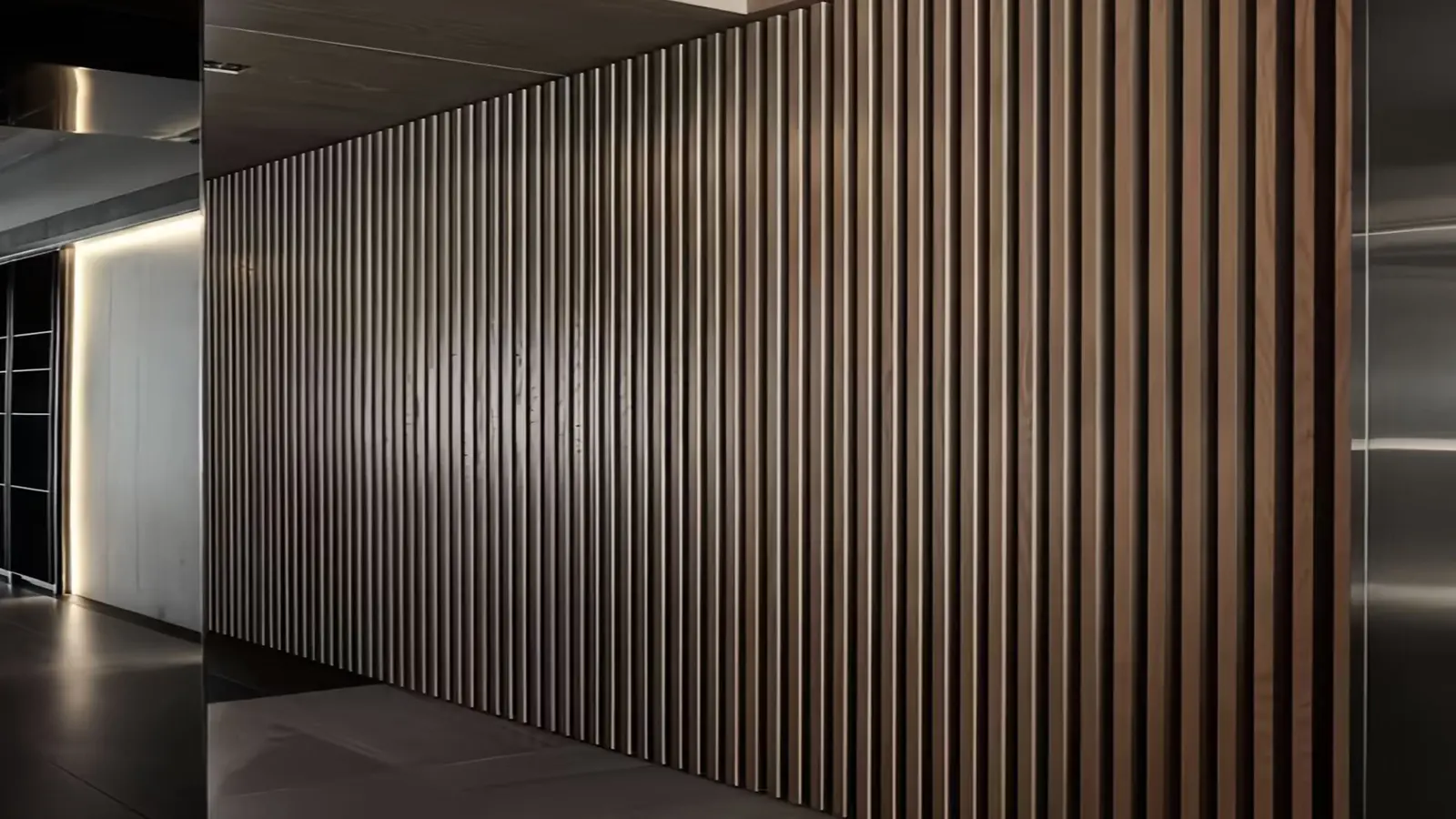
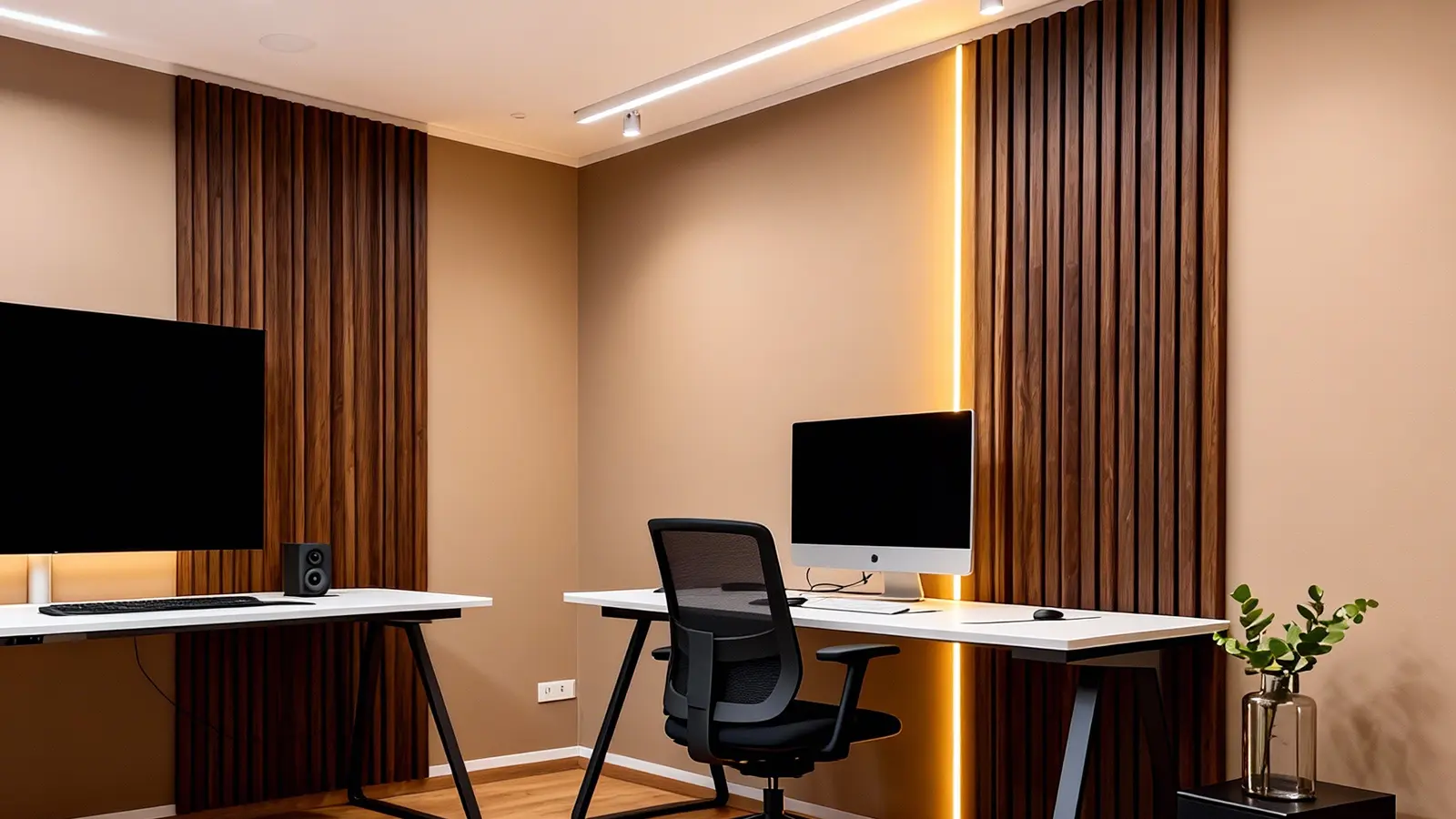
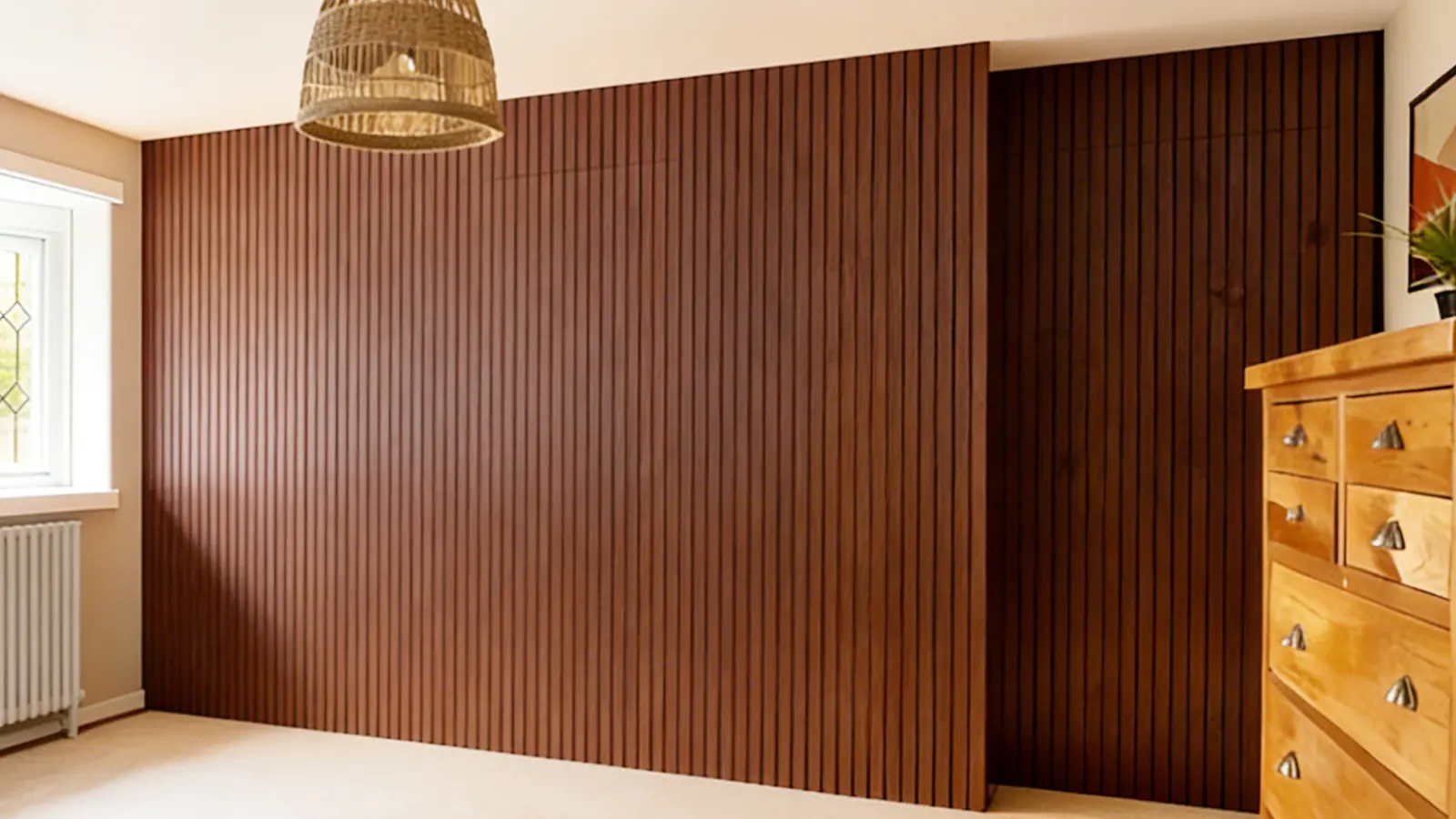
In more refined architectural applications, you’ll find slatted wood or composite systems where narrow linear strips are affixed to a continuous acoustic backing, blending texture and function.
Material and Design Varieties
Common Core Materials
- Fabric-wrapped fibre or fibreboard: Used for traditional absorption panels, often made from mineral wool or glass fibre wrapped in acoustically transparent fabric.
- PET (recycled polyester) felt panels: Lightweight, available in many colours, eco-friendly and good for mid-frequency sound absorption.
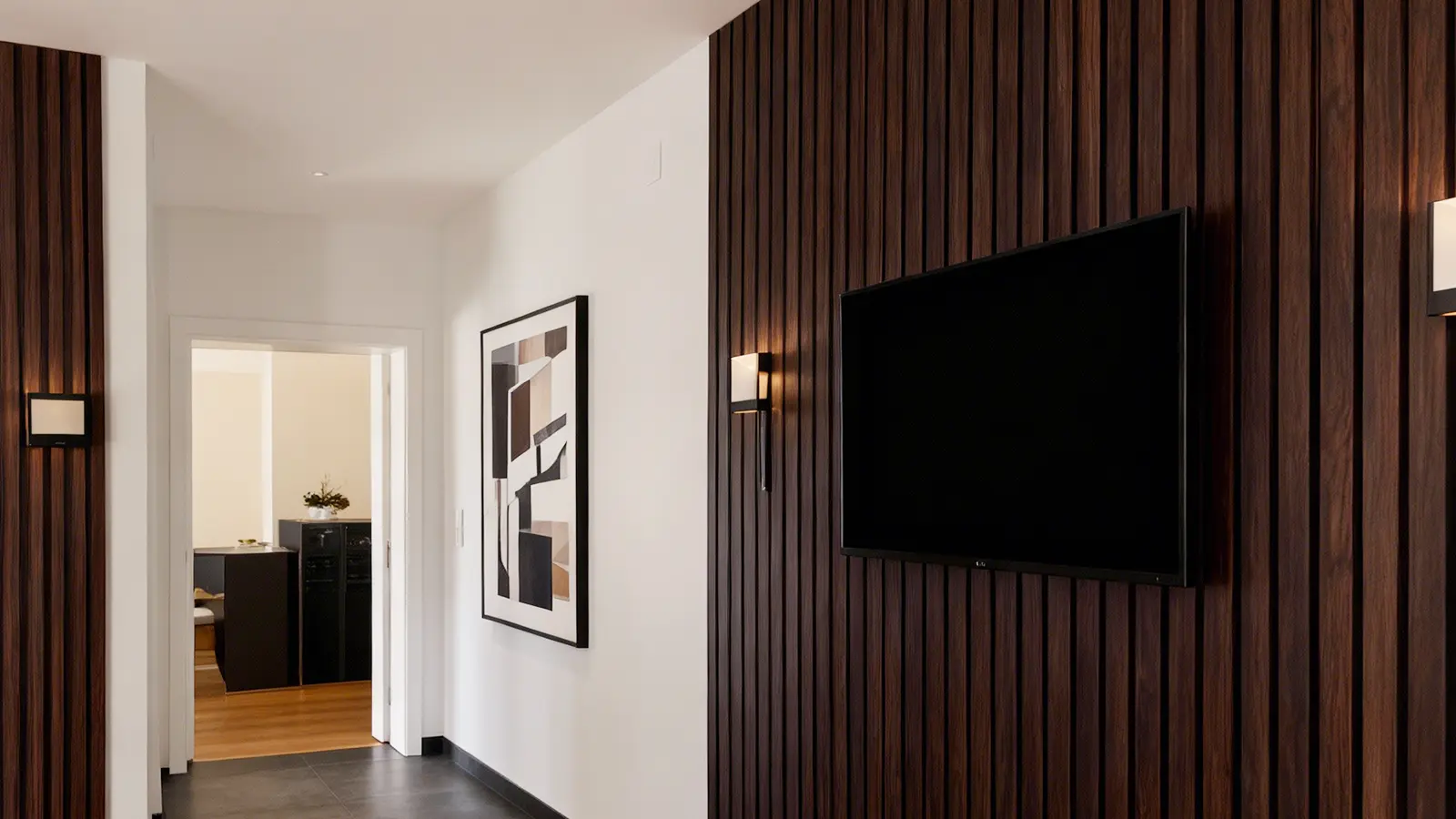
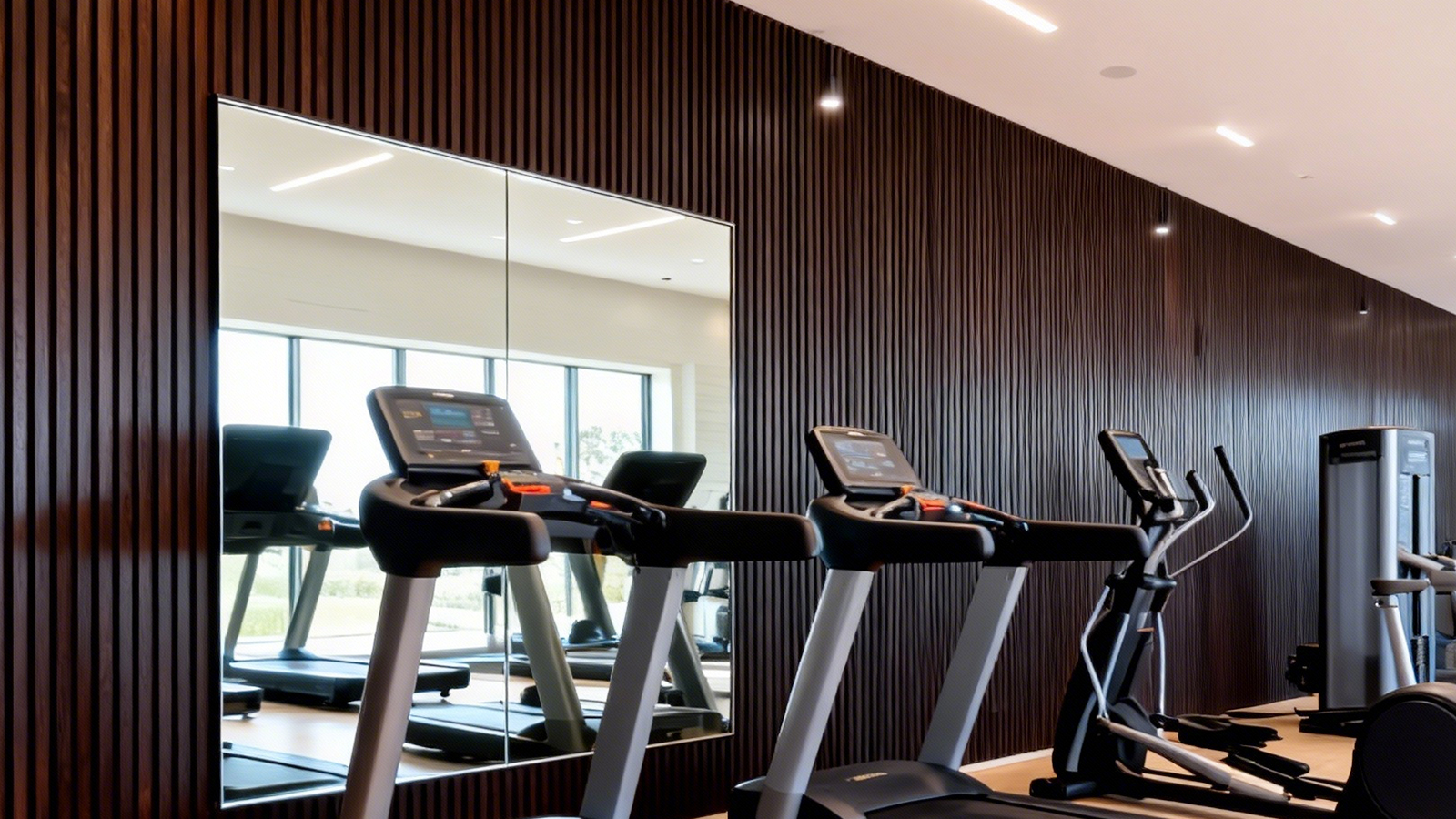
- Slatted timber or wood-composite systems: For situations where form is equally important as function—strips of wood or composite mounted on an acoustic backing behind.
- Wood-plastic composite (WPC) and weather-resistant materials: Used where moisture or outdoor durability is required.
- Metal slats with acoustic cores: For high-end or industrial interior environments.
Aesthetic Options
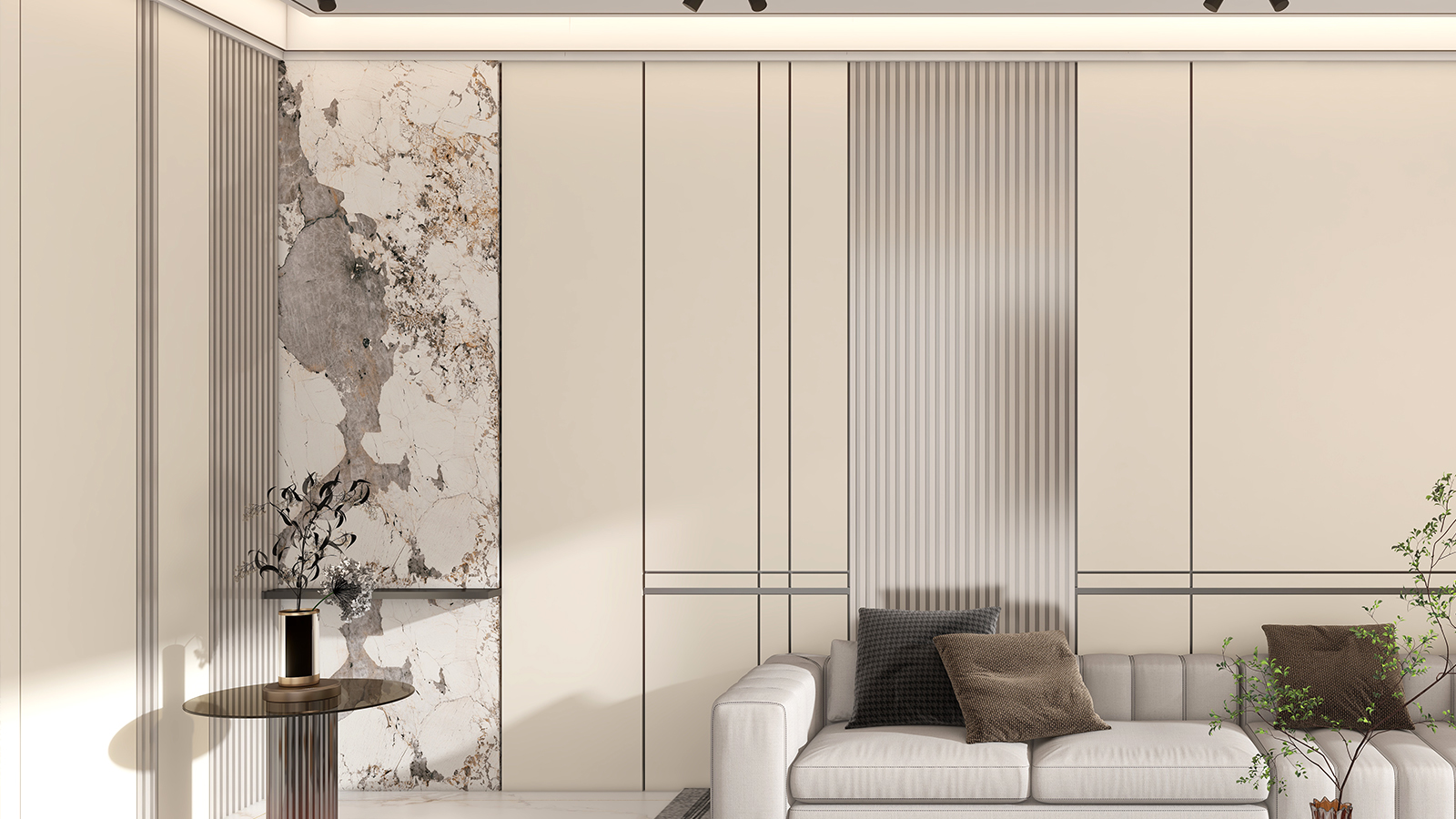
These panels are no longer just “ugly sound absorbers”. Modern designs come in many colours, finishes, textures and shapes. Perforated wood, vertically spaced slats, patterned felt, even custom printed artwork panels.
Customers can choose from warm oak, walnut, matte black, metallic finishes—or smooth fabric panels in bold colours. They can enhance height (vertical slats), activate bare walls, or serve as feature walls.
How They Work (Acoustic Performance)
When sound waves hit a hard surface like bare drywall, tile or glass, much of the energy is reflected back into the space, causing reverberation and echo. Acoustic panels address this by absorbing part of the sound energy, converting it into heat (via friction) or diffusing the wave so it doesn’t bounce directly back.
Key metrics:
- Noise Reduction Coefficient (NRC): Indicates how much sound energy is absorbed (0 = none, 1 = all). Some wall panels achieve NRCs of 0.75–0.95.
- Placement matters: Panels are most effective at first-reflection points (walls, ceiling above seating or conversation zones) and where sound may bounce.
Benefits of Using Acoustic Panels
- Improved clarity of speech and sound: Especially in offices, meeting rooms and home theatres, panels reduce noise and make dialogue easier to understand.
- Reduced ambient noise and stress: Better sound control improves comfort and wellbeing in residences and commercial spaces alike.
- Enhanced aesthetics: Modern panels integrate design and acoustic function—so you don’t sacrifice looks.
- Flexibility and retrofit-friendly: Many systems are modular and relatively easy to install on existing walls or ceilings.
- Brand or décor tie-in: With custom finishes, colours and patterns, panels can become a design element, not just a treatment.
Typical Applications
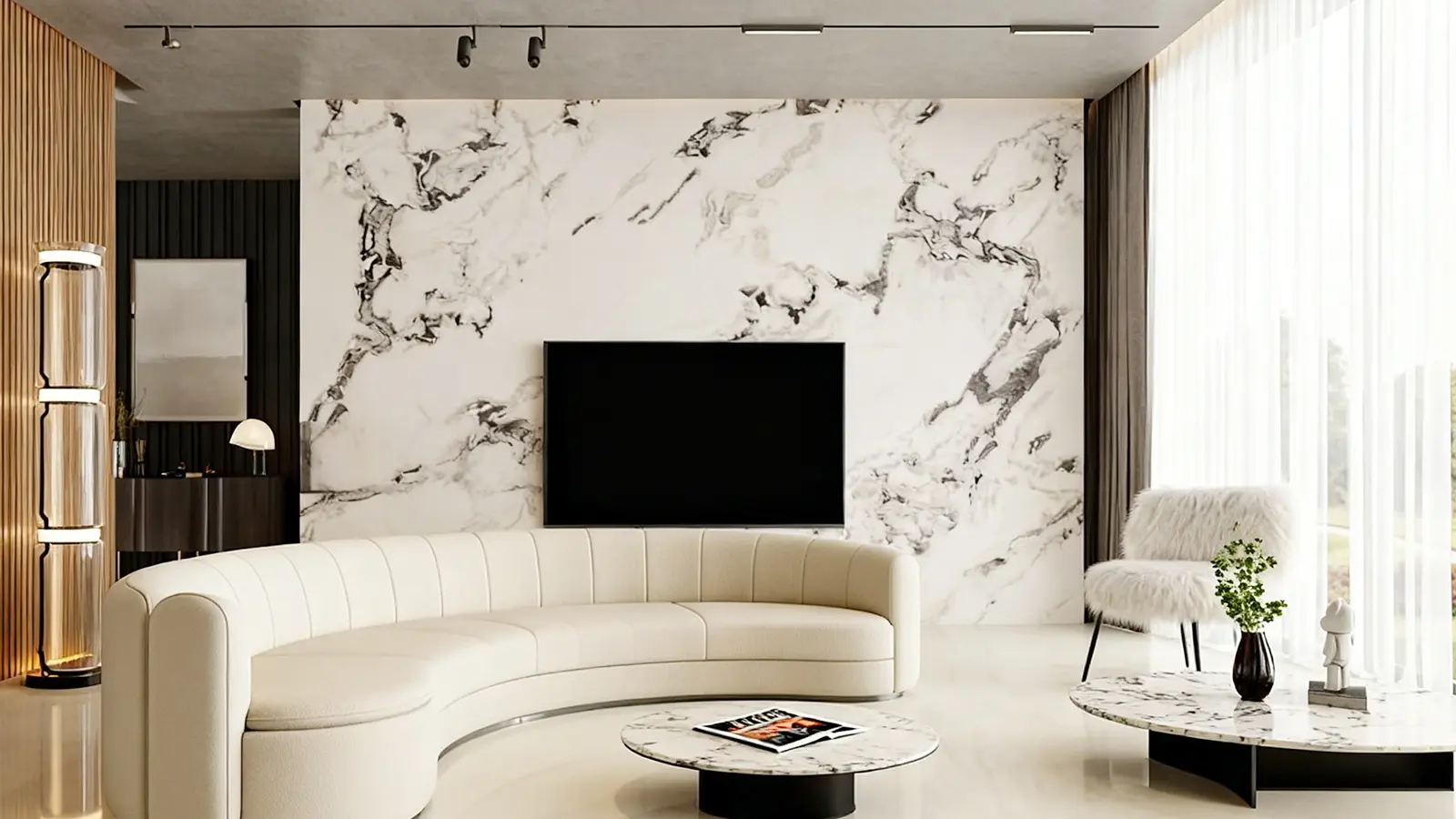
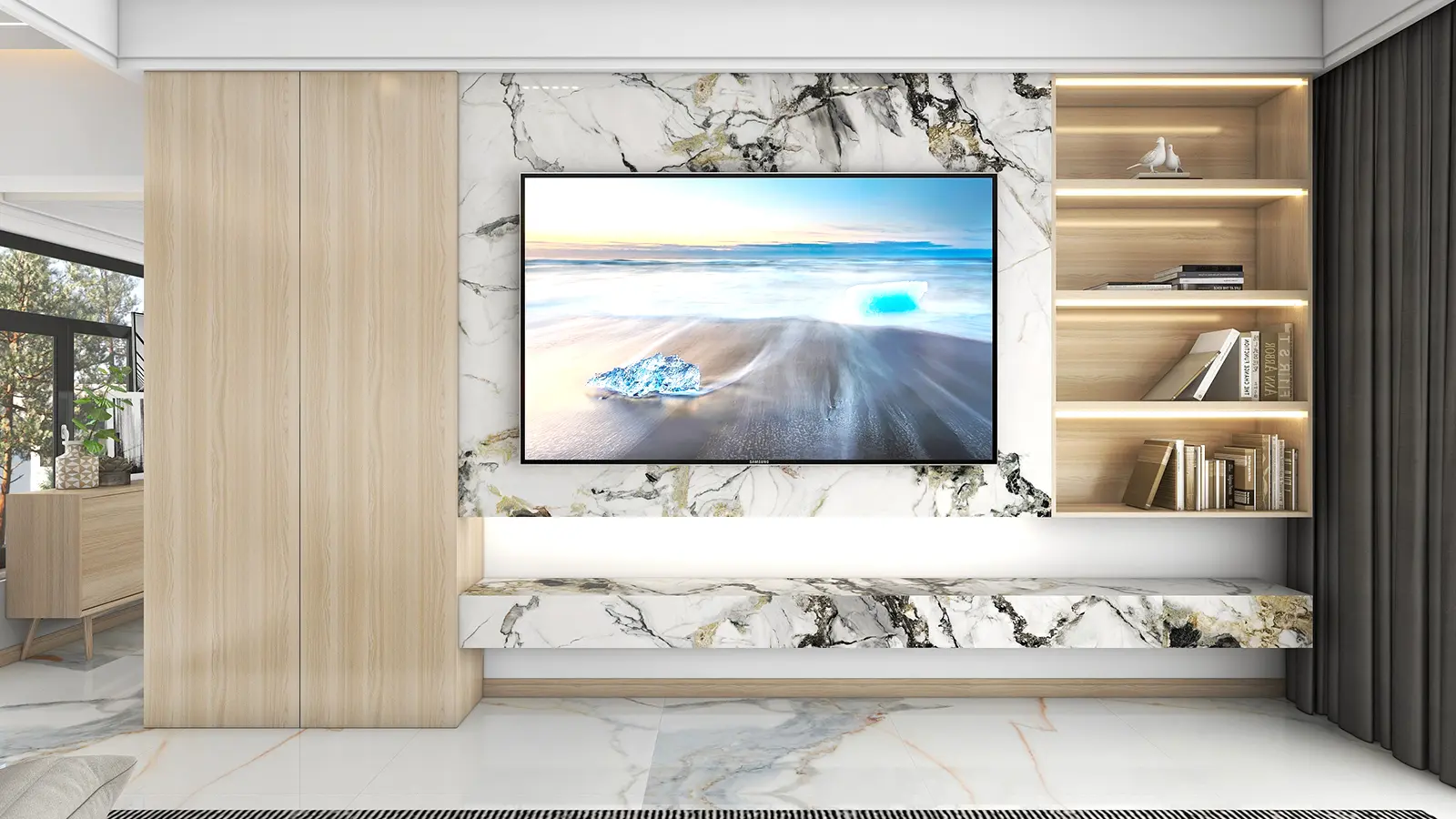
- Residential: Living rooms, media rooms, bedrooms, corridors—particularly where echo is problematic or TV/audio systems are used.
- Commercial offices: Open-plan offices, meeting rooms, breakout areas—where reducing background noise improves productivity and communication.
- Hospitality: Hotel lobbies, restaurants/cafés, retail spaces—both for acoustic comfort and elevated interior styling.
- Public and educational spaces: Classrooms, libraries, auditoria, where speech intelligibility is important.
- Exterior or semi-outdoor: With weather-resistant materials, balconies, covered patios or façades can also use treated slat panels.
Selection and Installation Basics
Design and Specification Considerations
- Material type: Consider frequency performance, moisture exposure, fire rating, durability.
- Finish and texture: Ensure finish aligns with interior design goals.
- Panel size and slat dimensions (if slatted): Slat width, gap, thickness, backing depth all influence look and performance.
- Coverage area: Full-wall coverage isn’t always necessary—targeting key reflection points often suffices.
- Mounting method: Adhesive, screw fixings, clip systems—depending on substrate and permanence.
Installation Tips
- Prepare substrate: wall or ceiling should be clean, dry and level.
- Measure and mark panel grid: ensure consistent spacing and alignment to maintain seamless appearance.
- Choose fixing method: for lightweight panels, construction adhesive may suffice; heavier slatted systems may need mechanical fixings.
- Edge treatment: a trim or molding around the panels gives a finished look and conceals gaps.
- Check acoustic result after installation: walk the space while speaking or playing audio to confirm echo/reverb is reduced.
Maintenance and Care
These panels are generally low-maintenance. Here’s how to keep them looking and performing well:
- Regular dusting with a soft microfiber cloth.
- For stains, a mild detergent with damp cloth (test in inconspicuous area first).
- Avoid harsh chemical cleaners, steam cleaning or abrasive tools especially on wood or composite surfaces.
- For felt or polyester panels: vacuum gently or use low-suction upholstery tool.
- Check that fixings remain secure, especially in high-traffic or public spaces.
Emerging Trends & Market Demand
Acoustic panel use is growing globally, driven by increased focus on indoor sound environments, work-from-home setups, open-plan offices, and hospitality refurbishments.
Trends include:
- Slatted wood or composite panels with minimalist aesthetic.
- Eco-friendly materials (recycled PET, bamboo, sustainable wood).
- Custom printed Acoustic Panels acting as branded wall art.
- Multi-functional panels combining lighting or integrated sensors.
- Prefabricated modular systems for faster installation in commercial builds.
Why Consider Overseas (Including Chinese) Sourcing?
From a procurement standpoint (for wholesalers, distributors or contractors), sourcing panels from China can deliver benefits: competitive pricing, flexible customization (OEM/ODM), high production capacity, and export logistics experience. Factories in China often support custom lengths, finishes and branding packaging—making them attractive for international projects.
However, it remains essential to verify manufacturer certifications (fire rating, VOC emissions, structural compliance), and to ensure clear supply-chain transparency.
Conclusion
In sum, acoustic wall panels represent a smart blend of design and engineering: they enhance interior quality—visually and sonically. Whether you’re outfitting a home theatre, designing a restaurant, or specifying an office refurbishment, the right panels can make a measurable difference. By selecting materials appropriately, aligning installation to acoustic principles and integrating them into your design language, you’ll deliver spaces that look refined and sound better.