
PVC Marble Sheets: Production Process, Benefits, Drawbacks, and Applications Explained
Table of Contents
- Introduction
- Raw Materials & Formulation
- Production Process
- Advantages of PVC Marble Sheets
- Disadvantages & Limitations
- Typical Applications
- Summary & Selection Tips
- FAQ (Sample Questions)
1. Introduction
Marble has long been prized for its elegance and timeless appeal. But in many interior design projects, using real stone can be prohibitively expensive, heavy, and high-maintenance. Enter PVC marble sheets (also called faux marble PVC panels) — a modern alternative that offers aesthetic versatility combined with lightweight convenience. In this article, we explore how Pvc Marble Sheets are manufactured, weigh their benefits and drawbacks, and highlight typical applications to help you decide whether they’re a smart choice for your next project.

2. Raw Materials & Formulation
Producing high-quality PVC marble sheets involves blending a mix of raw materials, each fulfilling a distinct role in achieving both structural stability and decorative effect:
- PVC Resin: The foundational polymer, often in the form of high-purity or suspension-grade PVC, provides the core matrix.
- Plasticizers: To make the resin processable and impart flexibility, manufacturers typically add plasticizers such as DOP (dioctyl phthalate), DOTP, or DINP.
- Stabilizers: Heat and light can degrade PVC during processing; stabilizers like calcium-zinc systems, tin-based compounds, or non-lead systems protect against such degradation.
- Fillers / Extenders: Materials like calcium carbonate are used to reduce cost and tweak mechanical properties, such as rigidity or dimensional stability.
- Pigments & Colorants: To mimic marble patterns, manufacturers use titanium dioxide (for white), carbon black (for dark veins) and oxide-based pigments for varied hues.
- Functional Additives: Depending on performance targets, the formulation might include UV stabilizers, impact modifiers, flame retardants, anti-scratch agents, and so on.
By carefully proportioning and homogenizing these elements, one aims to strike a balance between aesthetics, durability, and cost.
3. Production Process
Below is a breakdown of the main steps in turning the formulated PVC blend into a finished marble-look sheet:
- Premixing / Masterbatch Mixing: All raw materials—resin, plasticizer, stabilizer, fillers, pigments, and additives—are combined in a mixing vessel (often a high-speed mixer or twin-screw compounding line). The goal is uniform dispersion and avoidance of agglomerates.
- Extrusion / Melt Flow: The premixed material is fed into an extruder under controlled heating. As the mixture melts and becomes viscous, it is forced through a flat die to generate a continuous sheet profile.
- Calendaring / Rolling & Embossing: Immediately after extrusion, the molten sheet is passed between heated rollers. At this stage one can emboss surface textures (e.g., stone grain, gloss/matte finish) or apply a printed film to simulate marble veining. This step ensures uniform thickness and surface quality.
- Cooling / Solidification: The textured sheet is cooled via air cooling or water baths to solidify it. Proper cooling is critical to minimize internal stresses and warping.
- Trimming & Cutting: Once cooled, edges are trimmed, and the sheet is cut to designated widths and lengths. Quality tolerances for flatness, edge straightness, and thickness variation are enforced here.
- Inspection & Quality Control: Each batch is inspected visually and via measuring instruments: checking surface finish, pattern clarity, dimensional accuracy, mechanical properties, and absence of defects (bubbles, delamination, warps).
- Packaging & Dispatch: Finished panels are carefully packaged (often with protective film, corner guards, stacking separators) and shipped to customers or distributors.
Over the years, manufacturers have refined each step (e.g., using better extrusion control, improved embossing rollers, online inspection systems) to reduce scrap rate and enhance consistency.
4. Advantages of PVC Marble Sheets
When well made, PVC marble sheets offer a number of compelling advantages over traditional stone cladding. Below are their major strengths:
- Lightweight & Easy Handling: Compared to natural marble, Pvc Panels are extremely light. This makes transportation, installation, and handling much simpler and less labor-intensive.
- Cost Efficiency: Material cost, shipment, labor, and installation time are all generally lower than those associated with stone. This makes PVC marble a popular choice for budget-sensitive projects.
- Waterproof & Moisture Resistant: PVC is non-porous, so these sheets resist water absorption, preventing mold, mildew, or swelling—ideal for bathrooms, kitchens, and humid climates.
- Low Maintenance: Surfaces can usually be kept pristine by wiping with a damp cloth and mild detergent. No sealing or polishing is needed.
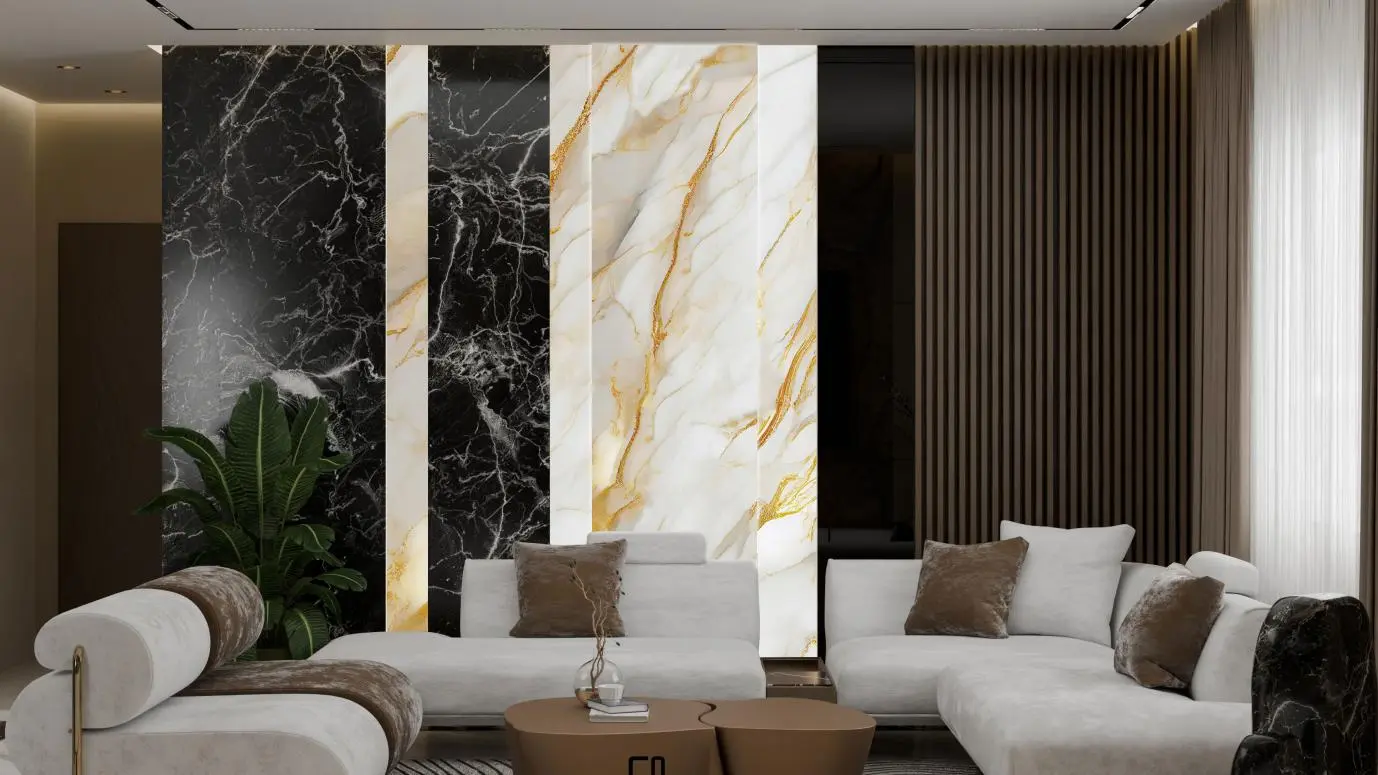
- Design Versatility: Thanks to printed patterns and embossing, a wide variety of stone or marble looks is possible—white Carrara, black marble with gold veins, classic beige, etc.
- Impact & Scratch Resistance (to some extent): While not as hard as stone, many PVC marble sheets can absorb minor bumps or abrasions without chipping like real marble would.
- Ease of Installation: Since the panels are light, they can often be affixed to existing walls (e.g. via adhesives, mechanical fasteners, or interlocking systems). This reduces surface prep and demolition work.
- Eco & Recyclability Potential: Some manufacturers promote the recyclability of PVC-based materials, reducing waste footprint (though real-world uptake is variable).
5. Disadvantages & Limitations
Despite the appeal, PVC marble sheets are not without their drawbacks. Some of their weaknesses include:
- Limited Heat Resistance: PVC softens or deforms under high temperatures. Thus, they are unsuitable for installations adjacent to stoves, fireplaces, ovens, or intense radiant heat sources.
- Surface Scratches & Wear Over Time: Sharp objects can scratch the surface; heavy foot traffic or impact may cause dents or discoloration, especially in lower-grade products.
- Color Fading / UV Degradation: If exposed to direct sunlight or UV light (especially in lower-quality products), the printed surface may fade over time.
- Non-Structural / Load Limitations: These sheets primarily serve as decorative surfacing; they lack structural strength and cannot support heavy loads or serve as load-bearing elements.
- Repair Difficulty: If damaged (deep scratch, crack), repairing PVC marble is often impractical—replacement of the entire panel is more feasible than patching.
- Environmental & Health Concerns:
- PVC production involves chlorine chemistry and may emit harmful substances if not well controlled.
- Disposal is problematic: PVC is not biodegradable, and recycling infrastructure is limited in many places.
- Some plasticizers or additives might raise health / VOC concerns if low-quality formulations are used.
- Perceived Value / Luxury Factor: Even high-quality PVC marbles may not fully replicate the depth, texture, or authenticity of natural stone, which can matter in premium or luxury projects.
6. Typical Applications
Thanks to their balance of aesthetics and practicality, PVC marble sheets find use in many interior settings:
- Bathrooms & Shower Enclosures: Ideal due to waterproof nature.
- Kitchen Backsplashes / Walls: As a decorative, easy-clean surface behind sinks and counters.
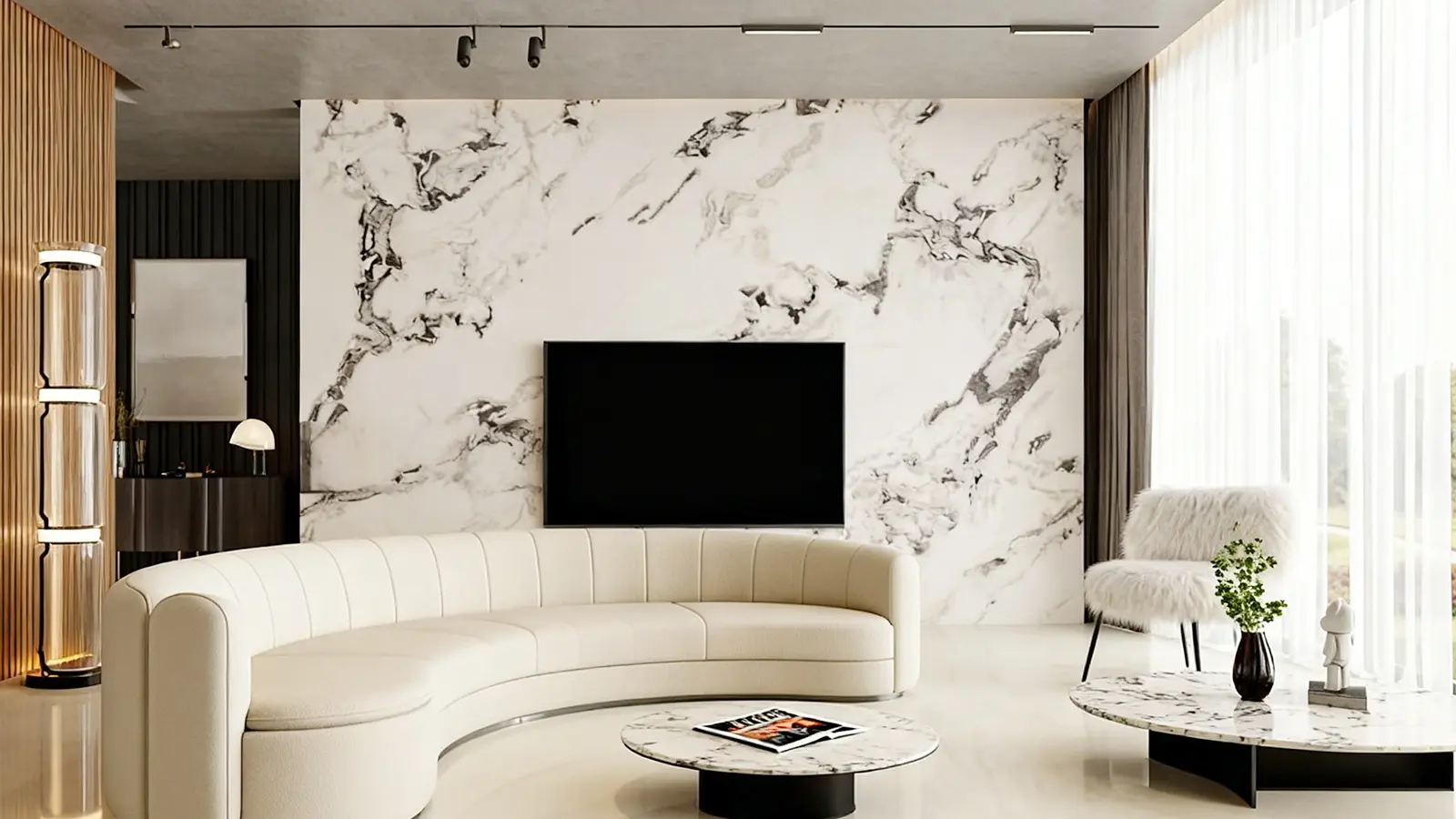
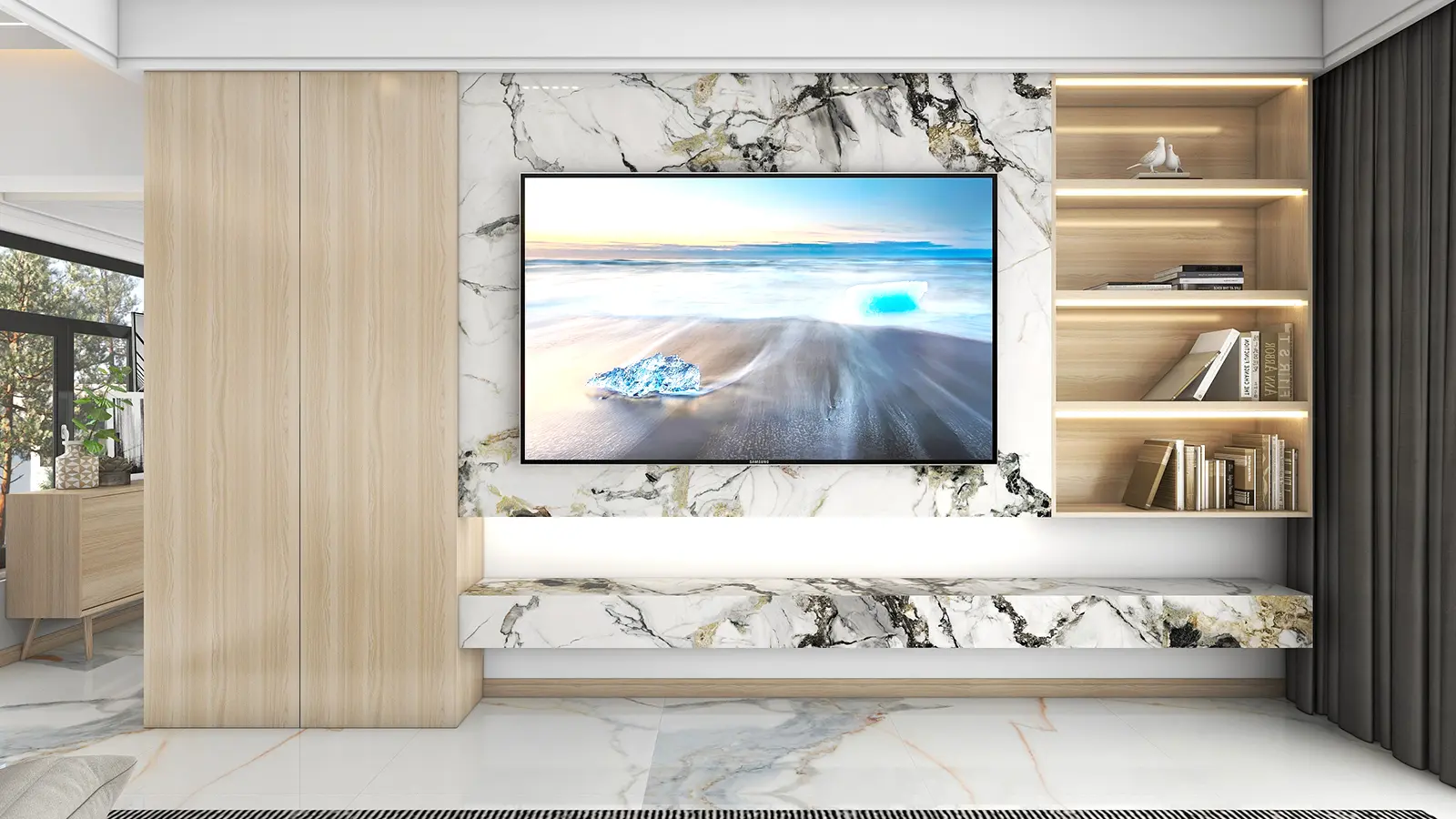
- Accent / Feature Walls: Living rooms, foyers, TV wall panels, ceilings, or decorative columns.
- Commercial Spaces: Showrooms, retail stores, offices, lobbies, restaurants.
- Public / Institutional Projects: Hospitals, schools, hotels—especially in washrooms, corridors, or restrooms.
- Furniture / Cabinet Surfaces: As decorative facing material for cabinetry, counters, or partitions.
Because they are light and non-structural, they are especially useful in retrofit or renovation settings where weight must be minimized.

7. Summary & Selection Tips
PVC marble sheet is a compelling choice for interior decoration when you want a marble look at lower cost, lighter weight, and easier installation. That said, its limitations—especially heat sensitivity, wear over time, and environmental considerations—mean it’s not a perfect substitute for real stone in every scenario.
When to choose PVC marble sheet:
- Projects with tight budgets
- Situations requiring light-weight materials
- Wet / humid locations (bathrooms, kitchens)
- Decorative rather than structural use
- Designs needing customizable patterns or easy installation
What to watch out for / spec carefully:
- Use high-quality UV-stabilized, scratch-resistant grades
- Avoid use near heat sources
- Ensure proper substrate, adhesive, expansion gaps
- Favor suppliers with good environmental / safety credentials
8. FAQ (Sample Questions)
Q1: How long can a PVC marble sheet last?
A: With proper installation and care, interior-grade PVC marble panels may last 15–25 years (or more). But performance depends heavily on UV exposure, impact history, and material grade.
Q2: Can PVC marble sheets be installed outdoors?
A: Generally they are intended for indoor use. Outdoor exposure (sunlight, temperature cycles) can accelerate fading, warping, or degradation.
Q3: Are they flame resistant?
A: Some formulations include flame retardants, but PVC is not inherently as fireproof as stone. Always check fire rating per local building codes.
Q4: Can I glue PVC marble onto any surface?
A: They can adhere to many common substrates (concrete, gypsum board, cement board, existing tiles) if surface is clean, flat, secure, and compatible with adhesives. Use recommended adhesive and allowance for thermal expansion.
