
Discovering PVC Marble Sheets – A Modern Decorative Solution for Walls & Interiors
Table of Contents
- What is a PVC Marble Sheet?
- How PVC Marble Sheets Are Manufactured
- Primary Benefits of PVC Marble Sheets
- Variants & Types of PVC Marble Sheets
- Typical Applications
- Market Trends & Industry Outlook
- Key Considerations When Choosing a Supplier
- Installation & Maintenance Tips
- Concluding Thoughts
In recent years, decorative designers and interior specifiers have elevated PVC marble sheetsto the forefront of modern interior solutions. These innovative panels capture the opulence of natural marble while eliminating many of its inherent limitations. Whether enhancing hotel lobbies, high-end retail spaces, or contemporary residential projects, Pvc Marble Sheets deliver a rare balance of luxurious aesthetics, streamlined installation, and cost-effectiveness that natural stone struggles to match. This guide explores the core definition, manufacturing process, key advantages, available variants, ideal applications, market dynamics, supplier selection criteria, and best practices for installation and maintenance of PVC marble sheets.
What is a PVC Marble Sheet?
At its core, a PVC marble sheet(alternatively referred to as a “PVC imitation marble panel” or “PVC decorative Wall Panel”) is a engineered decorative product designed to replicate the visual appeal of natural marble. The core structure of these sheets typically consists of polyvinyl chloride (PVC) resin blended with calcium carbonate, stabilisers, plasticisers, and pigments in precise formulations. A high-definition marble pattern is applied to the surface via lamination or digital printing, and a protective coating—often a UV-cured layer—is frequently added to enhance durability and refine the surface finish.
Unlike natural marble slabs, PVC marble sheets are lightweight, flexible, waterproof, and straightforward to install. They deliver the prestige associated with natural stone without the structural constraints, logistical challenges, or maintenance demands of genuine marble.
How PVC Marble Sheets Are Manufactured
The production of high-quality PVC marble sheets encompasses three to four critical production phases:
- Raw Material Mixing – PVC resin, calcium carbonate filler, plasticisers, stabilisers, and pigments are blended in exact proportions. This formulation directly influences the finished panel’s firmness, flexibility, and long-term visual stability.
- Sheet Forming (Extrusion/Calendaring) – The compound mixture is processed through extrusion or calendaring to create a flat sheet, which is then cooled and trimmed to size. This stage establishes the base thickness and structural rigidity of the material.
- Surface Lamination or Printing – A decorative film featuring marble veining is hot-laminated to the surface, or the pattern is applied directly via heat transfer or digital inkjet printing. This step imparts the authentic natural-stone appearance.
- Protective Finishing (UV Coating etc.) – A final protective layer—typically a UV-cured lacquer—is applied to enhance gloss or matte effects, improve scratch and stain resistance, and prevent colour fading over time.
Following these steps, the sheets are cut to standard or custom dimensions, carefully packaged, and prepared for shipment.
Primary Benefits of PVC Marble Sheets
Specifying PVC marble sheets over natural stone unlocks a range of practical advantages:
- Visual Realism – Advanced printing and lamination technologies enable precise replication of popular natural stones, including Carrara white, Calacatta, Black Galaxy, grey onyx, and travertine beige.
- Lightweight & Efficient Installation – Their significantly lower weight reduces structural load on walls and ceilings, while installation (via adhesive, mechanical fixings, or clip systems) is faster and less labour-intensive than natural stone.
- Water- and Moisture-Resistance – The inherent waterproof properties of PVC make these sheets ideal for bathrooms, kitchens, spas, and other damp environments, eliminating the absorption risks associated with porous natural marble.
- Low Maintenance – Unlike natural marble, which requires periodic sealing, polishing, and specialised cleaners, PVC marble sheets can be easily maintained with mild detergent and a soft cloth.
- Expanded Design Options & Cost Savings – PVC marble sheets typically cost a fraction of natural marble while offering a broader range of finishes (matte, gloss, 3D textured, fire-retardant) and colourways. This makes them particularly valuable for budget-constrained projects without compromising on aesthetics.
- Design Versatility – With diverse prints and finishes, these sheets complement multiple interior styles—from modern minimalist and classic to luxe glam—and can be installed on walls, ceilings, furniture cladding, backsplashes, and column covers.
Variants & Types of PVC Marble Sheets
Design professionals will encounter several distinct types of PVC marble sheets, each engineered to address specific project requirements:
- Glossy PVC Marble Sheet – Features a high-shine, mirror-like surface, ideal for high-end, glamorous settings such as hotel lobbies and luxury showrooms.
- Matte or Satin PVC Marble Sheet – Offers a soft, non-reflective finish, perfectly suited for minimalist interiors and residential spaces.
- UV-Coated PVC Marble Sheet – Incorporates a hardened surface layer that enhances scratch and chemical resistance, ensuring long-term colour stability.
- Textured/3D PVC Marble Sheet – Embossed to replicate the tactile depth and texture of natural stone, adding dimensionality to surfaces.
- Fire-Retardant PVC Marble Sheet – Formulated with flame-retardant additives or certified to meet specific fire-safety standards, making it suitable for commercial buildings with strict regulatory requirements.
Typical Applications
PVC marble sheets excel in virtually any indoor environment where aesthetics, installation efficiency, and low maintenance are priorities. Common applications include:
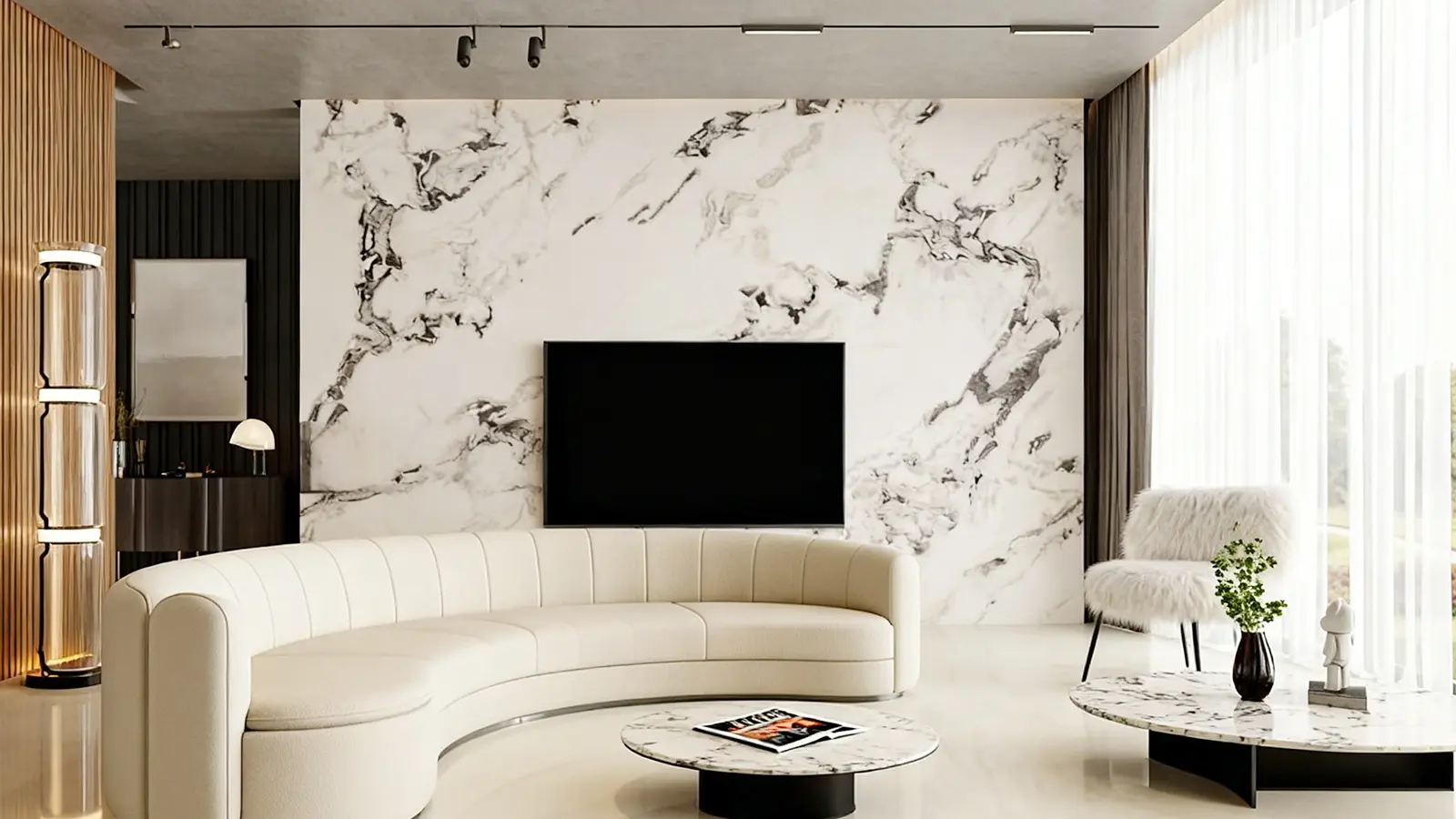
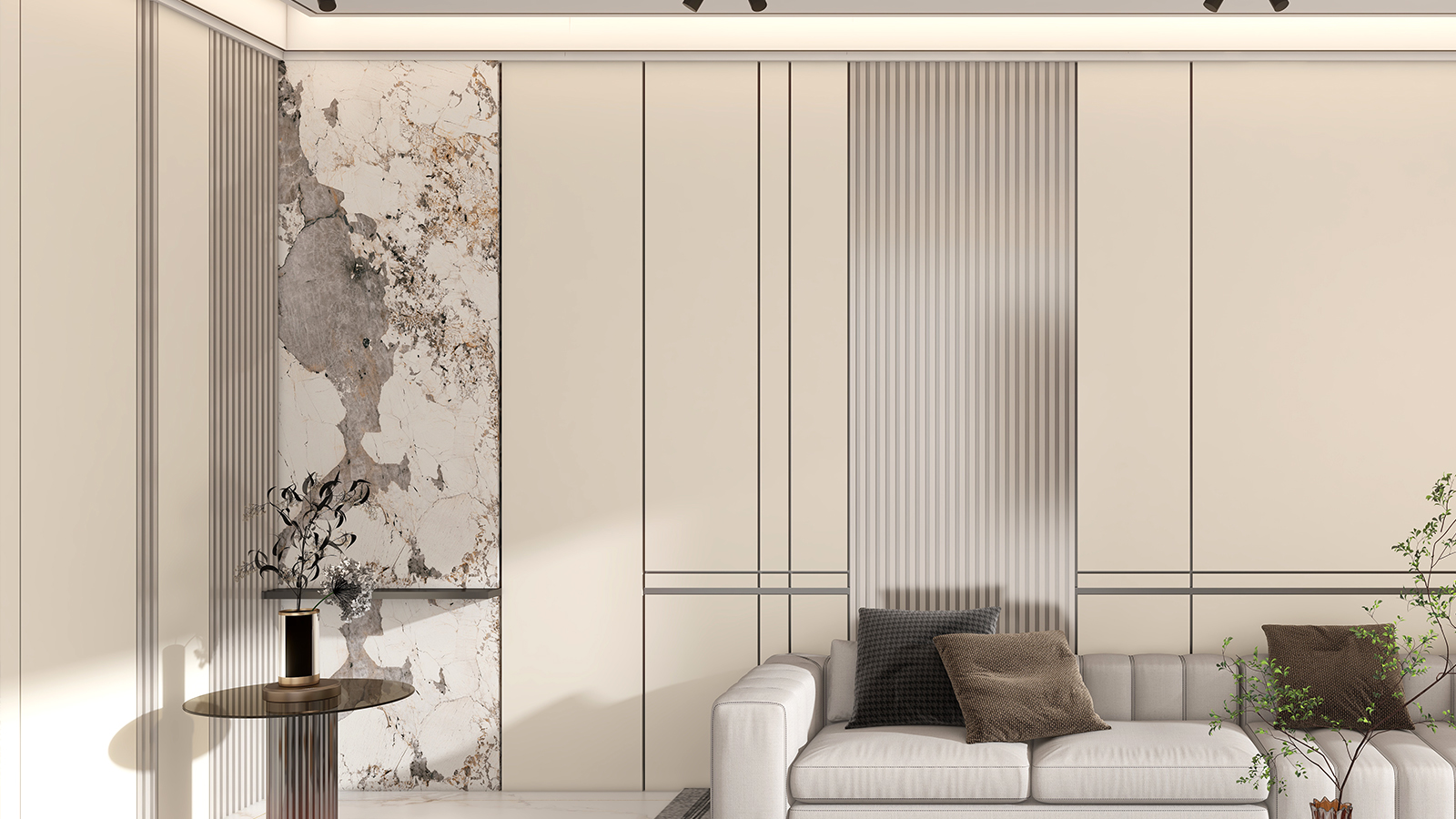
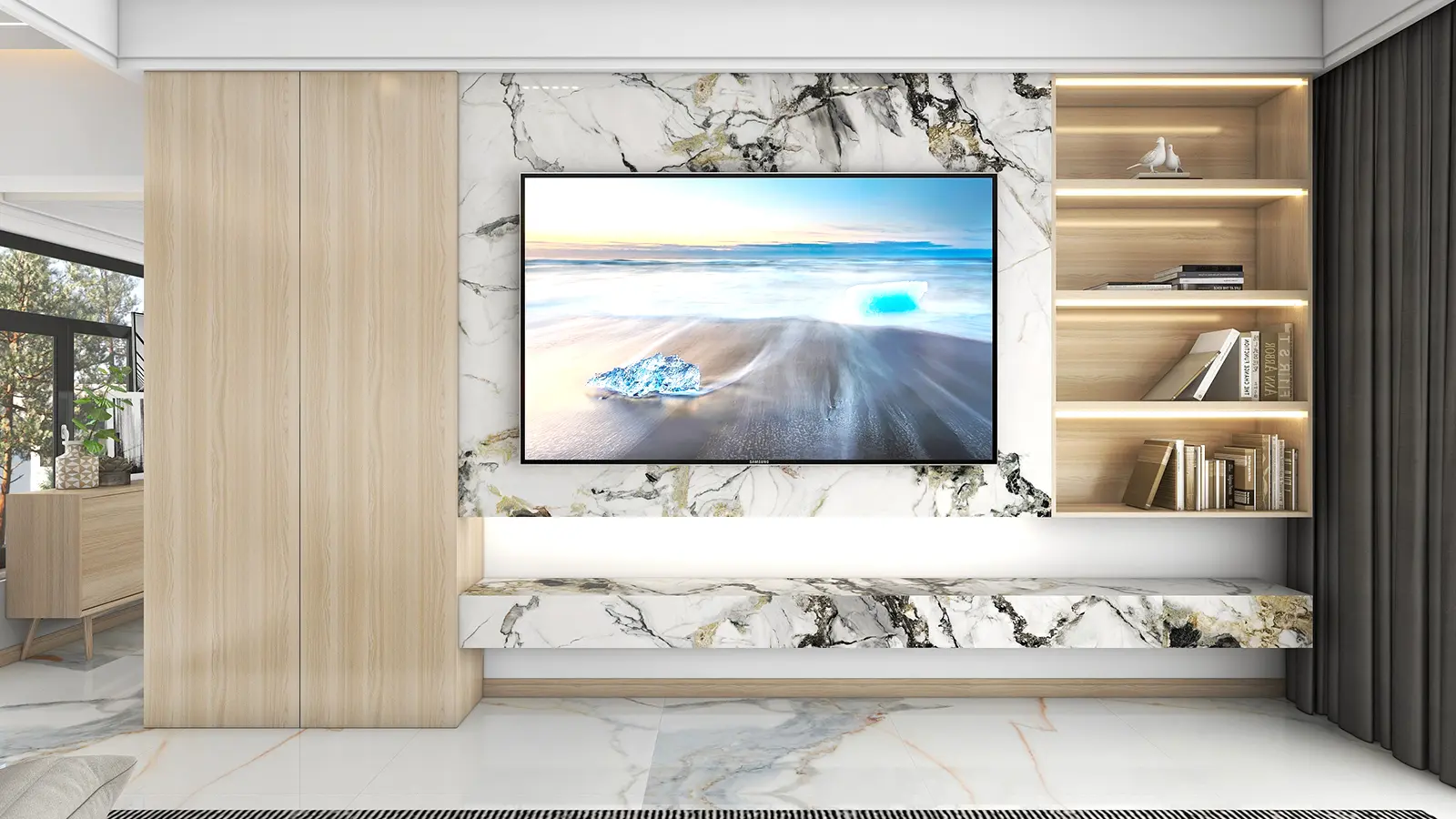
- Residential – Living room feature walls, TV backdrops, bathroom wall cladding, kitchen backsplashes, ceiling panels, and furniture surfaces (tabletops, cabinet doors).
- Commercial – Boutique hotel lobbies, corridors, and guest rooms; retail store wall cladding and column covers; restaurant accent walls and bar fronts; office reception areas and meeting rooms.
- Institutional/Public Spaces – Hospitals, schools, and airports benefit from the sheets’ easy-to-clean properties, durability, and optional fire-safety features.
- Furniture/Fixtures – Wardrobe fronts, shelving, display stands, and counters leverage the high-end stone aesthetic with a lightweight, practical build.
Market Trends & Industry Outlook
The global market for PVC marble sheets is experiencing robust growth, driven by urbanisation, construction cost pressures, rising demand for stylish yet low-maintenance cladding solutions, and advancements in printing and lamination technologies.
Notable trends include: expanded customisation options (custom patterns, private-label solutions), larger format offerings, enhanced fire-retardant variants, and expanded colour libraries—catering to both residential homeowners and large-scale construction firms. As a result, market adoption has surged across Asia, the Middle East, Africa, and Europe.
From a pricing perspective, factory-FOB costs for importer and wholesaler projects vary based on thickness, finish, pattern complexity, and quality grade, typically falling within competitive price brackets.
Key Considerations When Choosing a Supplier
For contractors, importers, and interior designers, selecting the right PVC marble sheet supplier is paramount. Key evaluation criteria include:
- Production Capabilities & Quality Control – Does the manufacturer operate automated extrusion, lamination, and UV-coating lines? Is there consistent quality in thickness and surface finish across batches?
- Raw Material & Certification – Are high-grade PVC resins, non-toxic stabilisers, and pigments used? Do products comply with international standards such as REACH and RoHS?
- Performance Specifications – Verify fire ratings, UV stability, durability, scratch resistance, and moisture resistance against project requirements.
- Customisation Flexibility – Can the supplier accommodate custom patterns, private-label branding, or modified sizes and thicknesses?
- Logistics & Support – Evaluate lead times, sample availability, installation guidance, and packaging quality for safe shipping.
Installation & Maintenance Tips
To optimise the product’s lifespan and performance, follow these best practices:
- Ensure the substrate (wall/ceiling) is flat, clean, and dry prior to installation.
- Use high-quality adhesive or mechanical fixings; incorporate proper expansion joint detailing for large-scale installations to accommodate thermal expansion.
- Seal joints and edges—particularly in wet areas—with compatible silicone to prevent moisture ingress.
- Clean regularly with mild soap and a soft cloth; avoid abrasive cleaners or harsh scrubbing tools that may damage the surface.
- While PVC marble sheets are moisture-resistant, avoid direct contact with high-heat sources (e.g., boilers, fireplaces) as they are not designed for extreme temperature exposure.
Concluding Thoughts
PVC marble sheets stand as a compelling alternative to natural marble, combining the visual richness of stone with the practical benefits of lightweight construction, simplified installation, cost-effectiveness, and design versatility. For both residential and commercial interiors, they deliver a “luxury aesthetic” without the premium price tag or operational complexities of natural marble.
As manufacturing technologies continue to advance and design libraries expand, PVC marble sheets are poised to become an even more integral part of modern architectural finish schemes. For anyone specifying decorative wall solutions, they represent a smart, stylish, and practical choice worthy of serious consideration.