

Creating Quiet Zones in Open Offices: How Acoustic Panels Make Focus and Comfort Possible
Table of Contents
- The challenge of noise in modern offices
- What acoustic panels are — and how they work
- Benefits: From focus to well-being
- Common product types for offices
- How to design an effective acoustic office
- Why partner with a Chinese manufacturing factory
- Conclusion
In today’s workplace design, the focus is on fostering connection — open-plan layouts, team collaboration zones, and spontaneous dialogue. Yet the very features meant to boost collaboration often bring an unwelcome side effect: unregulated ambient noise. When phone calls, printer hums, HVAC systems, and colleague conversations overlap, the workspace shifts from a productivity hub to a distraction-filled environment.
This is where acoustic panels come in. These sound-absorbing solutions are no longer a decorative afterthought — they’re a functional necessity for any modern office aiming to balance interaction with focused work.
In this article, we’ll explore how Acoustic Panels enhance comfort and focus in workplaces, why the science behind them matters, and how factory-based producers (especially in China) with strong manufacturing capabilities can deliver high-quality acoustic panel solutions for global clients.
The challenge of noise in modern offices
Today’s offices prioritize openness and flexibility: shared workstations, glass walls, and minimal partitions. These designs are visually appealing and support teamwork — but acoustically, they often fail. Studies show open-plan offices regularly face excessive background noise, with some research indicating productivity losses of up to 60% in tasks requiring concentration. Without proper noise control, a lively work environment can quickly devolve into one marked by distraction, mental fatigue, and frustration.
Key sources of noise in these spaces include:
- Colleague conversations and phone calls
- Office equipment (printers, scanners) and HVAC systems
- Hard surfaces like glass, concrete, or tile — all of which reflect sound
When sound waves bounce off these surfaces, they create echoes and reverberation, making it harder for employees to focus and communicate clearly.
What acoustic panels are — and how they work
Acoustic panels are sound-absorbing boards or panels crafted from materials such as polyester fiber, mineral wool, foam, or wood veneer. Their purpose is not to fully block sound (that’s soundproofing), but to control sound reflections and reverberation within a space.
When sound waves hit hard surfaces, they reflect and bounce; acoustic panels intercept these waves and convert (or dissipate) their energy into minimal heat via their porous structure. By reducing reflected sound, they moderate background noise and improve speech clarity.
Two key metrics define acoustic panel performance:
- NRC (Noise Reduction Coefficient): Measures how much sound a panel absorbs (scale from 0.0 to 1.0, with higher values indicating better absorption).
- STC (Sound Transmission Class): Evaluates how much sound is blocked from passing through a partition between spaces (higher values mean better sound isolation).
Understanding your space’s specific needs — whether absorption, isolation, or both — is critical to choosing the right panels.
Benefits: From focus to well-being
- Improved concentration and task focus: When ambient noise and reverberation are reduced, employees can engage in deep work with fewer interruptions. Research shows that improved office acoustics can drive significant gains in focus and productivity.
- Better communication and clarity: In meeting rooms or open spaces, cleaner sound (free from echo clutter) boosts speech intelligibility. This leads to fewer misunderstandings, more effective meetings, and clearer virtual or in-person calls.
- Reduced stress and mental fatigue: Chronic exposure to unregulated noise raises stress levels and causes mental fatigue. By refining the office soundscape, workplaces become more comfortable and psychologically restful.
- Enhanced privacy: While acoustic panels aren’t full soundproof barriers, they reduce sound spillover between spaces, making adjacent work zones or meeting areas feel less exposed — a key benefit for shared offices.
- Style combined with function: Modern acoustic panels do more than perform — they elevate design. From wood-slat finishes to colored felt options, they integrate seamlessly with office aesthetics while managing sound.
Common product types for offices
- Wall-mounted panels: Installed on vertical surfaces to absorb sound reflections. Ideal for meeting rooms and open work zones with high ceilings. Available in diverse finishes (fabric, wood veneer, etc.) to match design needs.
- Ceiling baffles or clouds: Suspended from the ceiling, these panels reduce vertical sound reflections and manage noise in large open areas or lobbies.
- Desk partitions or dividers: Dual-purpose panels that act as physical separators between workstations and absorb sound.
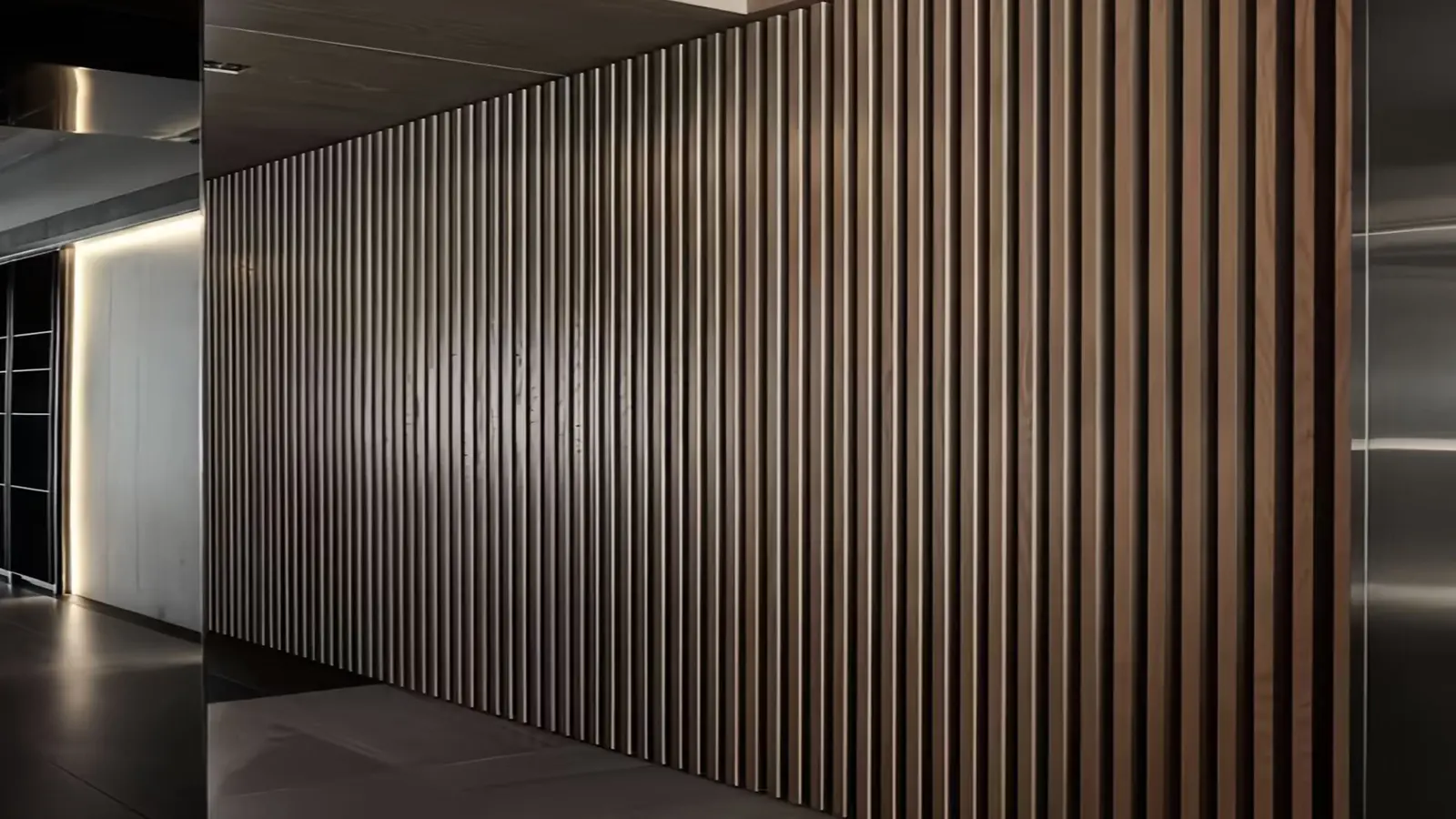
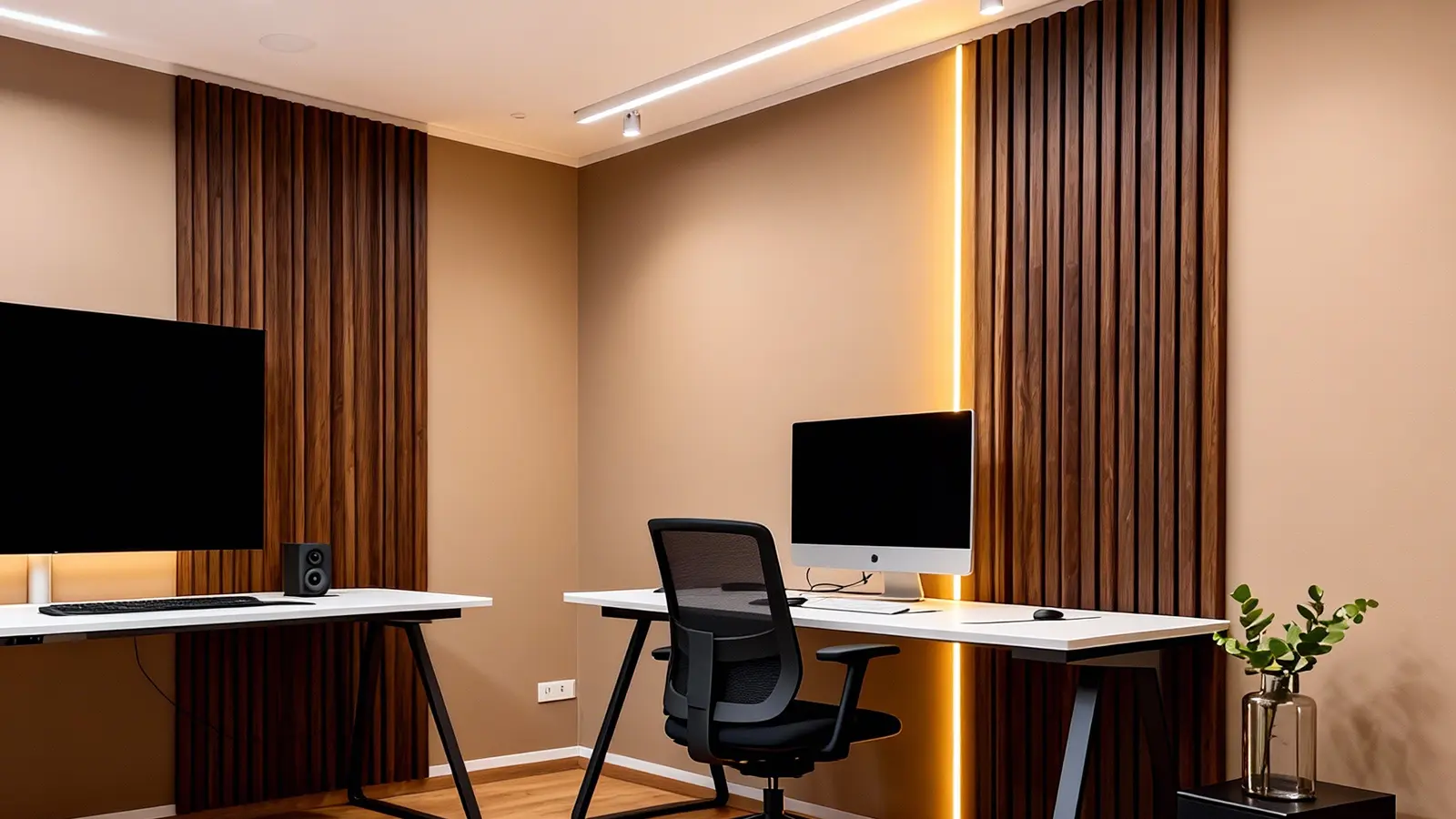
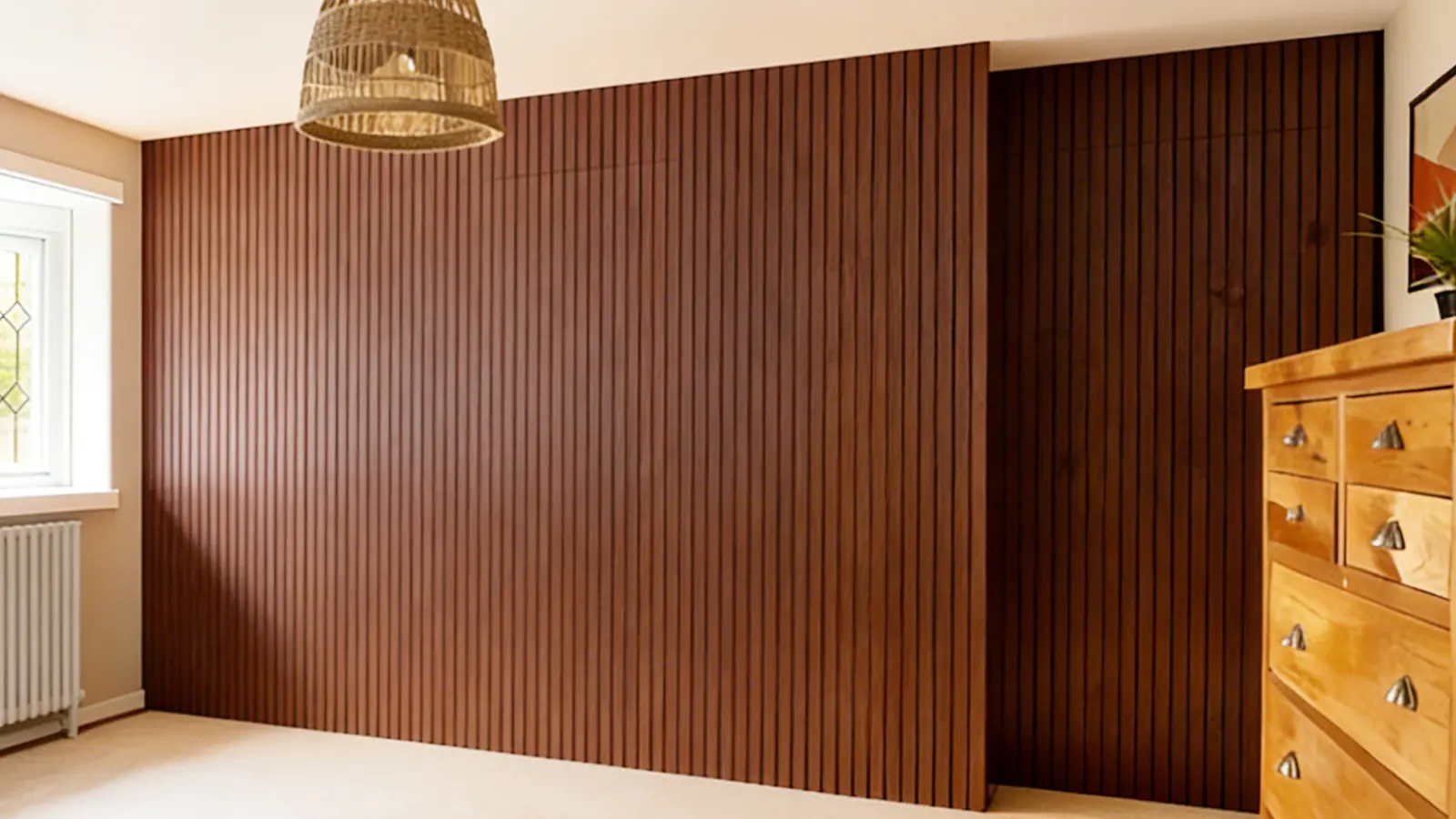
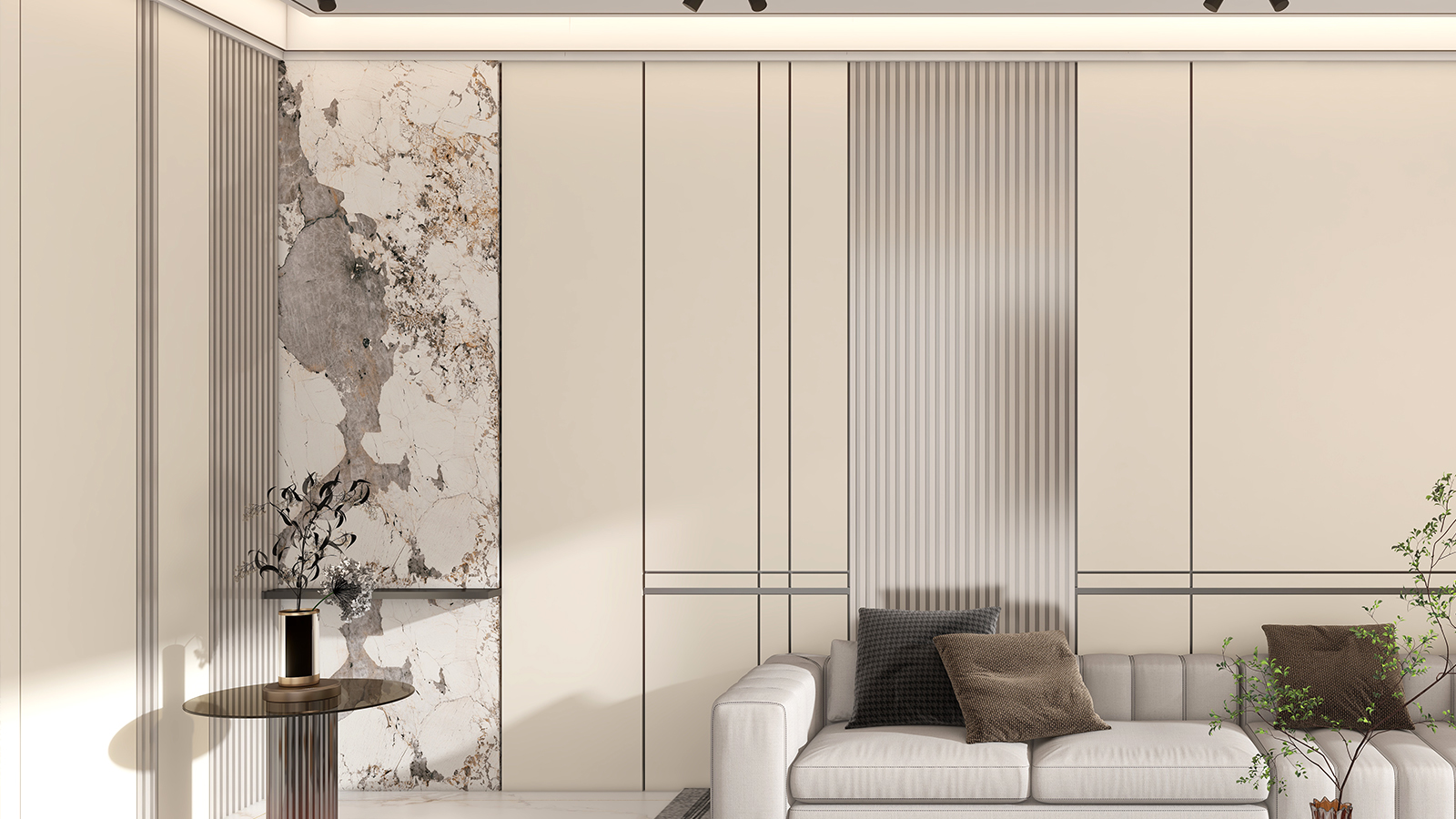
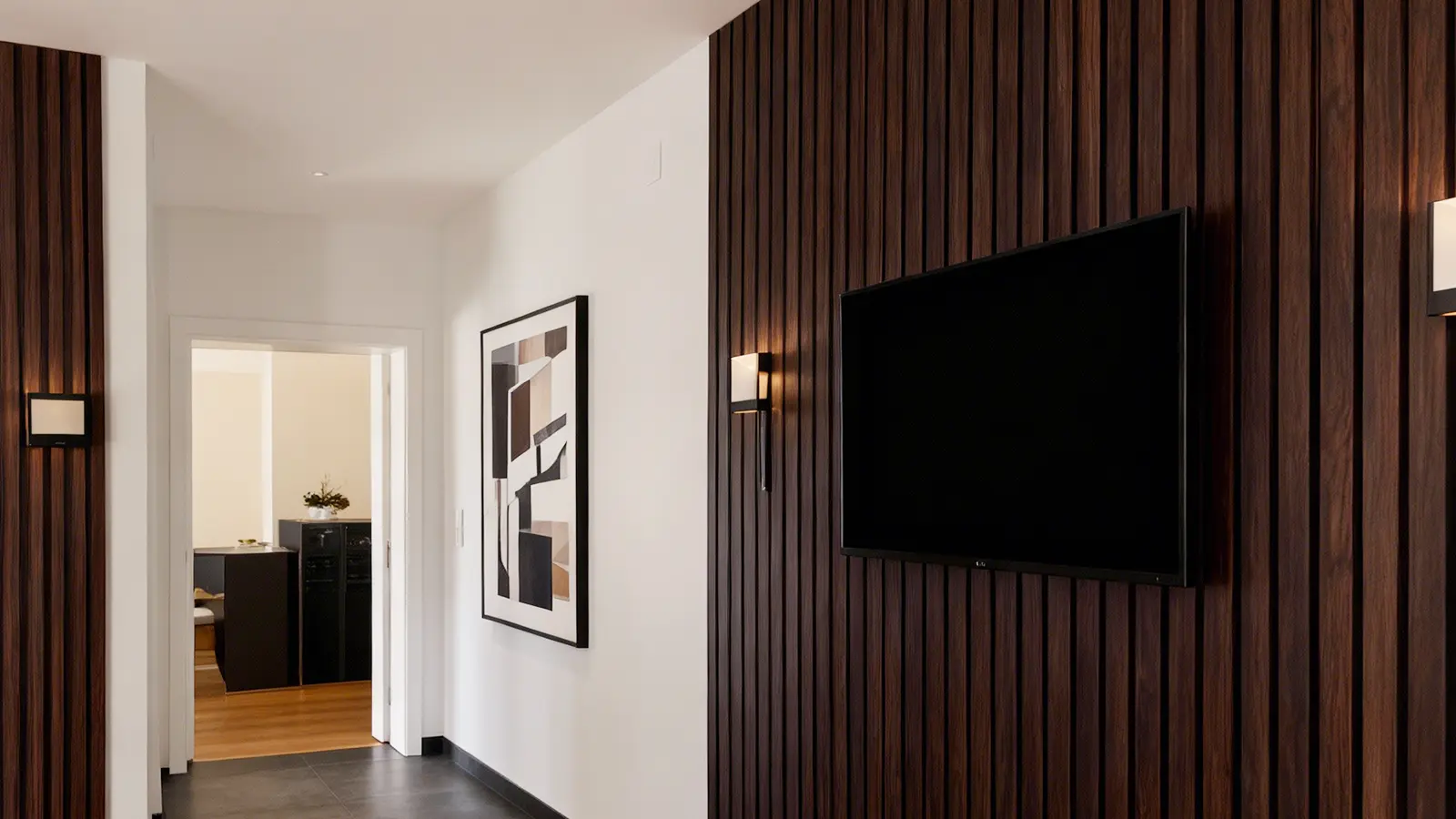
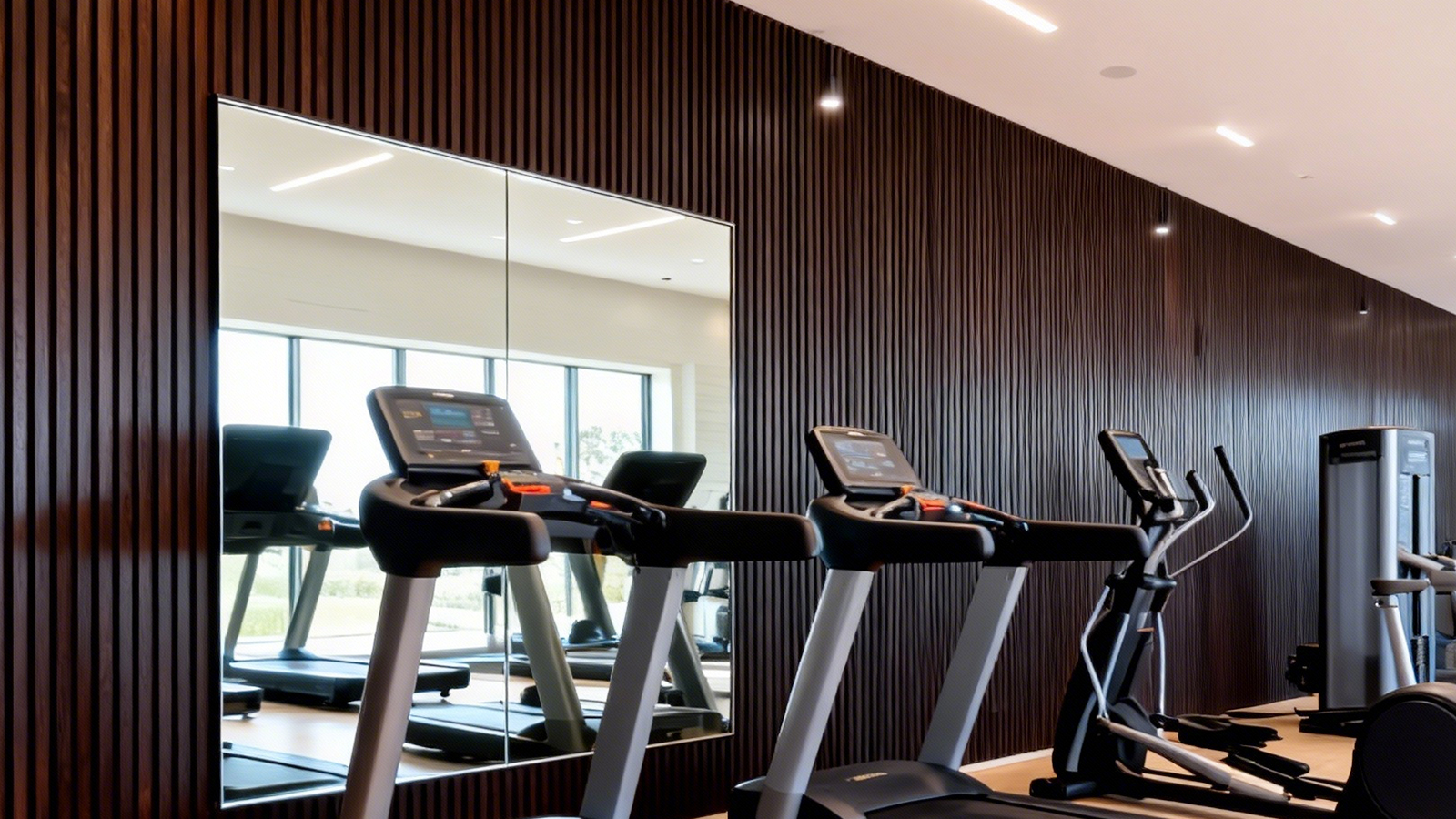
- Decorative wooden slat panels: Blend acoustic performance with natural wood aesthetics, perfect for offices seeking a warm, organic design feel.
How to design an effective acoustic office
- Conduct an acoustic assessment: Before selecting panels, measure reverberation time (RT60), background noise levels, and map key sound-reflective surfaces. This establishes a baseline and identifies priority treatment zones.
- Define purpose-driven zones: Divide the office into functional areas: focus zones (private, high-absorption), collaboration zones (acoustically treated but lively), and meeting zones (where speech clarity is critical). The right materials and placement will vary based on each zone’s needs.
- Match panels to performance and design: Balance acoustic metrics with aesthetics: For heavy mid-to-high frequency absorption, choose panels with an NRC of 0.85–0.95; for design appeal, opt for wood-slat or felt-covered options.
- Prioritize strategic placement: Treating both walls and ceilings yields better results than focusing on one surface — sound reflects from multiple angles. Use desk dividers in open benching areas, ceiling baffles over high-traffic zones, and wall-mounted panels behind noisy equipment.
- Consider sustainability and materials: Select low-emission, recyclable materials (e.g., PET polyester fiber panels) that meet global standards. Effective acoustic design should align with environmental responsibility.
- Plan for installation & maintenance: The factory or supplier should provide technical drawings and mounting guidance. Periodic inspection and cleaning (especially in dusty environments) preserve long-term performance.
Why partner with a Chinese manufacturing factory
- Strong production capacity: A well-equipped Chinese factory can produce tens of thousands of square meters of panels monthly, supported by automated cutting systems and efficient logistics — ideal for large-scale projects.
- Global export expertise: Manufacturers with experience supplying over 40 countries understand global standards (e.g., ASTM, EN), export packaging requirements, and international project management.
- OEM/ODM flexibility: Factories with OEM/ODM capabilities let you customize shapes, patterns, colors, branding, and packaging — enabling local distributors or architects to align with regional design trends.
- Competitive pricing + consistent quality: By working directly with a factory, you avoid middleman markups while accessing factory-level pricing. Reputable manufacturers maintain strict testing standards and quality control processes.
- End-to-end support: From acoustic layout consultation to delivery logistics and after-sales service, these factories offer turnkey solutions — not just product shipments.
Conclusion
Quiet doesn’t mean no sound — it means balanced sound. In offices where focus, collaboration, and well-being are critical, managing acoustics with carefully selected and strategically placed panels is a high-impact investment. Acoustic panels reduce distractions, improve communication, enhance comfort, and support privacy — all while fitting seamlessly into modern office design.
For organizations seeking an acoustically balanced, visually appealing workspace, partnering with a reliable Chinese manufacturer of acoustic panels delivers both performance and flexibility. Whether you’re outfitting a coworking space, a corporate headquarters, or a high-tech meeting room, the right acoustic solution can transform productivity and employee experience.