
Color Trends & Practical Uses of Modern Acoustic Panels in Commercial and Residential Projects
Table of Contents
- Introduction
- Why Color Plays a Key Role in Acoustic Panel Selection
- Most Requested Acoustic Panel Colors in International Orders
- How Professionals Select Panel Colors for Different Types of Spaces
- Common Installation Areas of Acoustic Panels (Based on Factory Export Volume)
- Materials Offering the Widest Color Variations
- Emerging Color Trends for the Next 3–5 Years
- Conclusion
Introduction
Modern architecture has shifted from focusing solely on visual appearance to prioritizing acoustic comfort. Whether in an office, hotel, educational facility, or residential property, sound control is now considered a core part of interior design. At the same time, clients expect acoustic materials to be visually appealing, customizable, and compatible with the overall décor. As a manufacturer supplying acoustic products to North America, Europe, Oceania, and the Middle East, we have observed a strong surge in demand for high-aesthetic acoustic solutions—particularly panels available in versatile colors and design-friendly textures.
This article summarizes the color preferences, applications, and material advantages most sought after by overseas designers and contractors. The insights come from years of factory export data, project cooperation with wholesalers, and feedback from global distributors.
Why Color Plays a Key Role in Acoustic Panel Selection
Selecting the right panel color is no longer a simple decorative choice. Color influences perception, emotional response, productivity, and the overall spatial atmosphere. For acoustic panels—especially those installed on large wall and ceiling areas—the visual effect is immediate and highly influential.
1. Color Impacts Mood and User Behavior
Different colors can enhance a room’s psychological function:
- Warm tones bring energy, which is why they appear in creative studios or youth spaces.
- Cool shades promote calmness, frequently used in training centers and corporate meeting rooms.
- Neutral palettes create a professional and unobtrusive backdrop, ideal for work environments or public facilities.
2. Acoustic Panels Have Become Architectural Features
Today’s acoustic products are part of the interior vocabulary. PET panels, slat panels, and fabric systems are often used as focal points, accent installations, or decorative patterns. Designers prefer colors that blend with cabinetry, flooring, or brand identity.
3. Color Helps Maintain Visual Consistency in Commercial Branding
Many corporate clients require acoustic panels that match:
- Brand colors
- Pantone specifications
- Accent wall tones
To support this, we provide color-matched production and custom color development for large projects.
Most Requested Acoustic Panel Colors in International Orders
Data from our manufacturing output shows clear trends in global color demand.
1. Graphite & Carbon Gray
These shades dominate commercial project requests due to their adaptability.
Reasons for popularity:
- Works with almost all design schemes
- Offers a clean, modern appearance
- Minimizes visible dust and scuffs
Common uses: Workspaces, corridors, large open-plan areas, private offices, and auditoriums.
2. Natural Wood Finishes
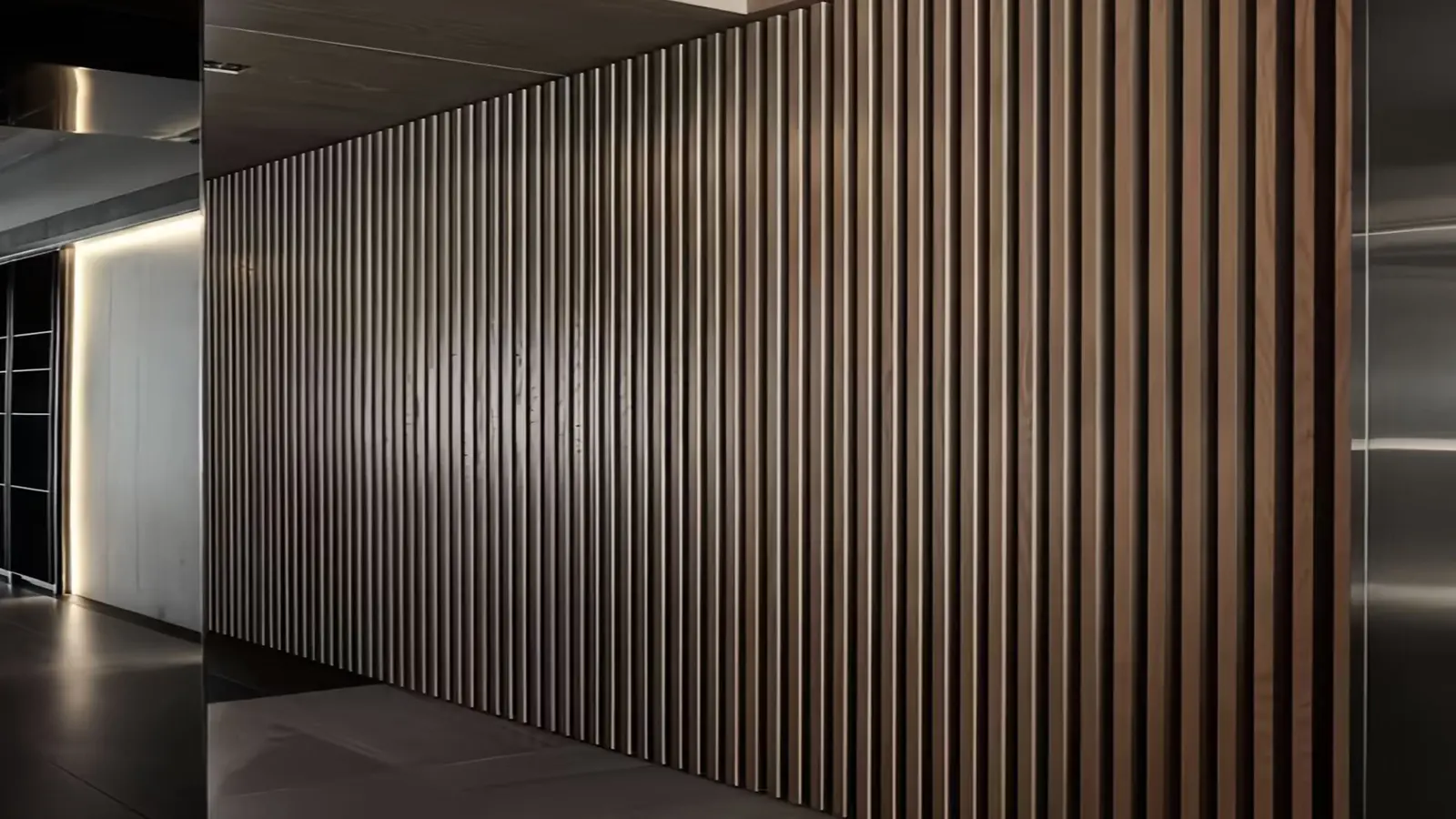
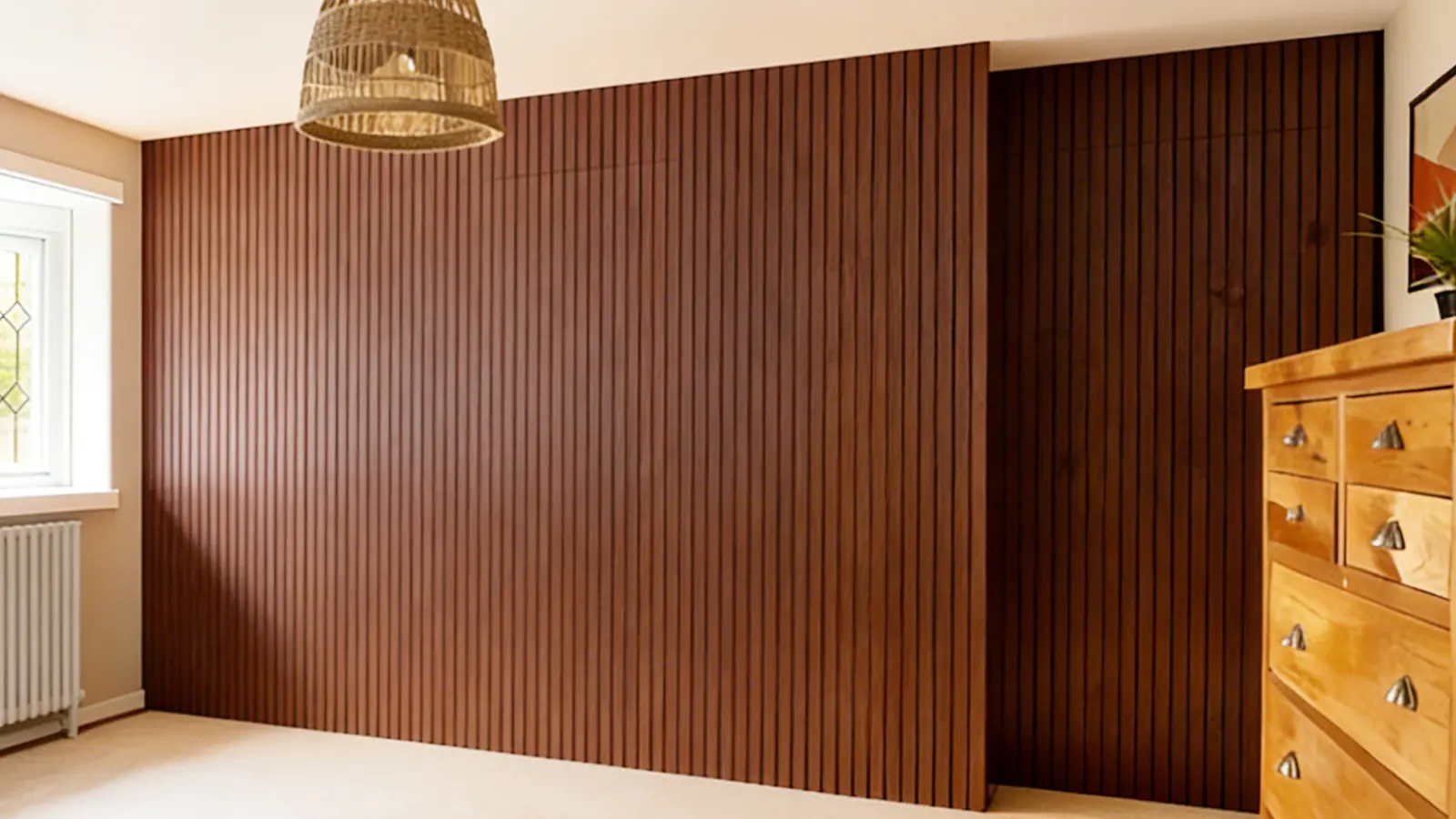
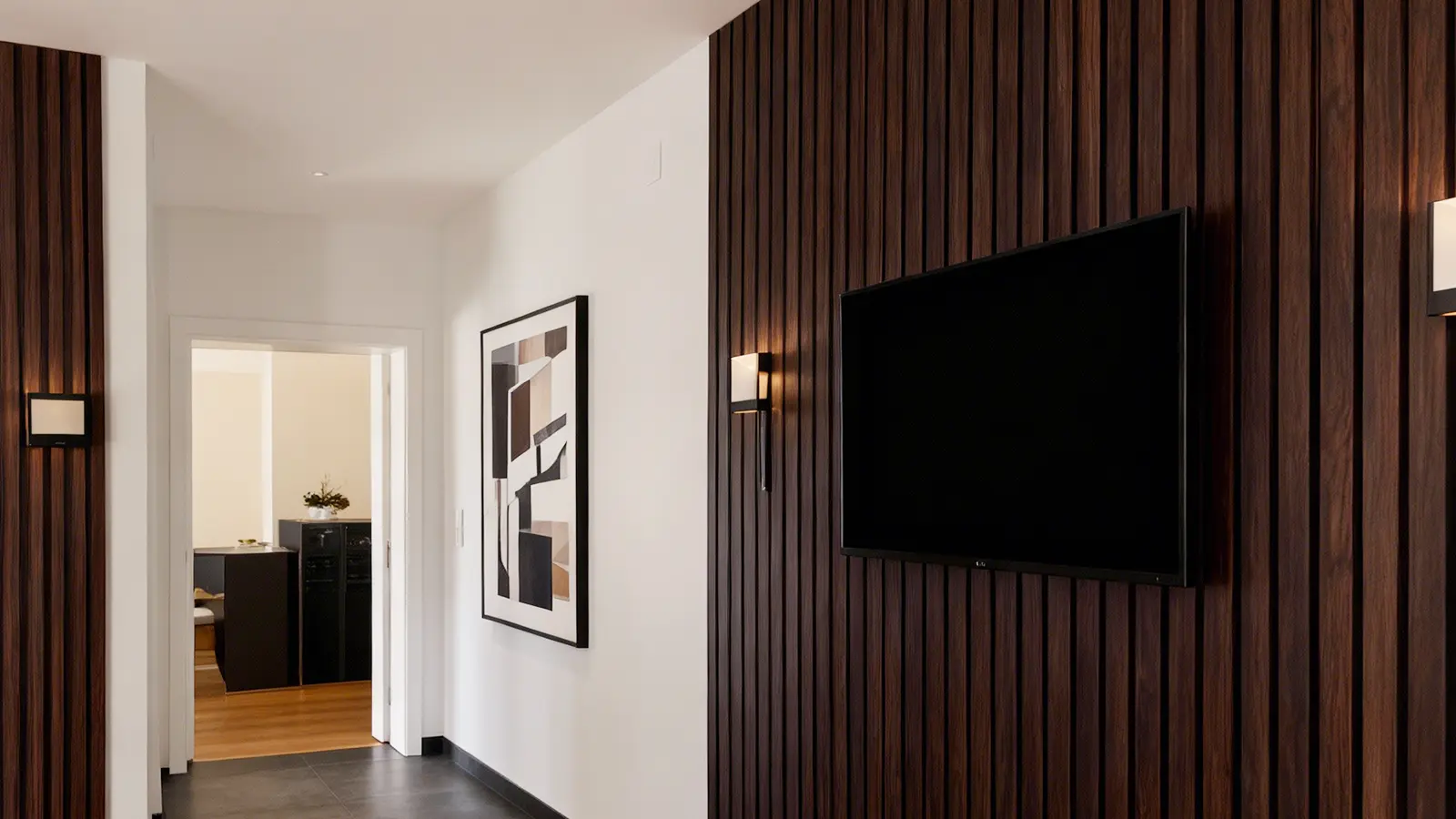
Slat acoustic panels or wood-faced systems in oak, walnut, teak, and maple are favored by interior designers seeking a warm, organic look.
Typical applications: Boutiques, hotels, luxury homes, restaurants, galleries, and high-end retail developments.
3. Light Neutrals (Soft Gray, Mist, Sand)
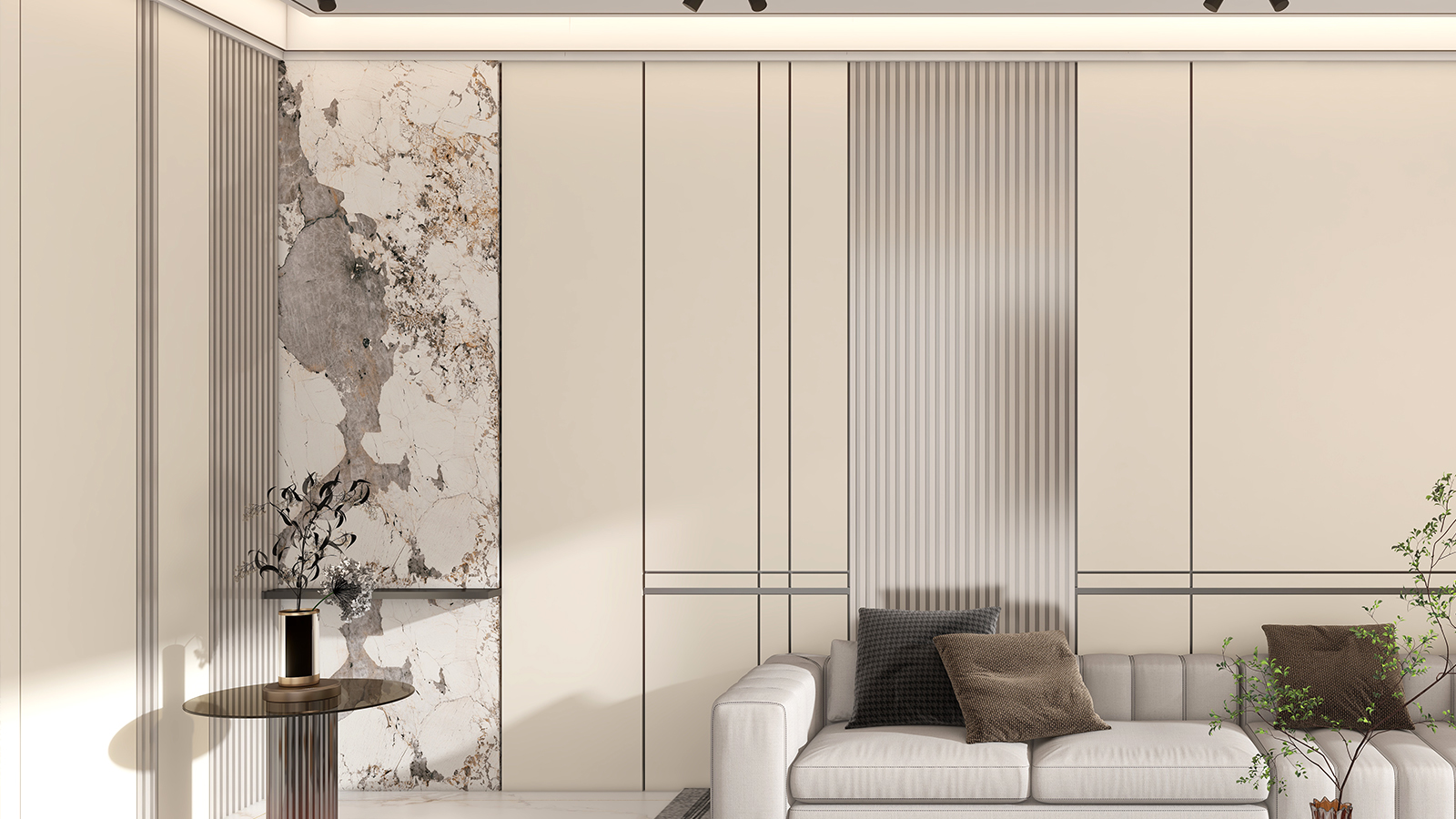
Scandinavian-inspired tones continue to influence global décor trends. They provide a bright, clear backdrop suitable for: Minimalist homes, corporate headquarters, and multipurpose rooms.
4. Navy and Deep Blues
Blue shades remain a strong choice where concentration or calmness is important. Commonly used in: Learning spaces, co-working hubs, clinics, and administrative rooms.
5. Greens Inspired by Nature
Muted forest greens and sage tones align with biophilic design trends. Seen in: Cafés, wellness studios, healthcare centers, and lounge areas.
6. Classic Black
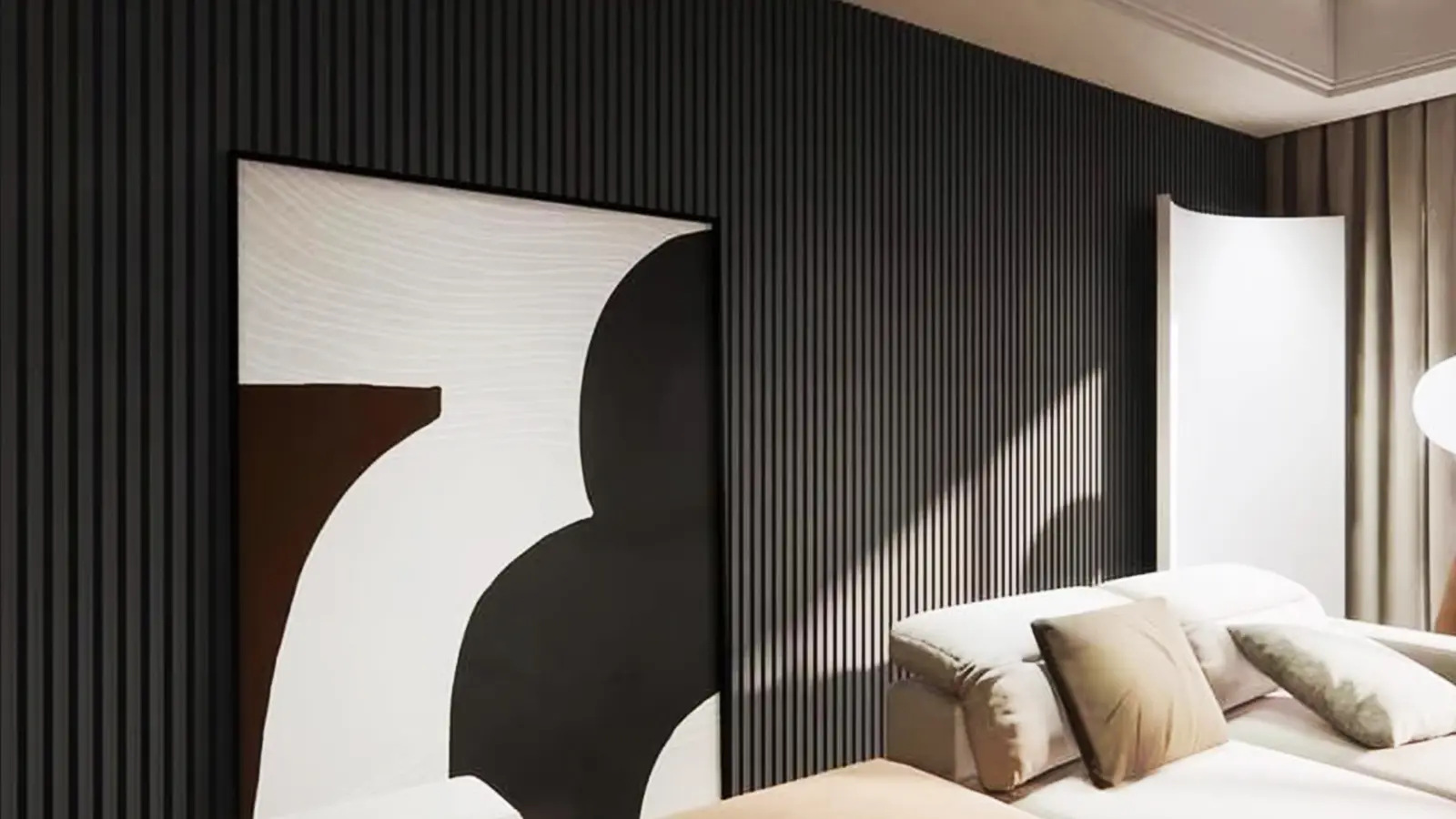
Essential for sound-critical environments. Used in: Home theaters, cinemas, recording studios, live rooms, KTV venues, gaming rooms. Black panels reduce visual distraction and absorb both sound and light.
How Professionals Select Panel Colors for Different Types of Spaces
The ideal acoustic panel color depends on how the space is used, the lighting environment, and the intended visual direction.
1. Selection Based on Function
| Space Type | Recommended Colors | Purpose |
| Corporate offices | Gray tones, muted blues, beige | Focus, professionalism |
| Entertainment rooms | Dark gray, black, wine red | Strong sound absorption, controlled lighting |
| Learning environments | Blue, green, yellow | Boosts motivation and attention |
| Hotels | Wood tones, earth colors | Warm, calm ambience |
| Homes | Soft neutrals, natural wood | Comfort and balance |
2. Matching Architectural Styles
- Modern & Minimalist: black, white, slate, or cool grays
- Nordic: light woods, soft neutrals
- Industrial: charcoal, steel-gray, black
- High-end luxury: rich wood grains, champagne, dark walnut
3. Creating Focal Points
Acoustic Panels are often used to build:
- Feature walls
- Art-inspired patterns
- Layered geometric effects
- Multi-tone compositions
We support CNC cutting, lamination, printing, and mixed-color splicing to achieve these effects.
4. Impact of Lighting
Lighting dramatically changes how color is perceived:
- Low-light rooms benefit from pale tones.
- Bright spaces can handle darker palettes.
- Cinemas should strictly use dark finishes.
We provide sample books to help clients test colors onsite.
Common Installation Areas of Acoustic Panels (Based on Factory Export Volume)
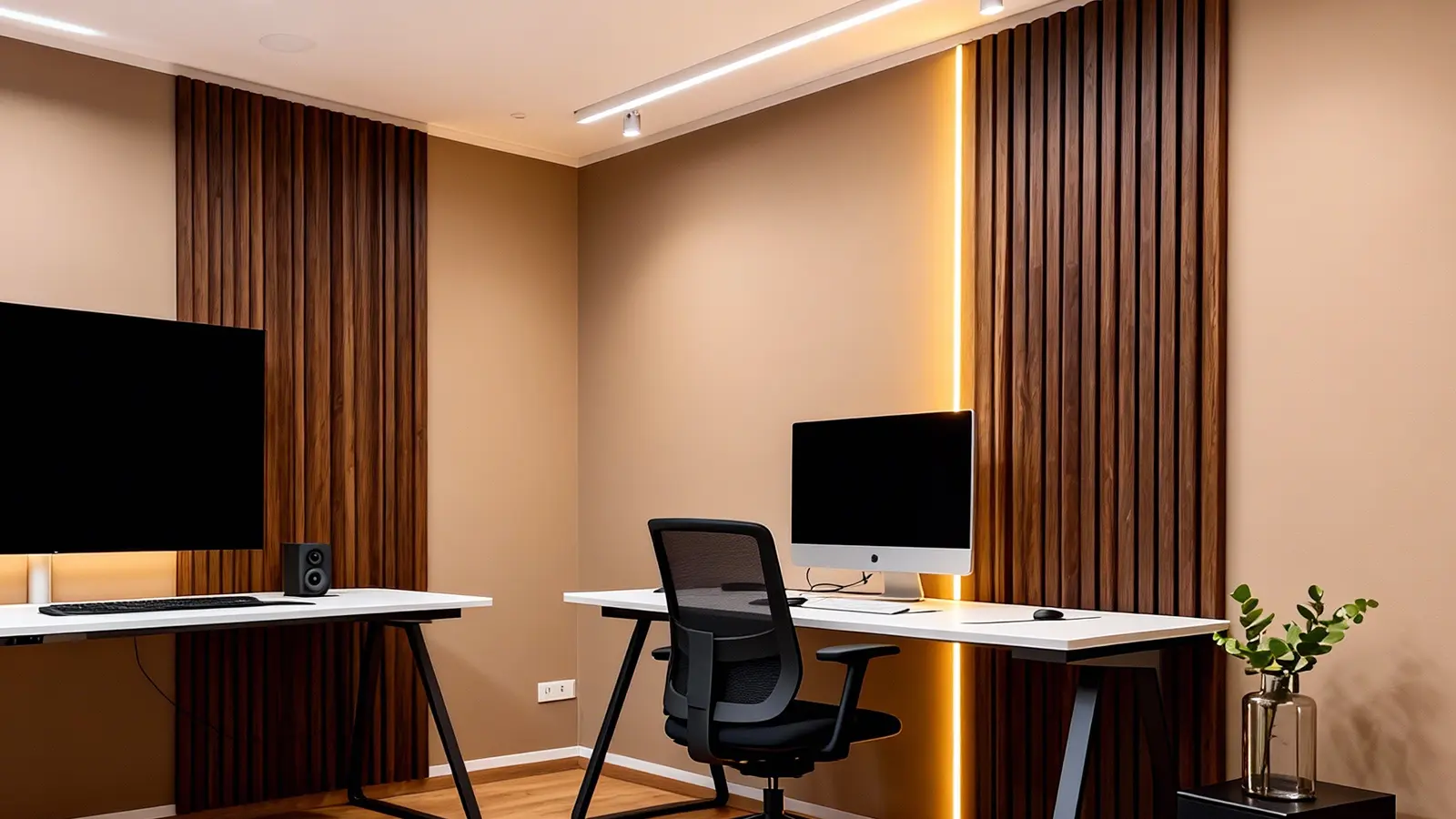
1. Offices and Workplaces
Open-plan offices often struggle with noise from conversations, calls, and equipment. Acoustic panels help stabilize sound levels, making communication easier.
Popular color choices: medium gray, blue, beige, walnut.
2. Hotels & Hospitality Projects
This category prioritizes both quietness and elegant décor. Panels appear in:
- Lobbies
- Guestrooms
- Conference halls
- Restaurants
- Spa areas
Warm woods, gold-tone PU leather, and neutral shades dominate orders to GCC countries and Southeast Asia.
3. Residential Homes & Private Villas
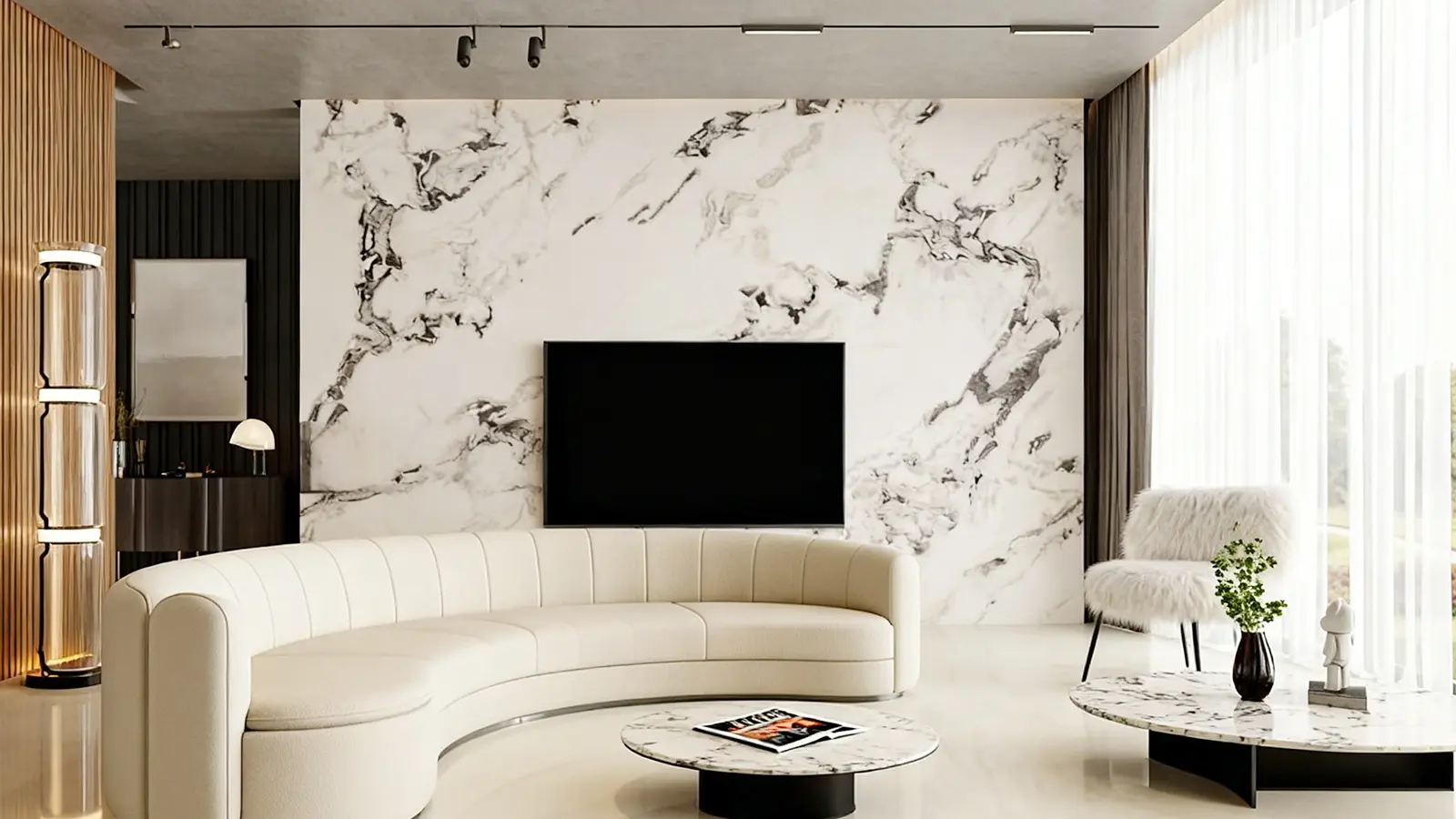
Homeowners use acoustic materials for aesthetic and comfort reasons. Common locations: Living rooms, bedrooms, private cinemas, children’s rooms.
4. Cinemas, KTV, & Audio Rooms
These installations require deeper absorption and darker hues. Popular colors: burgundy, black, charcoal.
5. Educational Buildings
Schools and universities install panels to improve speech clarity. Mainly used colors: blue, green, and light neutrals.
6. Retail, Fitness Centers, and Transportation Hubs
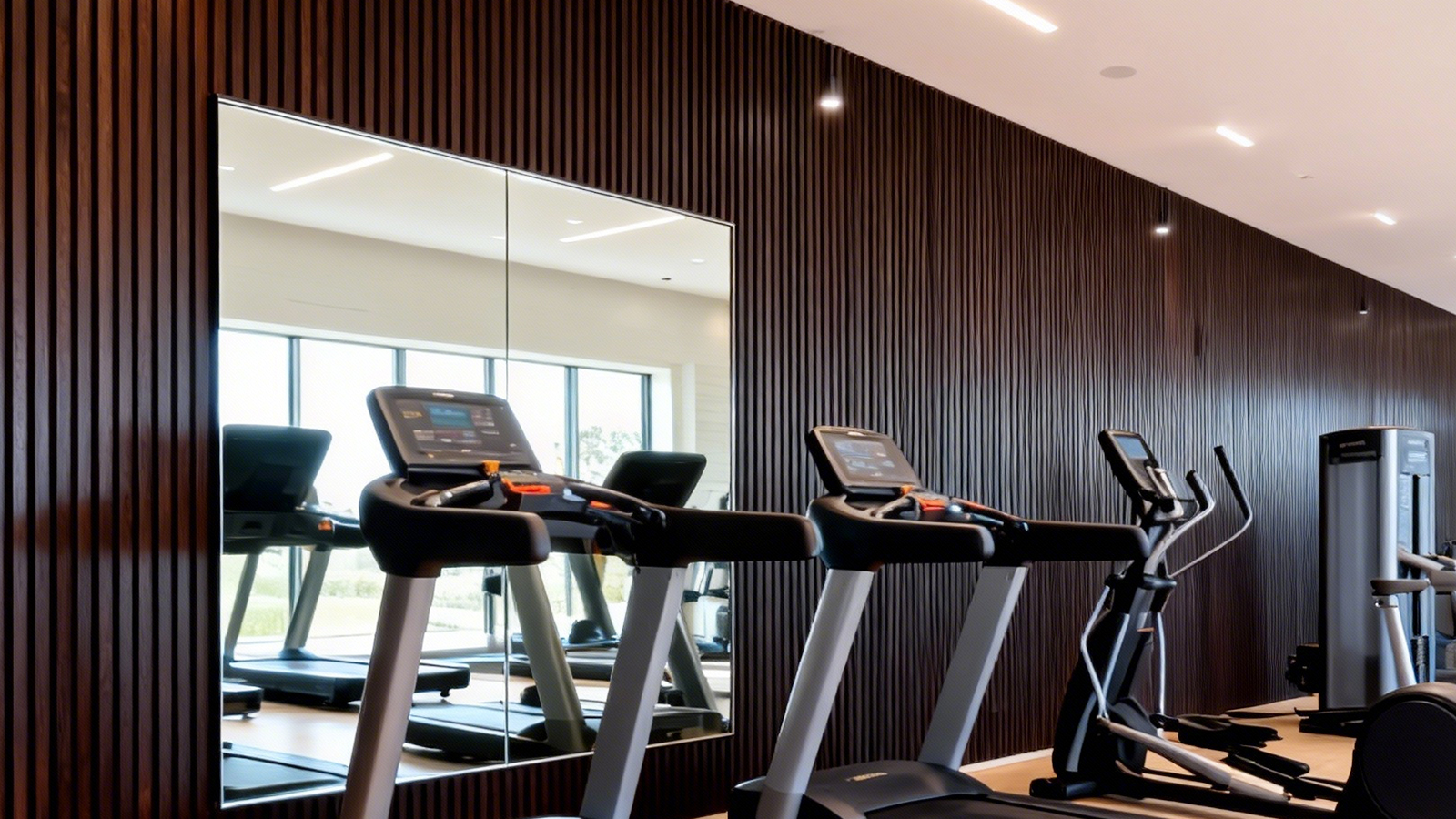
These public spaces demand durability and brand alignment. Most frequently ordered colors: Custom brand colors, grays, and wood finishes.
Materials Offering the Widest Color Variations
1. PET Polyester Panels
- Over 40–70 factory colors
- Custom Pantone available
- Lightweight, durable, eco-friendly
- Suitable for walls, ceilings, and partitions
2. Fabric-Wrapped Panels
- Hundreds of fabric textures
- Premium appearance
- Used in studios, theaters, and meeting areas
3. Wood Slat Panels (WPC or MDF)
- Realistic wood patterns
- High decorative value
- Leading export product for EU, US, UK
4. PU Leather Panels
- Smooth, soft surface
- Good for luxury hotels and clubs
5. Decorative 3D Panels
- Wide color selection
- Ideal for feature walls and creative interiors
Emerging Color Trends for the Next 3–5 Years
Based on global project orders and design forecasts, the next wave of colors includes:
- Natural greens, terracotta, clay, caramel
- Deep charcoal, espresso, navy
- Light oat, mushroom gray, soft white
- Orange-brown, mustard yellow, midnight teal
- Multi-color sculptural designs for offices and schools
Conclusion
Acoustic panels today are both functional and decorative. When chosen thoughtfully, they can transform a space’s visual character while delivering essential sound control. Our factory provides full-color customization, OEM services, and technical support to help wholesalers and project developers meet diverse design requirements.