

Choosing Outdoor Wall Panels: Wood vs. PVC vs. Composite — What You Need to Know
In modern construction and design, choosing the right outdoor wall cladding material has become critical—not just in terms of look, but durability, environmental impact, life‐cycle cost, and performance under harsh weather. Traditional wood, PVC, and composites each have strengths and limitations. This article breaks down the major differences, shows what to look for in high‐quality composite panels, and offers a guide for procurement.
Types of Materials & Basic Definitions
Wood (Solid Timber, Engineered Wood)
Natural timber like cedar, teak, oak, or softwoods such as pine. Engineered wood includes treated or laminated panels that resist some warping or decay.
PVC (Polyvinyl Chloride) Panels
Fully synthetic panels made primarily from plastic (vinyl), sometimes blended with additives. Lightweight, waterproof, often lower cost upfront.
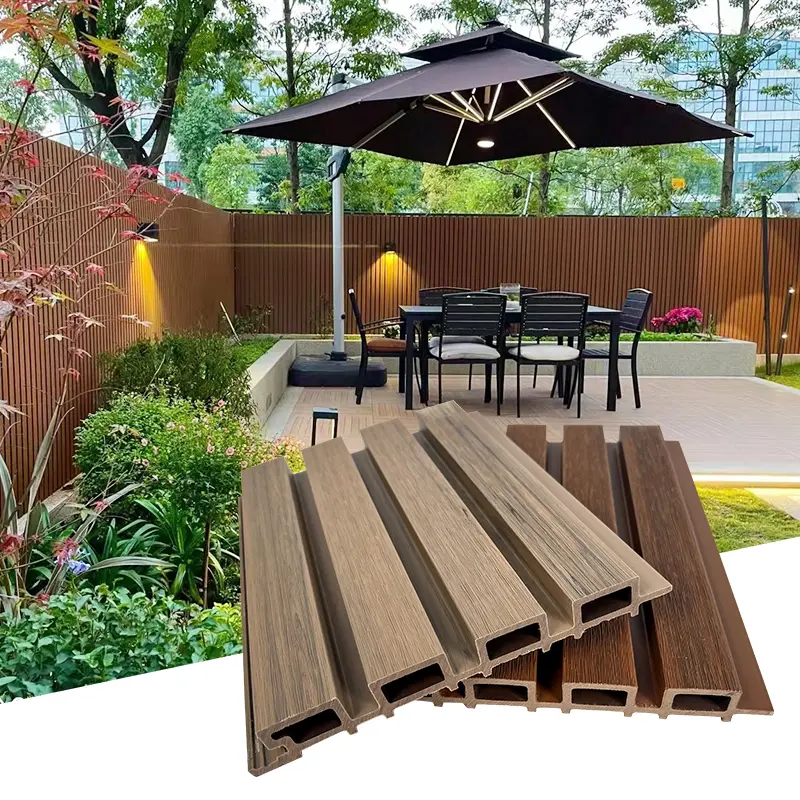
Composite Panels
A broad category. Usually involves a mix of natural fibres (wood powder, sawdust), recycled plastic or polymer resins, and often stabilisers/additives. The term “composite” can encompass wood‐plastic composites (WPC), aluminum composites (ACP), or hybrid panels combining structural layers, coatings, or insulation.
Sustainability & Environmental Considerations
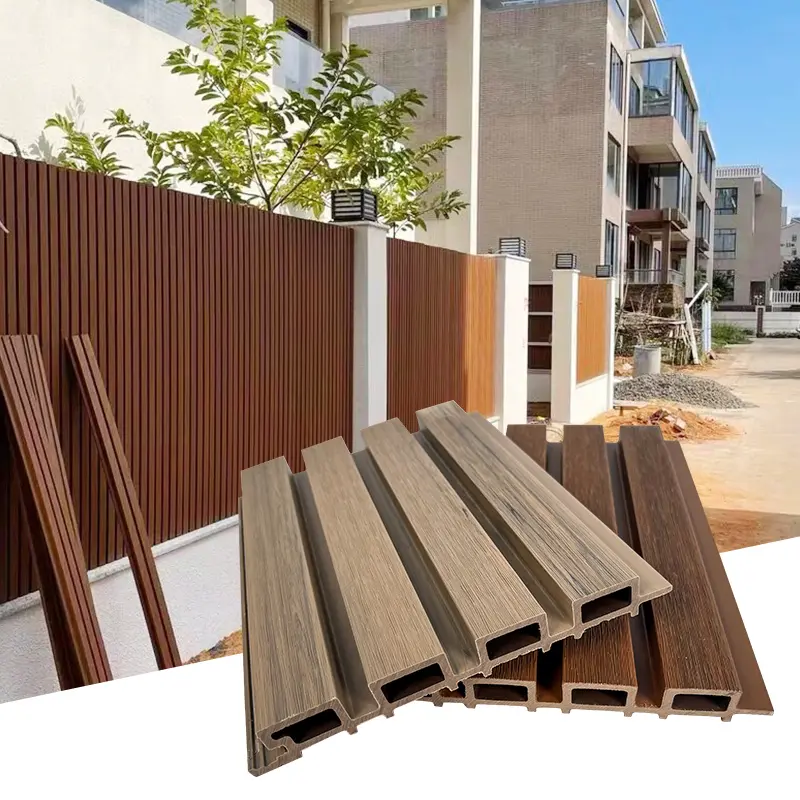
Recent studies and market trends indicate that composite cladding is increasingly viewed as a sustainable option, and for good reasons:
- Recycled Content: Many composites use reclaimed wood fibres and recycled plastic. This reduces waste and demands on virgin materials.
- Lower Carbon Footprint Over Life: Because composites last longer and need less maintenance (less painting, sealing, replacing), their cumulative environmental cost is often lower.
- Reduced Chemical Use: Wood often requires treatments for rot, insect resistance, and finish. Composite panels may already integrate many such treatments, reducing the need for external coatings.
- Insulation & Energy Efficiency: Good panels help reduce energy needed for heating/cooling by serving as extra layers of insulation; also, by preventing moisture ingress, less energy is lost.
- Recyclability & End-of-Life: Highly engineered composites and aluminum composites often can be recycled. Wood (if untreated) is biodegradable; PVC is more difficult, often ends up in landfill or incineration.
What to Look for in High-Quality Composite Panels
If you go the composite route, you’ll want panels that deliver on their promises. Key features include:
- Material Specification
- High percentage of recycled content (wood fibres or plastics).
- Stable polymers—resins that resist UV, moisture, and thermal cycling.
- Fire Retardancy
- Meet local fire-codes (e.g., Class A or equivalent).
- Includes flame retardant additives if required.
- Warranty / Lifespan Guarantees
- Look for warranties of 25-50 years or more.
- Manufacturer support for installation, as poor installation can degrade lifespan.
- UV & Colour Stability
- UV inhibitors, fade-resistant coatings.
- Good colour matching if mixing batches/long runs.
- Physical Size & Customization
- Long lengths / seamless panels reduce joints.
- Variety of widths, thicknesses; ability to replicate textures.
- Certifications
- CE, ISO, SGS or similar depending on region.
- Environmental certifications (LEED, BREEAM, WELL, etc.).
- Packaging & Supply Chain
- Proper export packaging to prevent damage.
- Knowledge of logistics, customs, handling.
Common Myths & Misconceptions
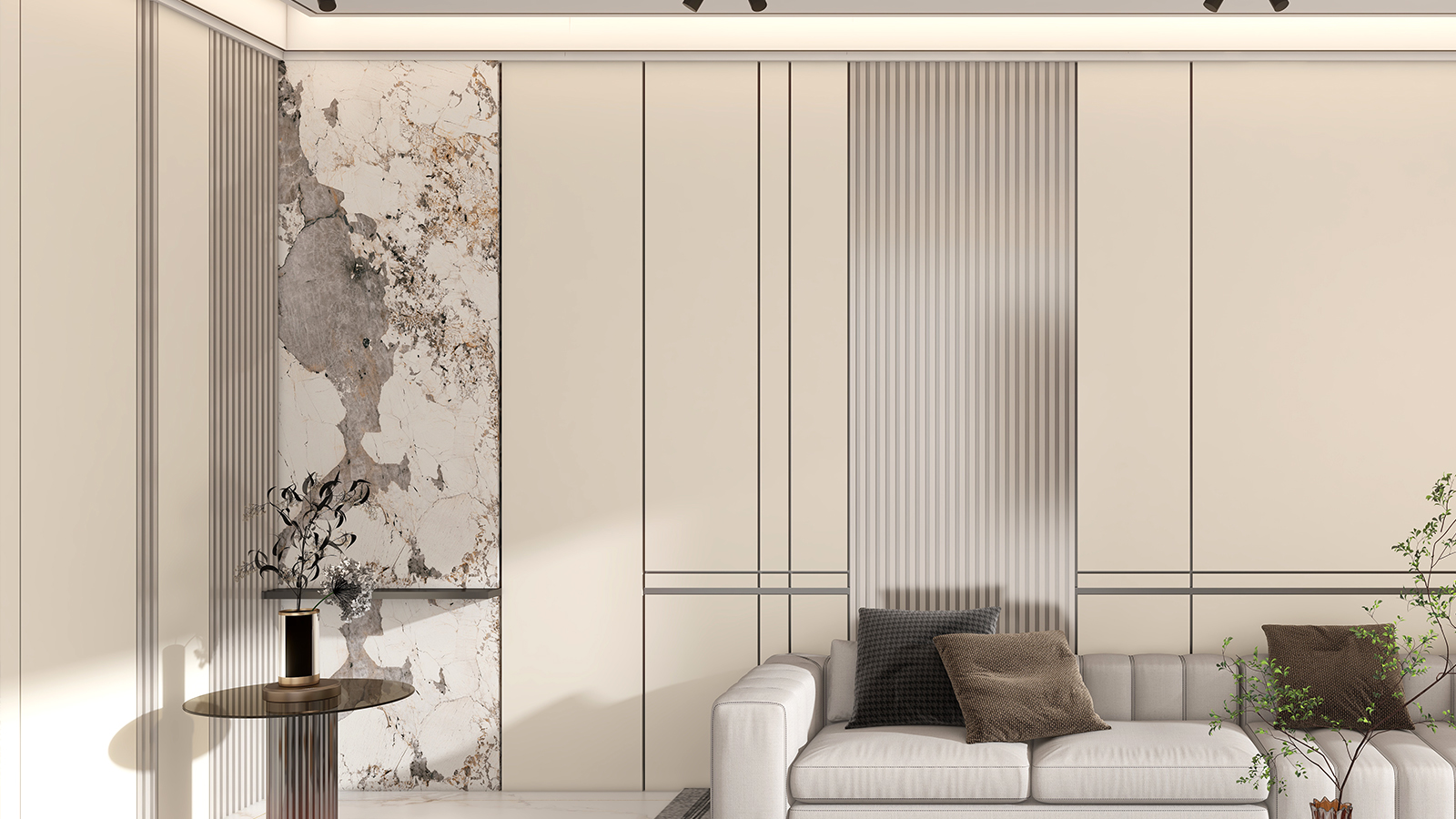
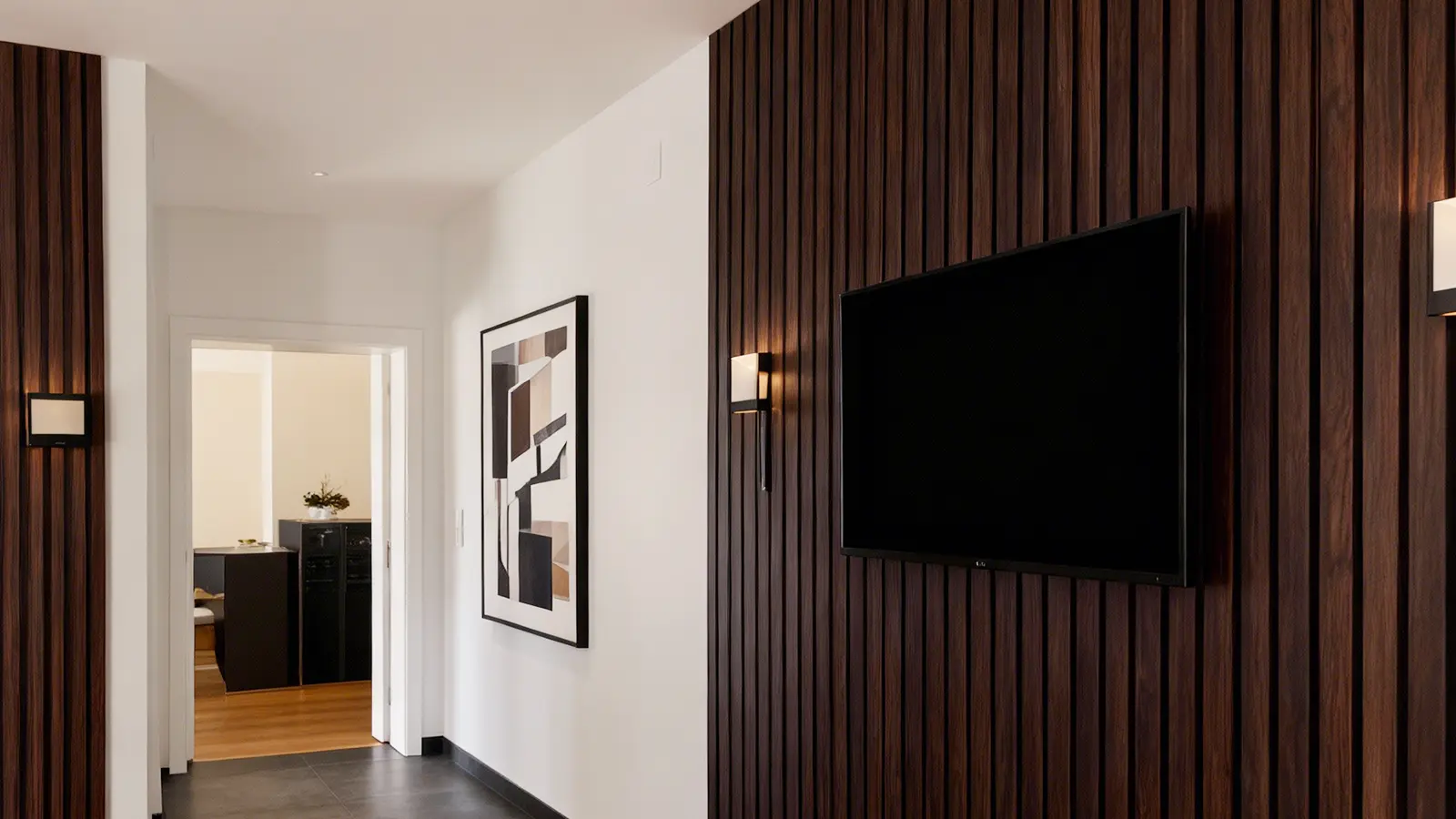
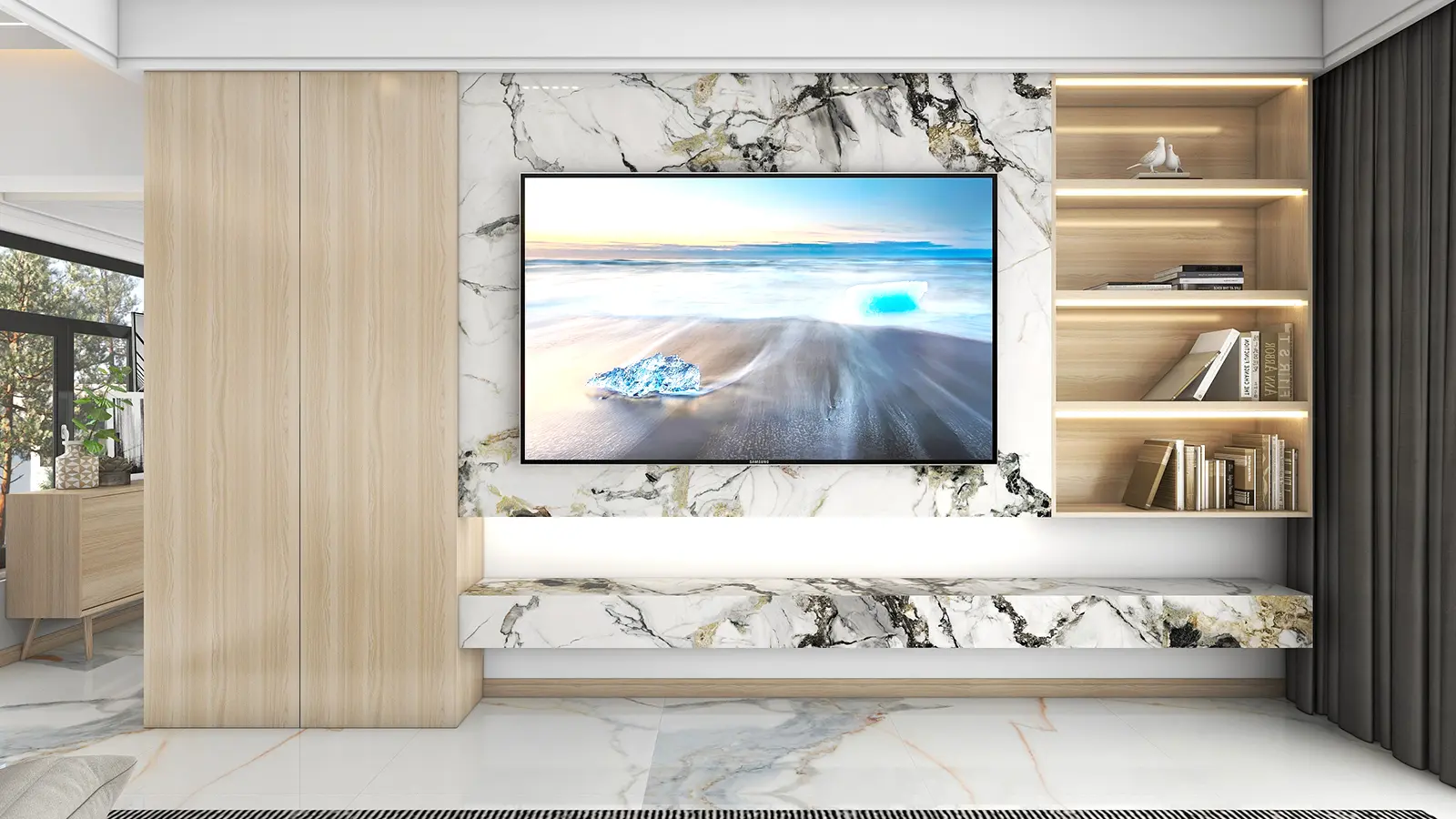
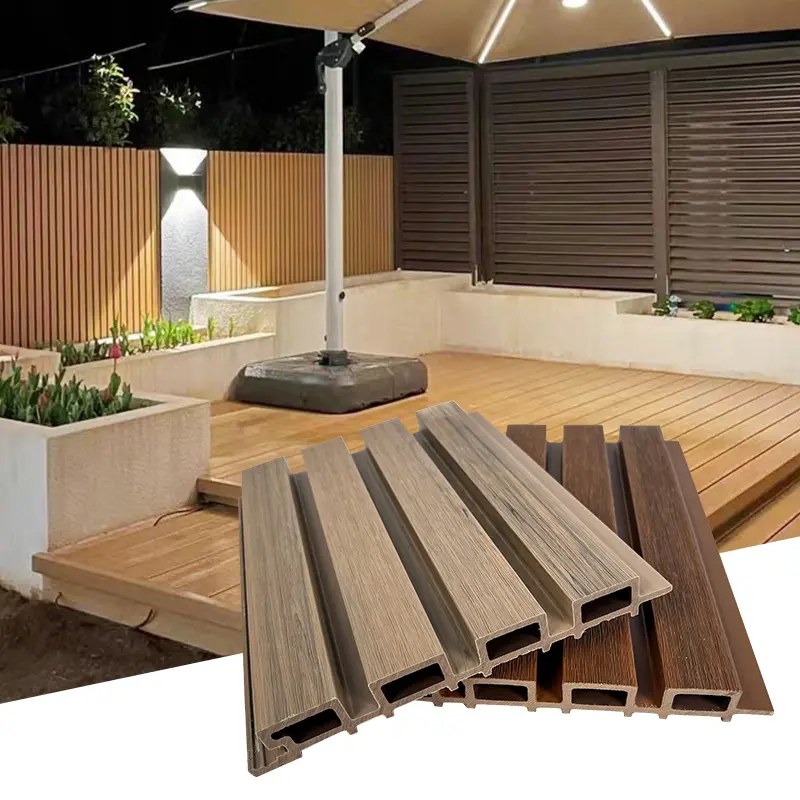
- Composite panels are plasticky or fake looking: Modern high-end composites mimic wood or stone quite convincingly. Finishing textures and digital printing help.
- PVC is always cheapest: Sometimes yes, upfront. But if UV fade, thermal warping, or maintenance costs occur, total cost over time may be higher.
- Wood feels more “premium”: That’s subjective. Many composites now deliver high aesthetic quality and add benefits outweighing those of untreated or poorly maintained wood.
- Sustainability always means wood: Not necessarily. Unsustainable logging, chemical treatments, and shorter lifespan can make wood worse in environmental terms than composites with recycled content.
Global Buyers’ Procurement Guide (Three Key Steps)
To avoid pitfalls and get best value if you’re buying for a large project (residential, commercial, resort, etc.), follow a pipeline like this:
- Sample & Specification
- Request real physical samples: minimum three panels if you want to test colours, texture, and how they weather under sun/moisture.
- Define the full specifications: maximum dimensions, wall module sizes, thickness, texture type, surface finish, UV/coating treatments, flame retardancy, insulation performance, weight load.
- Factory / Manufacturer Vetting
- Check for certifications: ISO, SGS, CE etc.; environmental credentials (e.g. evidence of recycled content, life-cycle analysis).
- Review manufacturing facilities: robotic cutting, quality control, packaging.
- Export/logistics capability: ability to handle customs, container loading, crating to protect during transport.
- Logistics, Installation & Support
- Lead time: verify how long production takes and shipping schedule.
- Freight costs, customs, insurance for international delivery.
- Installation guidance: do they provide instructions, remote support, or even in-person help?
- Warranty / after-sales: what’s covered, how long, what kind of maintenance is needed.
Where to Buy / What to Ask Suppliers
If you’re a contractor or buyer sourcing internationally (for example, from factories like RUIDE in China), here are key checklist items to ask:
- What is the composite material makeup? (percentage recycled wood / plastic, resin types)
- What coatings / surface treatments do you offer? UV protection, fire retardancy, anti-slip, texture finish.
- What are your dimension ranges? Width, length, thickness. Are there seamless large panels?
- Lead time & shipping commitment. How many days from order to shipping / door-to-site? Are rush options available?
- Sample policy. Can you send physical sample kits? How fast? Any fees?
- Warranty & maintenance documentation. Length of warranty; what maintenance (if any) is required / recommended.
- Certifications & compliance. CE, ISO, SGS, Fire safety, environmental credentials.
Summary & Recommendations
If you’re selecting a material for outdoor wall cladding, here are some general recommendations:
- For simple projects with tight budgets, in mild climates, treated wood might still be appropriate—if you accept higher maintenance and shorter lifespan.
- For moisture-rich, humid, or high UV exposure areas, PVC can perform reasonably well, especially for budget installations—but be careful about colour fade and heat expansion.
- For premium results, longevity, lower upkeep, and better sustainable credentials, high-quality composite panels are often the best choice in the long term. If the budget permits, the extra upfront cost tends to pay off in fewer replacements, less maintenance, and fewer environmental headaches.
Why a Direct Factory Composite Panel Supplier Model (Like RUIDE) Makes Sense
To tie this into the “factory-direct composite panel” model (such as the one you described earlier), these are the key advantages:
- Lower cost per square meter because you cut out middlemen / distributor markups.
- Faster lead time when the factory has streamlined production and established export procedures.
- Customization flexibility is higher: factories can more easily offer custom sizes, textures, prints.
- Control over quality and technical specs (fire retardant, UV coatings, etc.).
- Bulk packaging / better handling reduces damage during shipping.
If the factory also offers sample kits, remote engineering support, and certified compliance, you get much of the benefit with less risk.
Conclusion
Outdoor wall panels are no longer just about aesthetics—they are about long-term performance, cost, and environmental responsibility. When you weigh wood, PVC, and composite panels side by side, modern engineered composites (especially those made with recycled content, engineered for UV, fire, moisture, and backed by strong warranties) often outperform traditional wood or standard PVC in most metrics that matter.
If you are sourcing composite panels (as RUIDE’s model suggests), focusing on specification, certification, and logistics will ensure you get the best value. The right composite panel can deliver decades of low-maintenance, beautiful performance—and be a genuinely sustainable choice under today’s environmental standards.
