
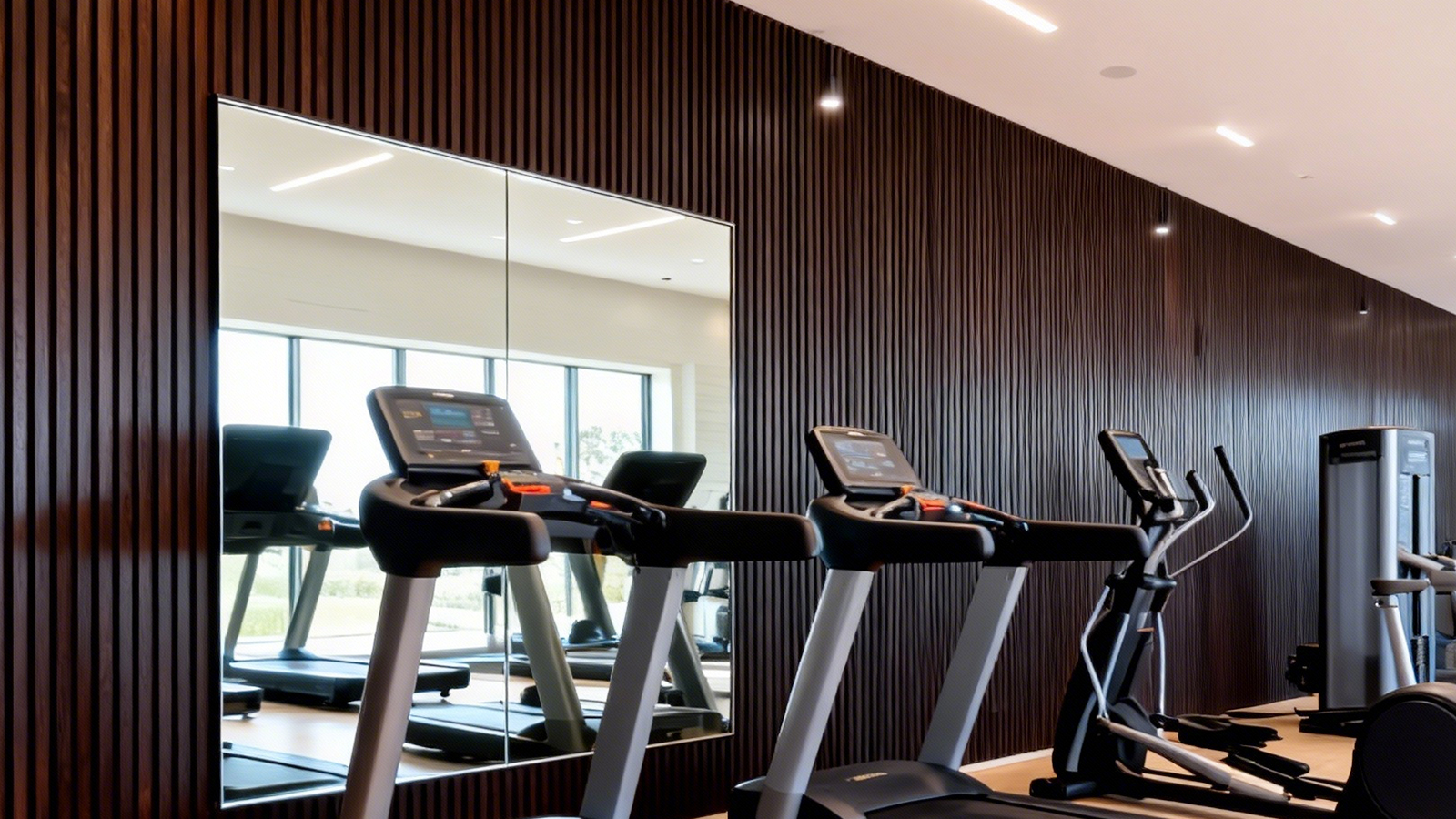
Bamboo Charcoal Wall Panels vs PVC Marble Boards – A Professional Comparison for Interior Projects
Table of Contents
- Introduction
- Material Structure and Manufacturing Differences
- Visual Style and Design Expression
- Performance Comparison in Practical Use
- Installation Methods and Suitable Scenarios
- Cost Positioning and Market Trends
- How to Choose the Right Material
- Conclusion
Introduction
In modern Interior Decoration, lightweight wall materials have gradually replaced traditional stone, solid wood, and ceramic tiles. Among the most widely adopted options, bamboo charcoal wall panels and PVC marble boards stand out for their visual appeal, installation efficiency, and cost advantages.
Both materials are now commonly used in residential apartments, hotels, office buildings, retail spaces, and commercial developments worldwide. However, despite being classified as decorative Wall Panels, their composition, performance, and ideal applications differ significantly.
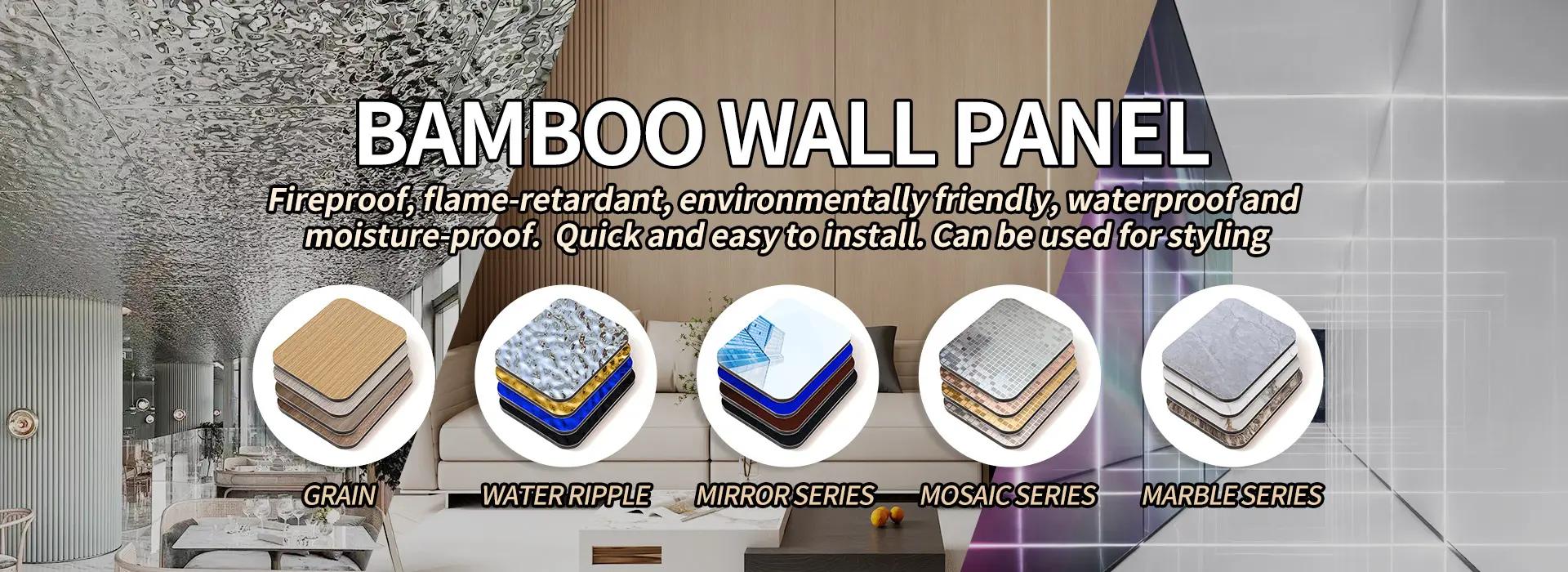
This article provides a detailed comparison from a manufacturing and project perspective, helping buyers, distributors, and developers make informed material choices based on real-world use rather than surface appearance alone.
1. Material Structure and Manufacturing Differences
Understanding what a panel is made of is essential because structure directly affects performance, durability, and environmental impact.
1.1 Bamboo Charcoal Wall Panel Structure
Bamboo charcoal wall panels are produced using carbonized bamboo powder combined with polymer resins, then laminated with a decorative surface film. This material was developed as a modern alternative to MDF boards and traditional wood veneers.
Typical Layer Composition
- Decorative surface film (wood grain / fabric / stone textures)
- Bamboo charcoal composite core
- Reinforced backing or ribbed structure
Key Material Characteristics
- Uses bamboo, a fast-renewable resource
- Free from formaldehyde under standard formulations
- Lightweight yet rigid
- Naturally moisture-resistant
Common Specifications
- Panel sizes: 1220 × 2440 mm / 1220 × 2800 mm
- Thickness: 5 mm / 8 mm
- Surface styles: flat, slatted, fluted, wave-textured
Bamboo charcoal panels are widely regarded as an eco-oriented wall solution for modern interiors.
1.2 PVC Marble Board Composition
PVC marble boards, also known as UV marble panels or artificial marble sheets, are made from PVC resin blended with calcium carbonate, with a printed marble film on the surface.
Typical Layer Composition
- UV-coated decorative marble film
- PVC + calcium carbonate core
- Flat or mesh-backed bottom layer
Material Characteristics
- Strong hardness and surface wear resistance
- Excellent water and stain resistance
- Consistent thickness and color stability
- Economical production cost
Common Specifications
- Standard size: 1220 × 2440 mm
- Thickness options: 2 mm to 3 mm
- Patterns: Carrara, Calacatta, Nero Marquina, Onyx, Granite
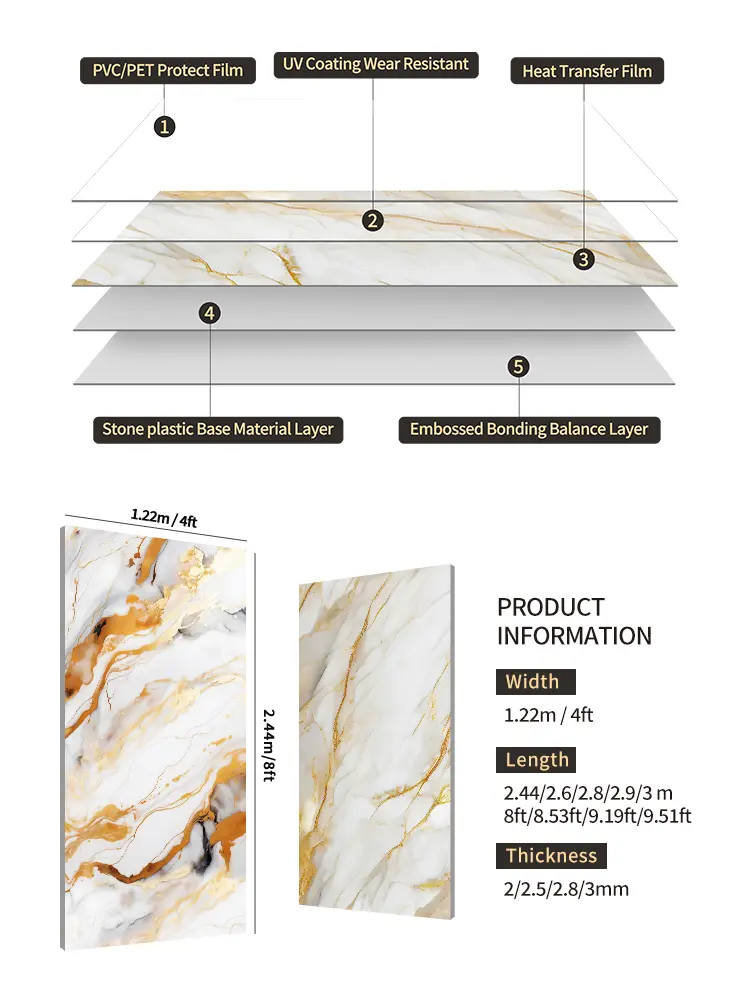
PVC marble boards are especially popular for large-area wall decoration projects due to their uniform appearance and affordability.
2. Visual Style and Design Expression
Although both products are decorative wall materials, they serve very different aesthetic purposes.
2.1 Design Features of Bamboo Charcoal Panels
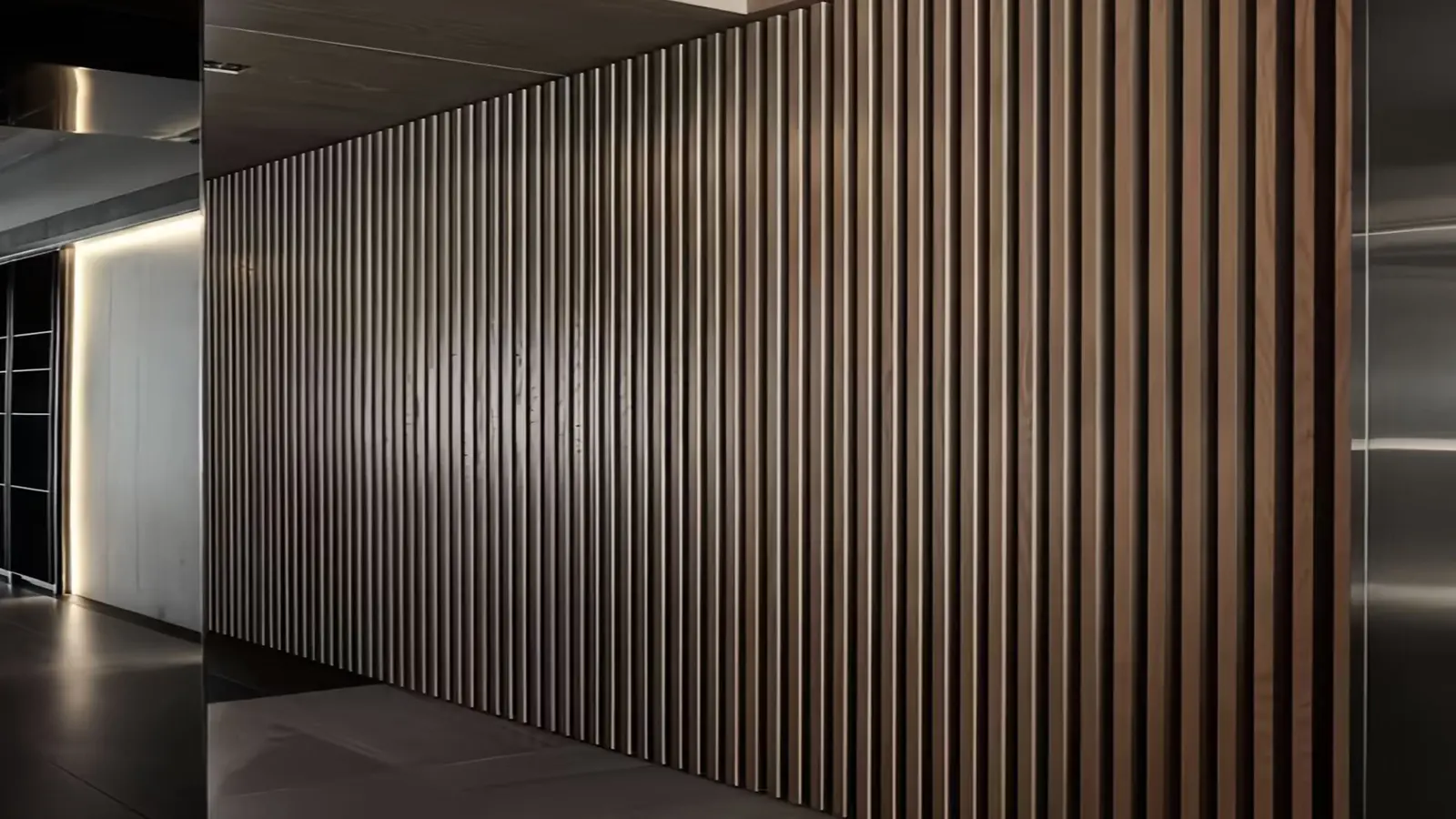
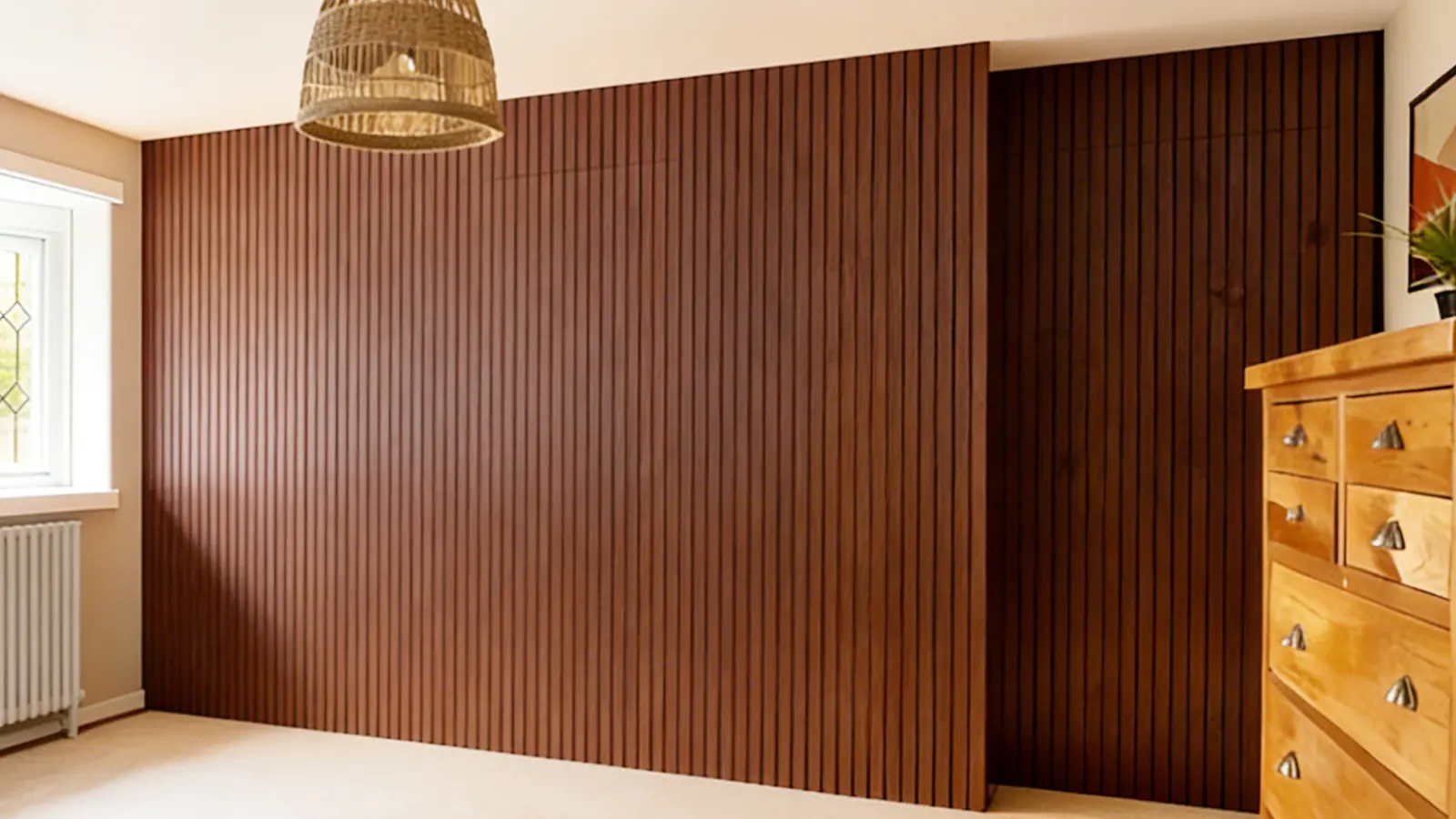
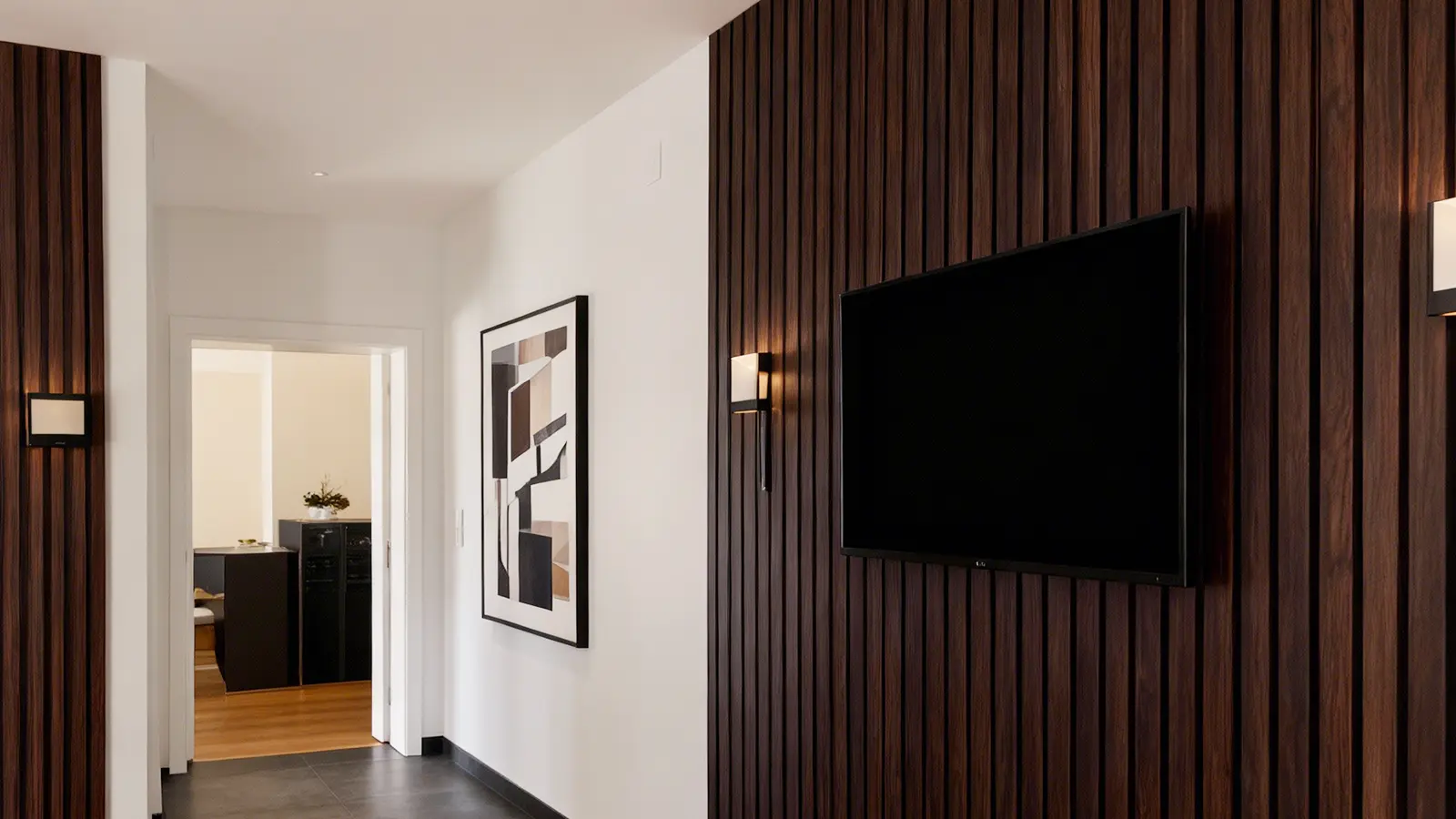
Bamboo charcoal panels focus on warm, natural, and textured finishes, primarily inspired by wood and fabric aesthetics.
Visual Advantages
- Realistic wood grain depth
- Matte or soft-touch finishes
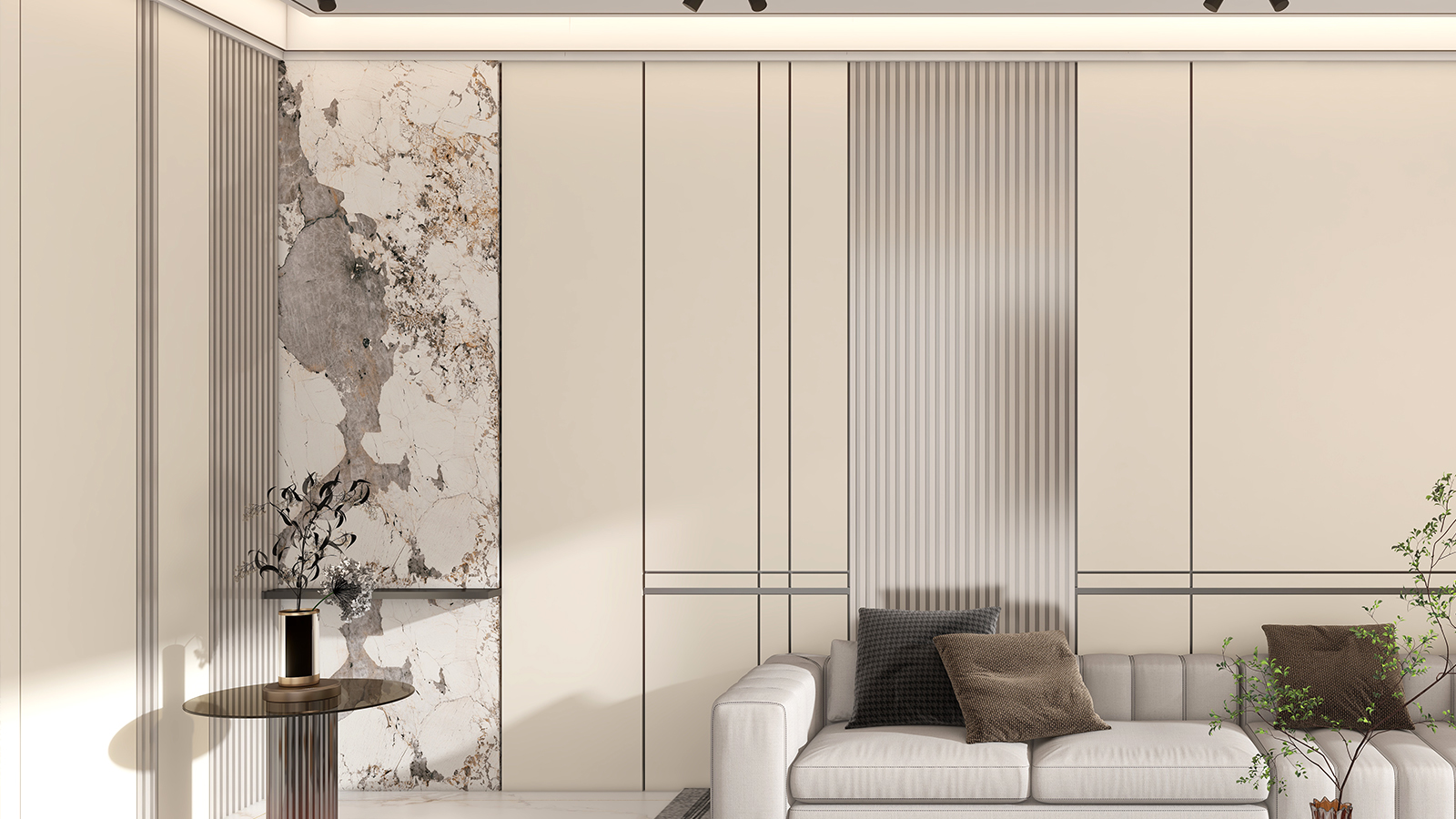
- Strong three-dimensional effects in slat and fluted designs
- Harmonizes well with lighting systems
Popular Design Applications
- Feature walls in hotels
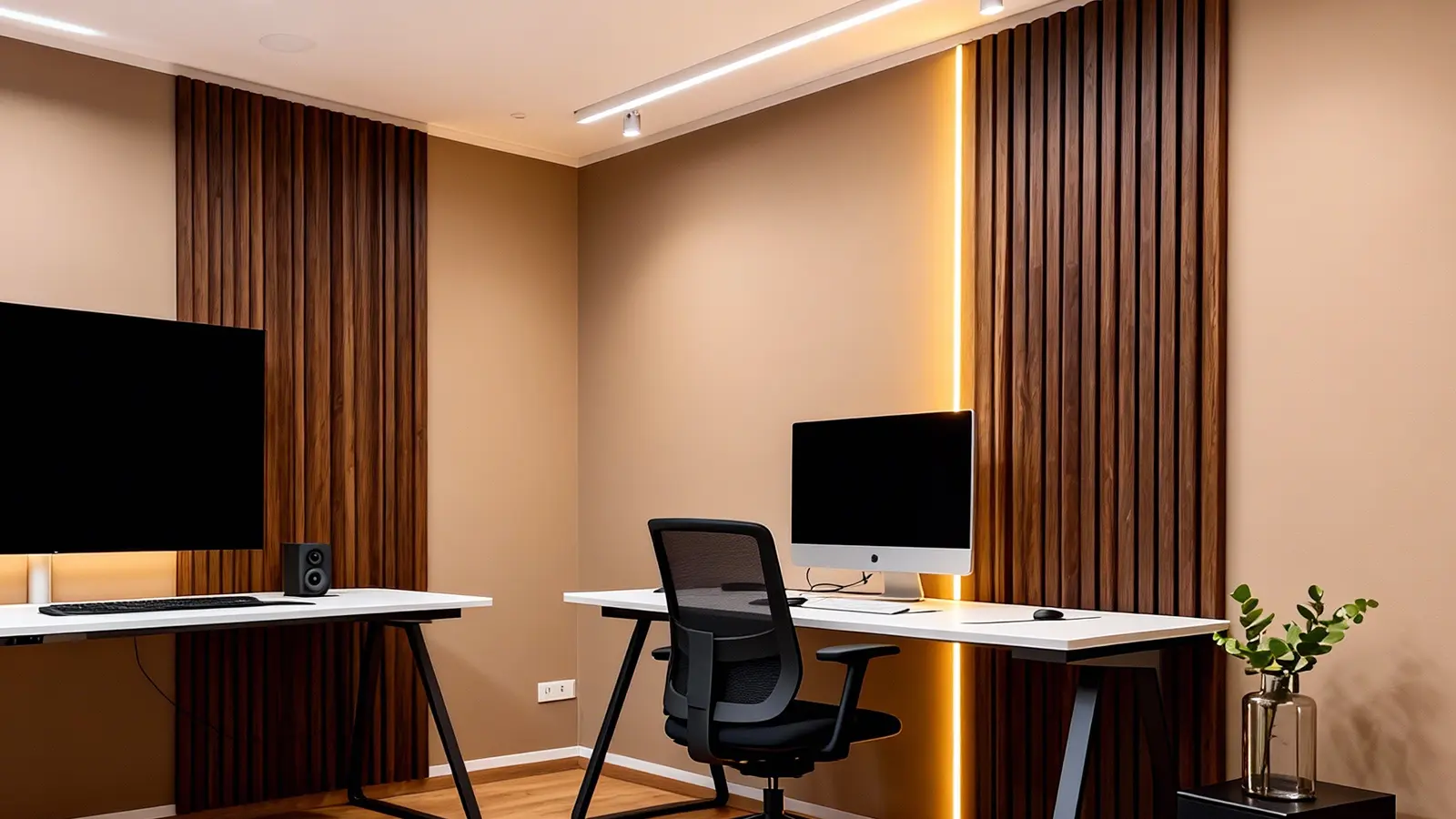
- Office meeting rooms
- Residential living spaces
- Boutique retail interiors
These panels are often chosen to create comfortable, calm, and premium environments.
2.2 Visual Characteristics of PVC Marble Boards
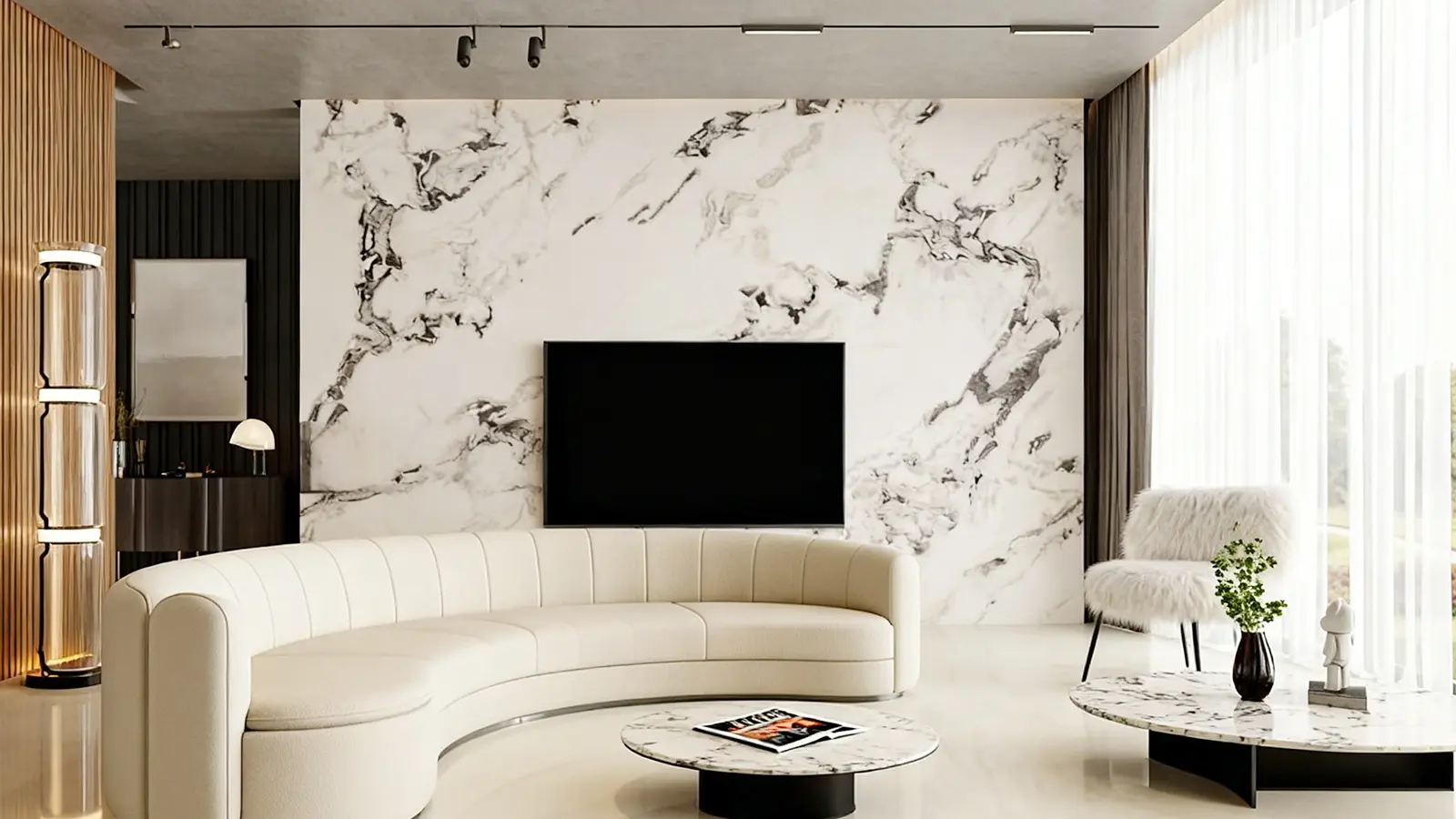
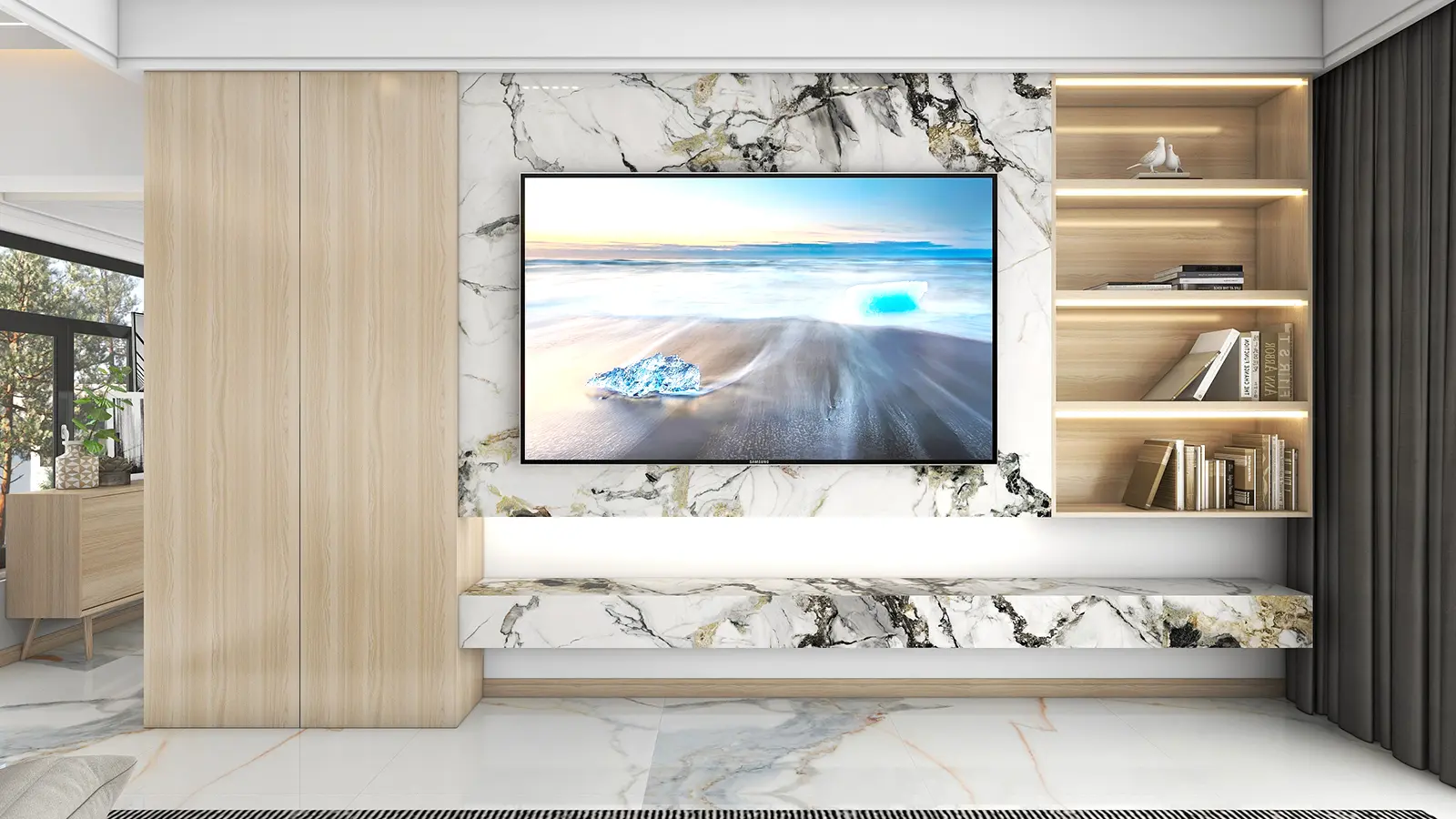
PVC marble boards aim to replicate natural stone surfaces, offering bold and modern visual impact.
Design Highlights
- High-gloss or semi-gloss surface options
- Sharp marble veining definition
- Reflective finish enhances space brightness
- Large-format seamless appearance
Common Applications
- Hotel lobbies
- Shopping malls
- Restaurants
- Bathroom and kitchen walls
PVC marble boards are ideal for projects that require luxury appearance with controlled budgets.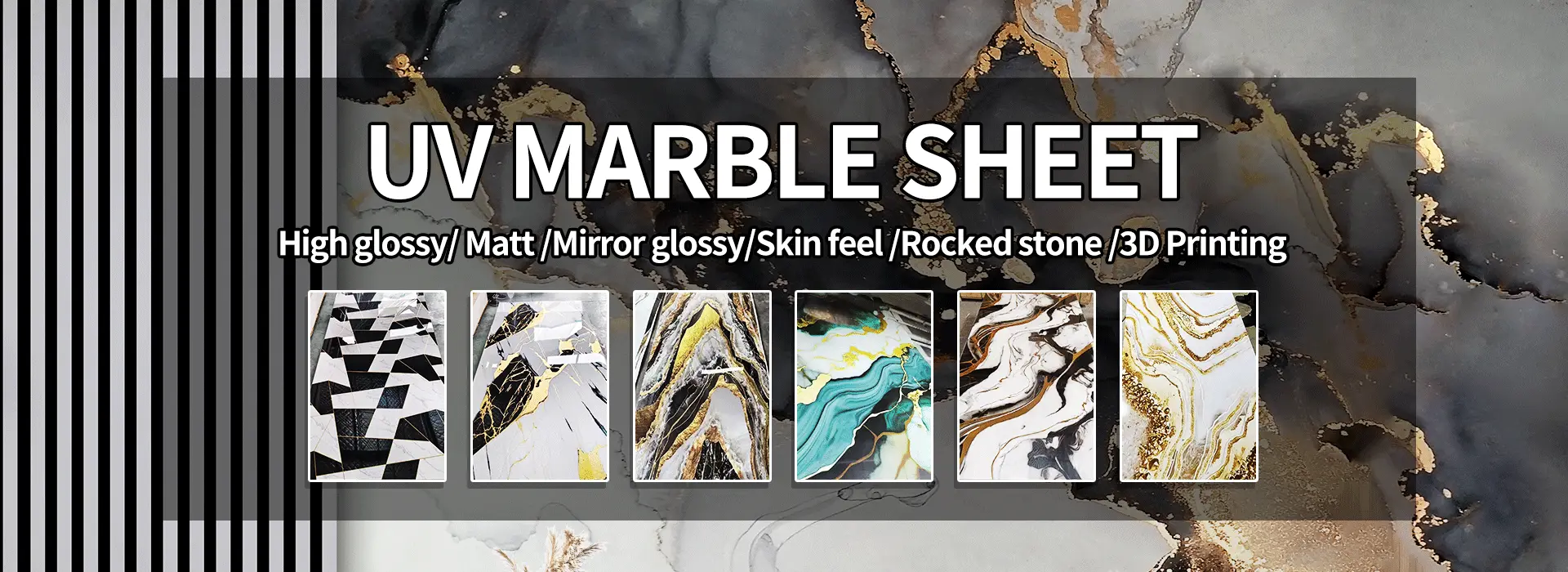
3. Performance Comparison in Practical Use
Beyond appearance, performance factors determine long-term satisfaction.
3.1 Bamboo Charcoal Panel Performance
- Moisture Resistance: The carbonized bamboo structure resists humidity and prevents warping.
- Fire Safety: With proper formulation, panels can achieve B1 fire-retardant classification.
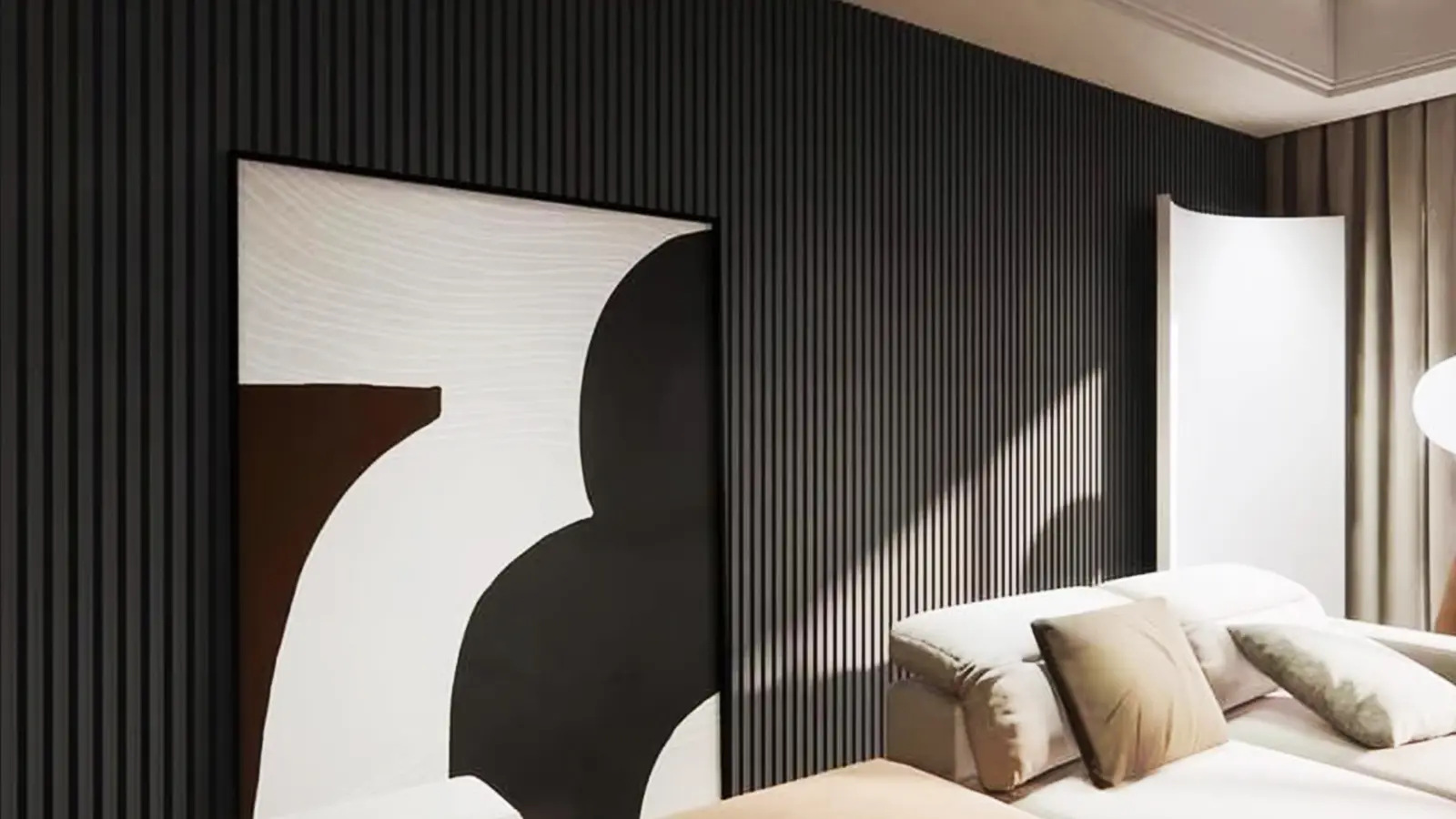
- Acoustic Benefits: Porous internal structure improves sound absorption, making them suitable for:
- Offices
- Hotels
- Home theaters
- Environmental Safety: Low VOC emissions, suitable for residential and commercial indoor use.
- Surface Durability: Moderate scratch resistance; best for vertical wall applications.
3.2 PVC Marble Board Performance
- Waterproof Capability: PVC composition makes the boards fully waterproof.
- Surface Hardness: UV coating provides excellent scratch and abrasion resistance.
- Chemical Resistance: Withstands cleaning agents, oils, and mild chemicals.
- Fire Resistance: Can meet B1 fire standards depending on resin quality.
- Heat Limitation: Not recommended for areas exposed to continuous high temperatures.
3.3 Performance Overview Table
| Property | Bamboo Charcoal Panel | PVC Marble Board |
| Waterproof | High | Excellent |
| Fire Rating | B1 achievable | B1 achievable |
| Sound Absorption | Strong | Weak |
| Scratch Resistance | Medium | High |
| Eco Performance | High | Medium |
| Heat Stability | Better | Moderate |
4. Installation Methods and Suitable Scenarios
4.1 Bamboo Charcoal Panel Installation
Installation Options
- Adhesive bonding
- Nail fixing
- Aluminum keel system
- Slot-and-clip installation for slatted panels
Recommended Uses
- Hotel guest rooms
- Villas and apartments
- Office feature walls
- Exhibition and showroom design
Installation is clean, fast, and adaptable to complex wall shapes.
4.2 PVC Marble Board Installation
Installation Options
- Structural adhesive
- Double-sided tape + glue
- Direct wall bonding
Recommended Uses
- Commercial corridors
- Public restrooms
- Restaurants
- Shopping centers
Large panels significantly reduce labor time in mass installations.
5. Cost Positioning and Market Trends
5.1 Pricing Comparison (FOB China Reference)
Bamboo Charcoal Panels
- USD 6–20 per panel
- Pricing depends on thickness and design complexity
PVC Marble Boards
- USD 5–12 per panel
- Highly competitive for volume orders
5.2 Global Market Preferences
Bamboo Charcoal Panels
- Growing demand in Europe, North America, Japan
- Popular in eco-conscious projects
- Strong interest in fluted and textured designs
PVC Marble Boards
- Strong sales in Southeast Asia, Middle East, Africa
- Preferred for commercial developments
- Trending colors include white marble with gold veining
6. How to Choose the Right Material
Choose Bamboo Charcoal Panels When:
- Natural warmth is a priority
- Acoustic comfort is needed
- Eco standards are important
- The project targets premium interiors
Choose PVC Marble Boards When:
- Stone aesthetics are required
- Budget efficiency matters
- Large areas need fast installation
- Maintenance simplicity is a priority
Conclusion
Both bamboo charcoal wall panels and PVC marble boards play essential roles in today’s interior decoration industry. While one emphasizes natural texture and environmental performance, the other excels in cost efficiency and visual impact.
Selecting the right material depends on project positioning, target customers, and functional requirements—not just appearance.