
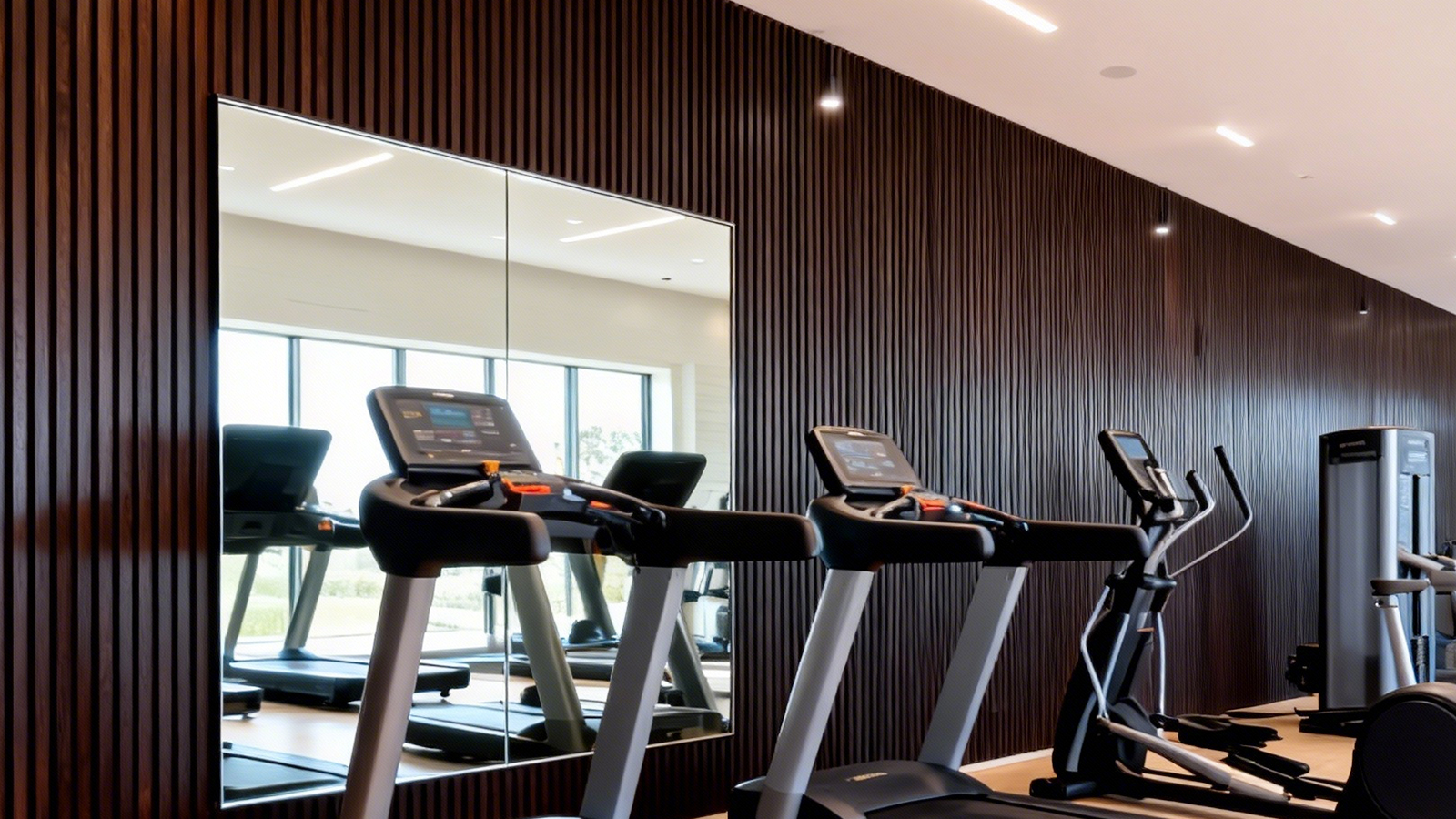
Analysis of the development trend and prospects of interior decorative wall panels
With the rapid development of the building decoration industry and the continuous upgrading of consumer demand, interior decorative Wall Panels, as an important solution for wall treatment, are undergoing profound changes in material innovation, functional upgrading and market segmentation. This article systematically analyzes the future development direction of decorative wall panels from five dimensions: material technology, design trends, functional development, sustainability and market prospects, and provides forward-looking references for industry practitioners, designers and consumers.
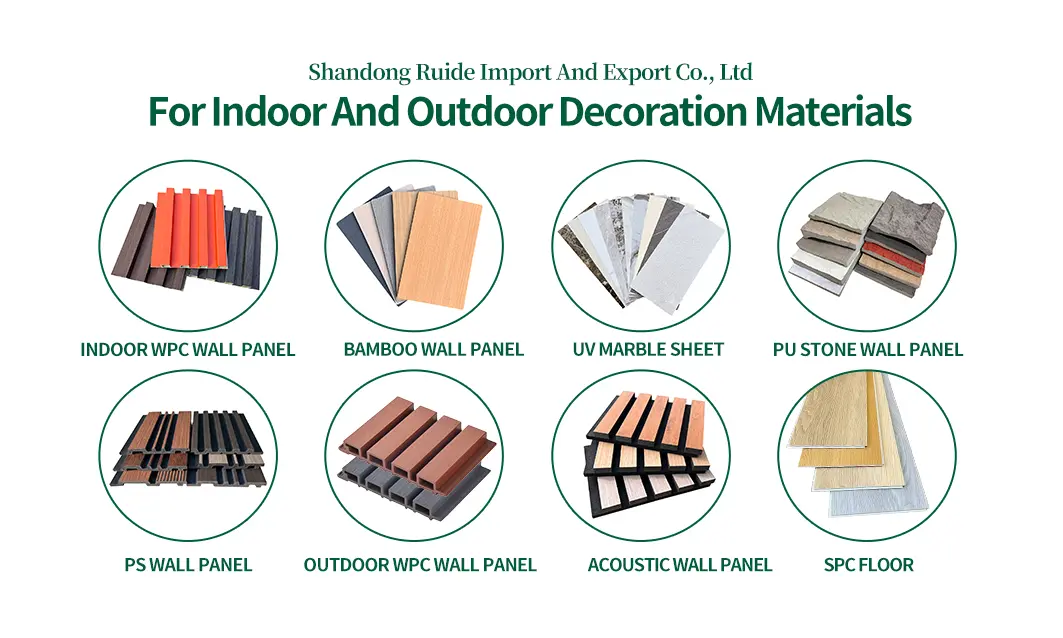
- Material technology: diversification and high-performance development
1.The rise of new composite materials
Traditional decorative wall panels are mainly wood, gypsum and PVC. In the future, more high-performance composite materials will be used:
Stone plastic board (SPC): Combining stone powder and PVC, it has both the texture of stone and the light and waterproof properties of plastic.
Wood plastic composite board (WPC WALL PANEL): A mixture of wood fiber and recycled plastic, environmentally friendly and moisture-resistant, suitable for bathrooms, kitchens and other areas.
Metal composite board: Aluminum-magnesium alloy facing wallboard, excellent fire resistance, suitable for commercial spaces.
2. Popularization of environmentally friendly materials
Formaldehyde-free substrate: MDI glue (isocyanate glue) density board or straw board, the formaldehyde emission is close to zero.
Degradable materials: such as PLA (polylactic acid) bio-based wallboard, which can be naturally degraded after disposal.
3.Trend of ultra-thin and large panels
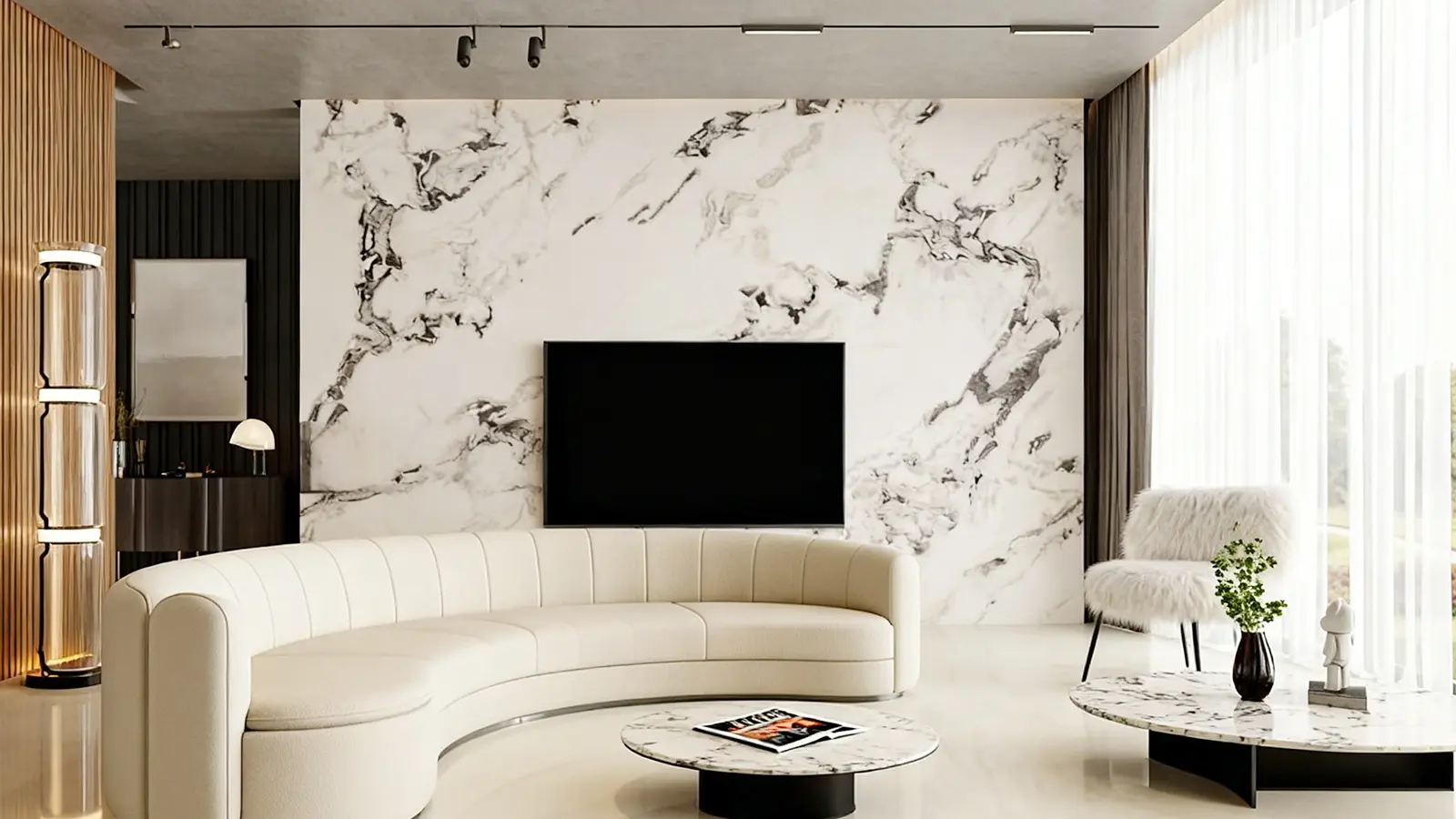
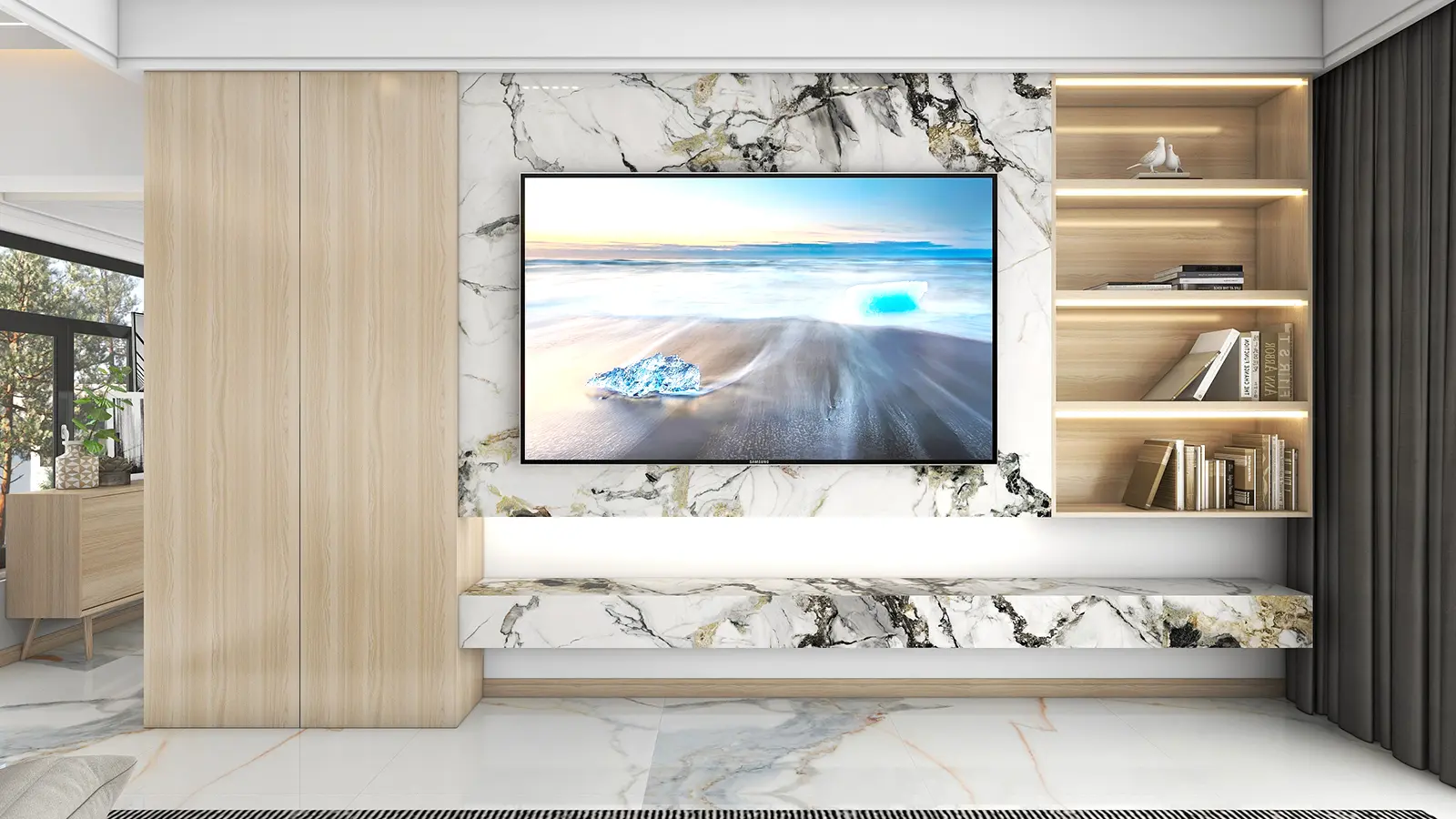
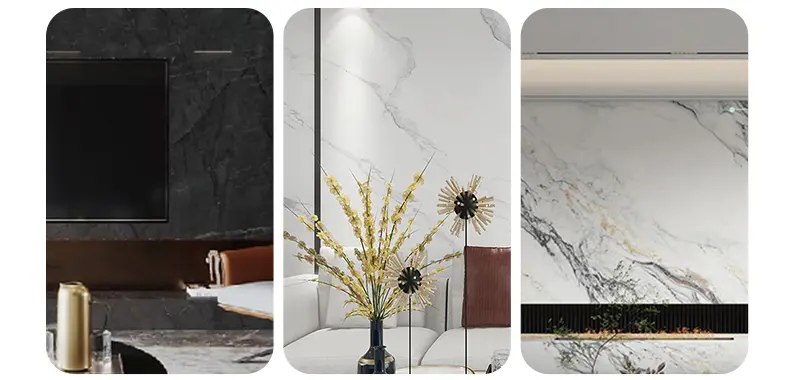
Ultra-thin wallboard (2-3mm): achieved through high-density compression technology, saving space and easy installation.For example:uv marble sheet.
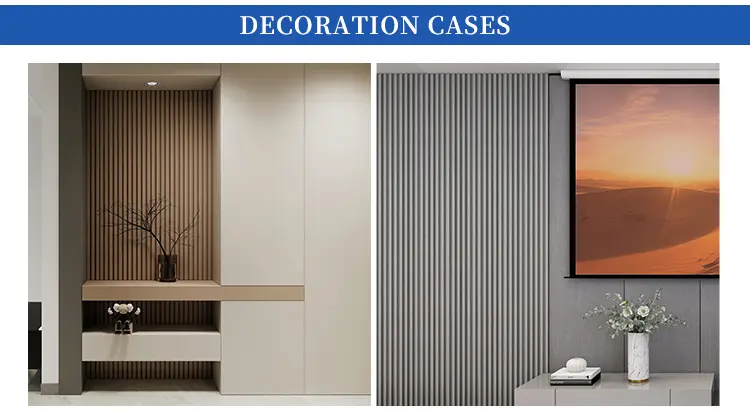
Large-size board (1.2m×2.4m or more): reducing joints and improving the overall visual effect, especially suitable for modern minimalist style.
- Design trend: the integration of personalization and natural aesthetics
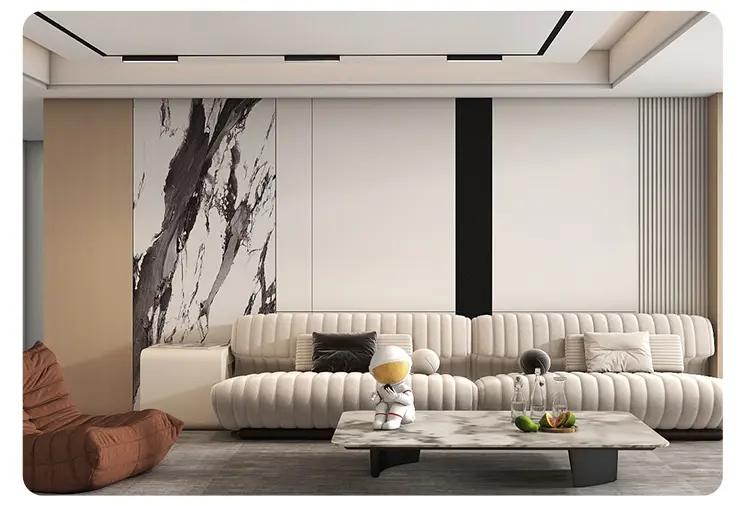
1.In-depth application of natural elements
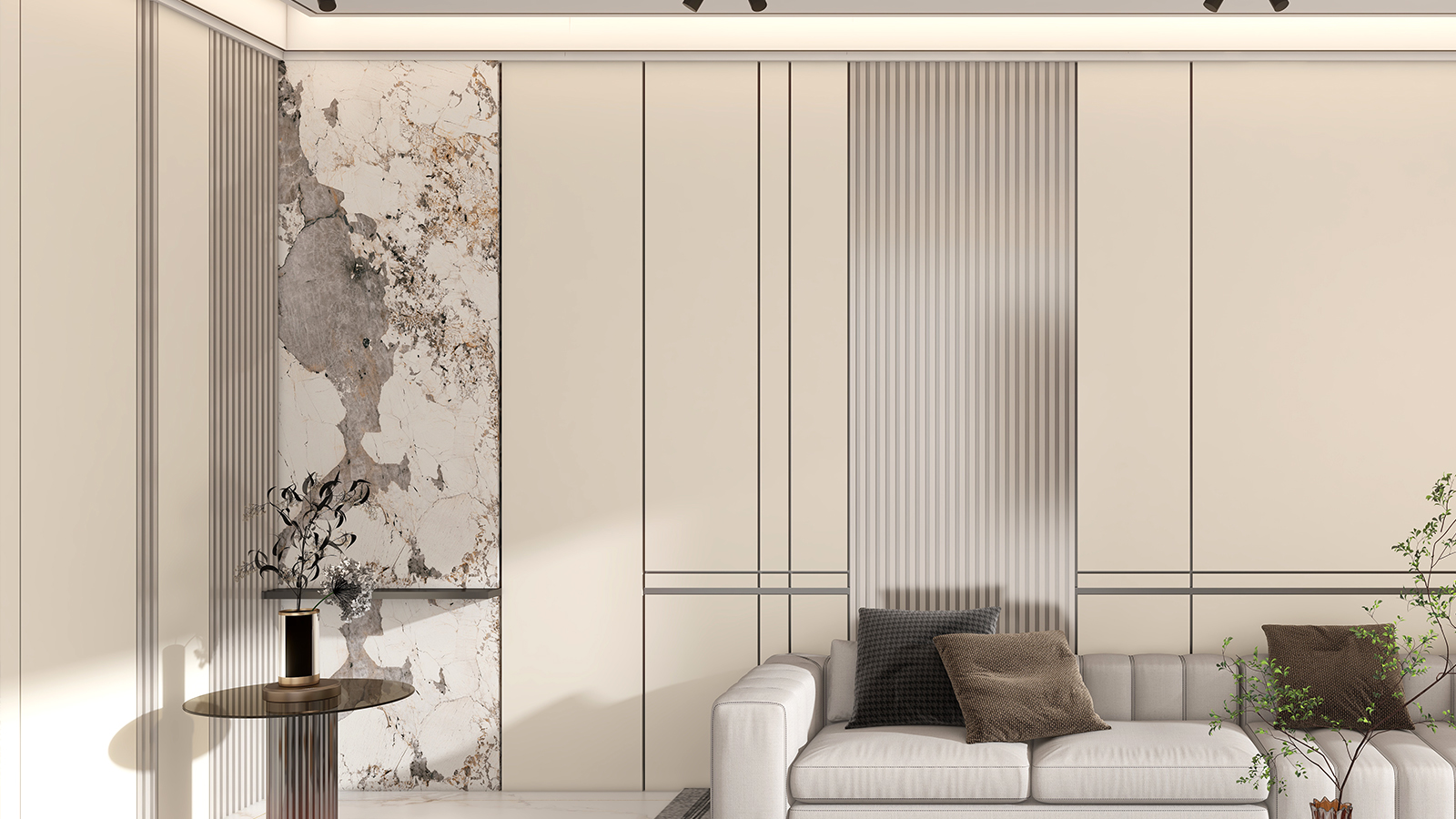
Real wood grain and stone grain: through high-definition digital printing and 3D embossing technology, the effect of imitating natural wood and marble is more realistic.
Ecological texture: imitating natural materials such as rammed earth, cement, and weaving to meet the needs of wabi-sabi style and industrial style.
2.Innovation in color and surface technology
Low-saturation color system: Morandi color (gray-blue, beige, light camel) becomes the mainstream, replacing traditional bright and bright colors.
Special surface treatment:
Matte and micro-cement texture: enhance the sense of luxury.
Relief and hand-scraping effect: enhance the tactile experience.
3.Modular and customizable design
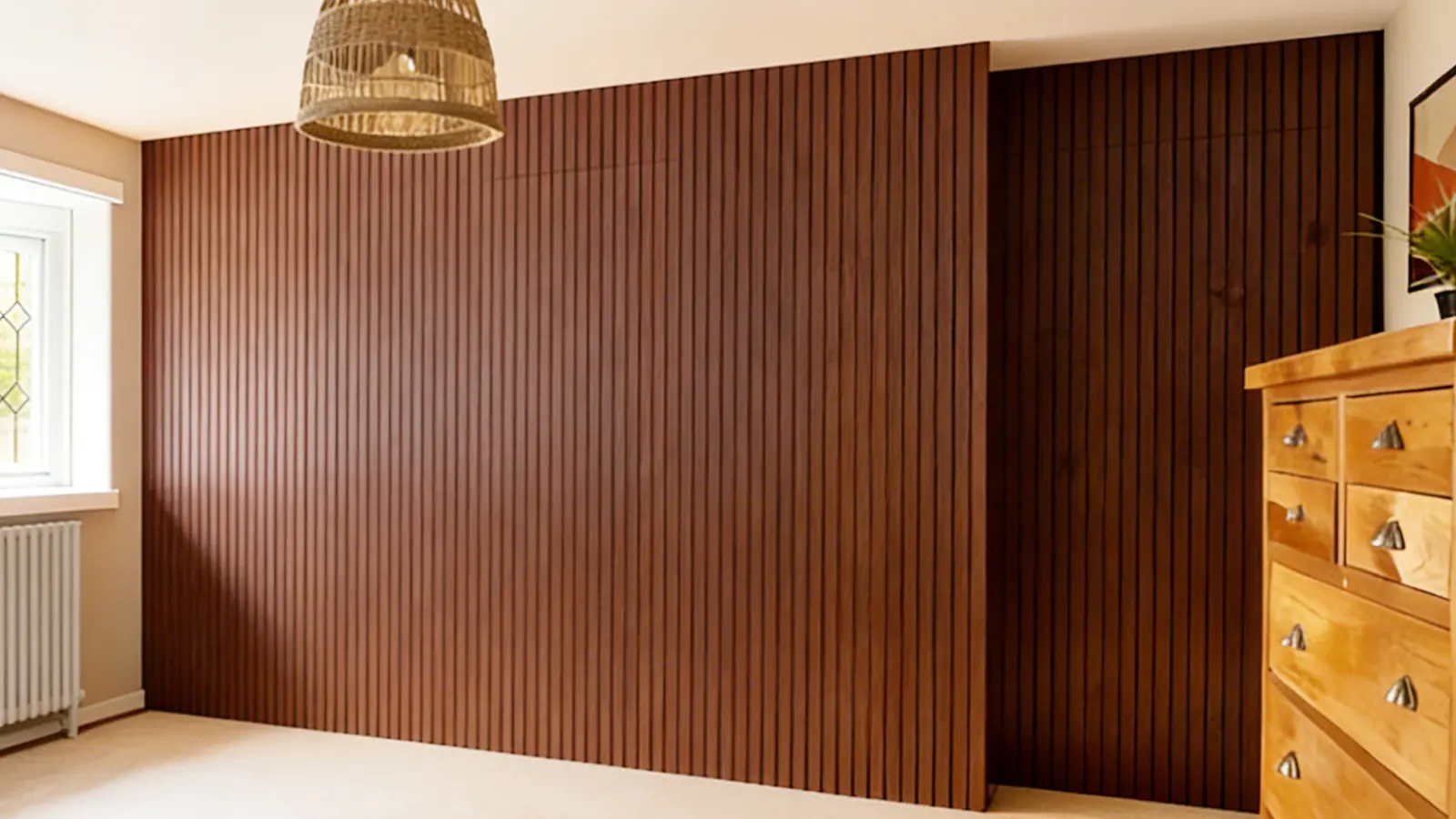
Assembled wall panels: such as hexagonal and strip modules, users can freely combine patterns.For example: bamboo charcoal wood veneer can be cut into any shape.
Digital customization: preview the effect through AR/VR tools, support personalized customization of patterns and sizes.
- Functional development: from decoration to intelligent interaction
1.Healthy functional wall panels
Antibacterial wall panels: add nano-silver or photocatalyst coating, suitable for hospitals and kindergartens.
Humidity-regulating wall panels: use diatomaceous earth or activated carbon substrate to automatically adjust indoor humidity.
Formaldehyde-free wall panels: load formaldehyde decomposition catalyst to help improve air quality.
2.Intelligent integration
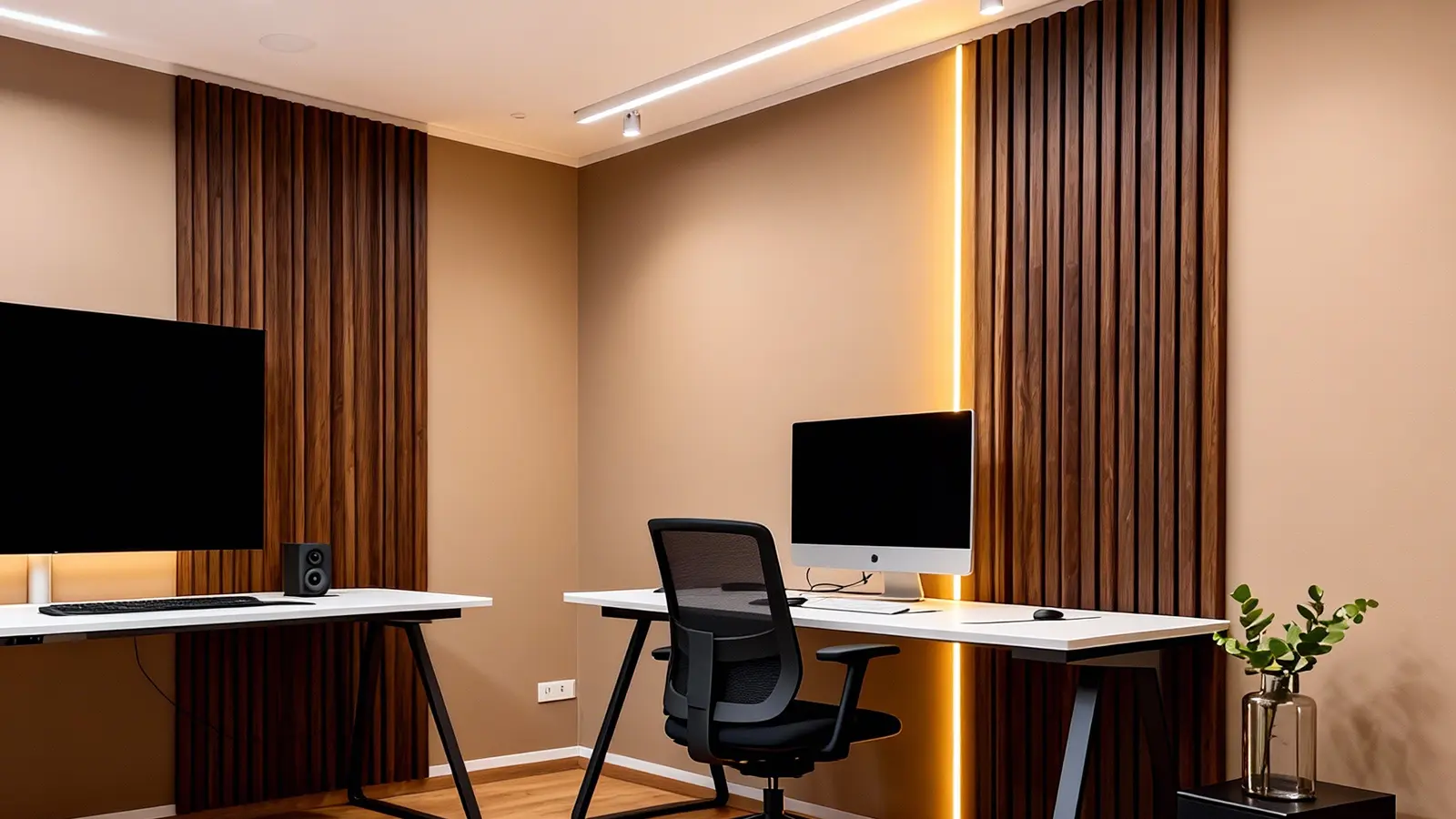
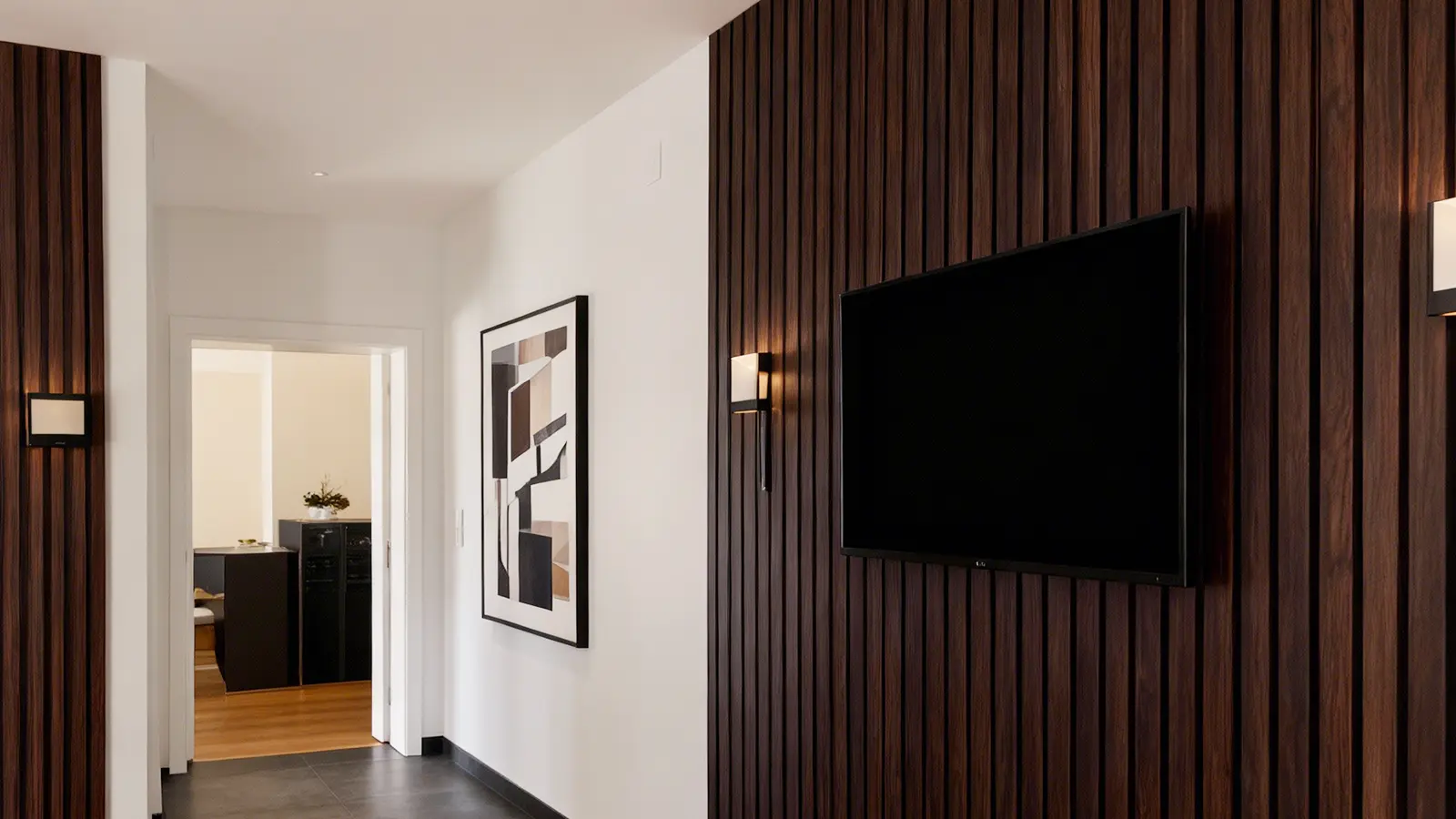
Luminous wall panels: embed LED light strips to achieve atmosphere lighting and decoration integration.
Touch interactive wall panels: Combined with capacitive touch technology, they can be used for smart home control (such as adjusting lights and temperature).
Acoustic optimized wall panels: porous structure or sound-absorbing cotton composite layer, reduce indoor noise, suitable for office and theater.
3.Easy installation and detachable design
Line positioning: Use a laser level to mark the reference line and determine the starting position of the wall panel (usually starting from the corner or door).
Wall panel fixing:
Gluing method: Apply structural glue (dot or strip) on the back of the wall panel, press it to the wall and temporarily support and fix it.
Nailing method: Use an air nail gun to drive the keel obliquely (the nail head needs to be lower than the surface, and it will be repaired with putty later).
Lock splicing: Align the male and female grooves of the wall panel and tap it lightly to tighten it (avoid deformation caused by violent knocking).
Edge treatment:
Use special closing strips or 45° diagonal splicing for the inner/outer corners.
Leave a 5mm expansion joint between the top and the ceiling (cover with flexible caulking agent).
- Sustainability: Green and environmental protection become core competitiveness
1.Circular economy model
Renewable materials: Wallboards made of bamboo fiber and agricultural waste (such as bagasse) gradually replace traditional wood.
Recyclable design: Modular components are easy to disassemble and recycle.
2.Low-carbon production process
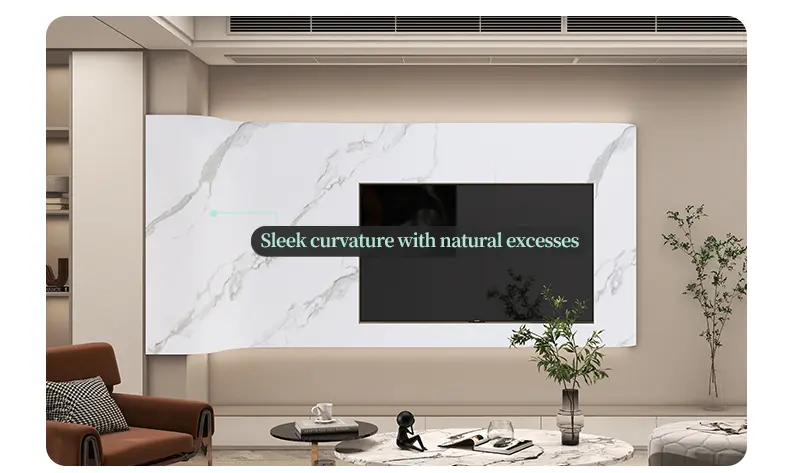
Low-energy manufacturing: For example, UV curing technology replaces traditional hot pressing to reduce energy consumption.(marble sheet uv wall panel)
Water-based paint: Replace solvent-based paint and reduce VOC emissions.
3.Certification and standardization
Green building material certification: such as LEED, GREENGUARD, etc. will become market entry barriers.
Carbon footprint label: Consumers can compare the environmental impact of products through labels.
- Market prospects: Segment growth and globalization opportunities
1.Residential decoration market
Popularization of fine decoration: Developers tend to adopt integrated wallboard solutions to promote bulk purchases.
Old house renovation: Easy-to-install wallboards have become the first choice for second-hand house renovation. It saves both cost and time, and greatly improves efficiency.
2.Commercial and public spaces
Hotels and office spaces: Demand for high-end wall panels that focus on acoustics and fire resistance is growing.
Medical and education: Antibacterial and scrub-resistant functional wall panels have great potential.
3.Emerging market opportunities
Southeast Asia and the Middle East: Tropical climate drives demand for waterproof and mildew-proof wall panels.
European and American markets: Environmental regulations are strict, and formaldehyde-free and recyclable wall panels are more competitive.
- Conclusion: The future of decorative wall panels belongs to "smart, green and personalized"
With the continuous upgrading of the building decoration industry and the diversified development of consumer demand, the Interior Decoration wall panel industry is ushering in unprecedented opportunities for change. In the next ten years, the industry will achieve comprehensive breakthroughs in material technology, functional properties, environmental protection concepts and market structure, presenting the following four key development trends:
Material innovation: High-performance composite materials gradually replace traditional panels.
1. Wide application of nanocomposites
2. Commercialization of intelligent response materials
3. Performance breakthroughs in bio-based materials
Functional upgrade: From single decoration to healthy and intelligent interaction
1. Deep integration of health monitoring system
2. Seamless integration of human-computer interaction interface
3. Innovative breakthrough of energy self-sufficient system
Sustainable development: Environmental certification and circular design become the core of brand differentiation.
1. Carbon management throughout the life cycle
2. Improvement of closed-loop recycling system
3. Industrialization of biodegradable materials
Market segmentation: Provide professional solutions for residential, commercial and public buildings.
1. Personalized evolution of residential market
2. Scenario innovation of commercial space
3. Functional enhancement of public buildings
The integrated development of these trends will reshape the value chain of the entire wallboard industry. It is estimated that by 2030, the market penetration rate of smart and environmentally friendly wallboards will exceed 40%, driving the global market size to exceed US$300 billion. Enterprises need to build interdisciplinary R&D teams and find innovative breakthroughs at the intersection of materials science, Internet of Things, biotechnology and other fields in order to gain the upper hand in this round of industrial upgrading.
With technological advancement and consumption upgrading, decorative wallboards will not only be the "outerwear" of space, but also a comprehensive system that carries health, intelligence and aesthetic values. Enterprises need to keep up with the trend, plan R&D and green supply chain to seize future market high ground.