



A Complete Guide to WPC Wall Panel Sizes for Global Importers & Building Contractors
Table of Contents
- Why WPC Wall Panel Size Matters for B2B Buyers
- Standard WPC Wall Panel Size Used Worldwide
- Global WPC Wall Panel Size Categories
- How to Select the Best Size for Your Market
- Regional Preferences in WPC Wall Panel Sizes
- Why Size Can Differ Between Manufacturers
- Conclusion
As demand for eco-friendly, low-maintenance interior finishes continues to rise, WPC (Wood-Plastic Composite) wall panelshave become a staple in commercial and residential projects worldwide. Their waterproof properties, aesthetic versatility, and long-term durability make them a superior alternative to traditional paint, plywood, or Pvc Panels.
For global importers, distributors, and building contractors, however, style takes a backseat to a critical business decision: selecting the right Wpc Wall Panel size.
Panel dimensions directly impact installation efficiency, shipping costs, market compatibility, project performance, and accessory integration. This guide delivers actionable insights into global size standards, regional preferences, product categories, and data-driven selection strategies to support your business objectives.

Why WPC Wall Panel Size Matters for B2B Buyers
Size selection is a high-stakes decision for wholesalers and contractors—here’s why it impacts your bottom line:
- Installation Efficiency
Wider or longer panels cover larger areas with fewer pieces, cutting labor hours and accelerating project timelines. For large-scale developments, even marginal width increases translate to significant time and cost savings.
- Shipping & Container Utilization
Optimal panel lengths (2.7–3 meters) maximize 40HQ container capacity, reducing unused space and lowering cost-per-unit shipping. Poorly sized panels lead to inefficient loading and higher logistics expenses.
- Market Compatibility
Regional markets have distinct size preferences—misaligning with local norms results in slow-moving inventory. Catering to established standards drives faster sales and repeat orders.
- Strength & Performance
Thickness correlates with rigidity, acoustic insulation, and durability. Thicker, higher-density panels meet the rigorous demands of commercial spaces (e.g., hotels, offices) and high-traffic areas.
- Accessory Matching
Trim pieces (corner profiles, U-channels, starter strips) are engineered for specific panel widths and thicknesses. Non-standard sizes require custom molds, increasing lead times and costs.
Standard WPC Wall Panel Size Used Worldwide
While WPC panels come in diverse configurations, the global market recognizes a universally accepted "standard" size for indoor applications:
⭐ Most Popular WPC Wall Panel Size
- Width: 170–195 mm
- Thickness: 9–12 mm
- Length: 2700–3000 mm
This size dominates global sales due to its balanced performance and market adaptability:
Key Advantages:
- Lightweight and easy to handle during installation
- Compatible with off-the-shelf wall trim accessories
- Optimized for international container shipping
- Suits both budget and mid-range market segments
- Versatile for bedrooms, living rooms, offices, hotels, and retail spaces
Global WPC Wall Panel Size Categories
WPC panels are categorized into four core families to simplify selection for specific use cases:
1. Classic Flat WPC Wall Panels (Indoor Standard Series)
Designed for mainstream interior renovation and basic decorative applications.
| Width | Thickness | Length | Usage |
| 170 mm | 9–12 mm | 2.7/3 m | Homes, apartments |
| 180 mm | 9–12 mm | 2.7/3 m | Hospitality projects |
| 195 mm | 9–12 mm | 2.7/3 m | Living rooms, hallways |
| 200 mm | 12 mm | 2.7/3 m | Office interiors |
Target Markets:
Mainstream segments in Asia, Middle East, Africa, and Latin America.
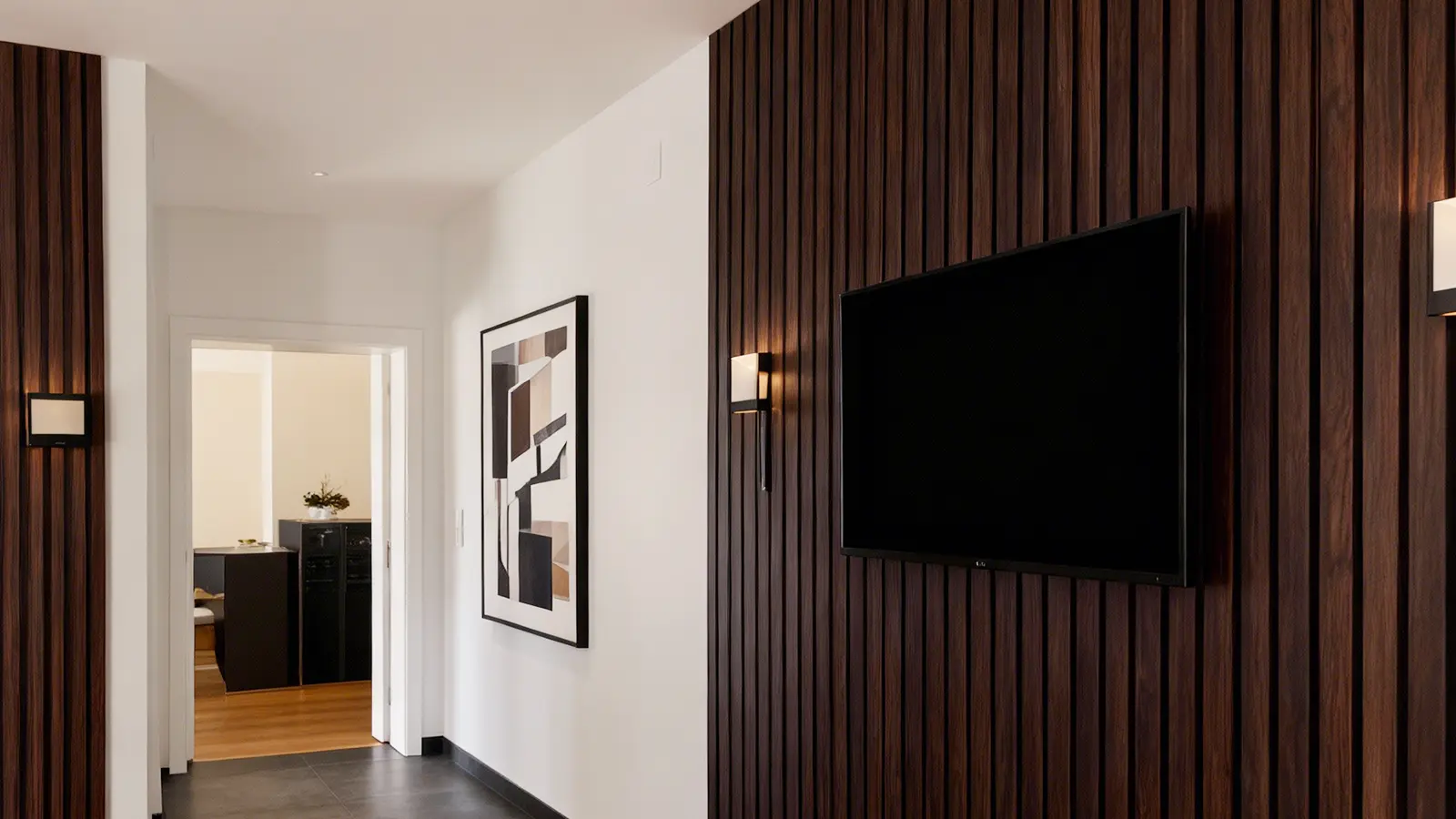
2. 3D Fluted & Slat WPC Wall Panels
Driven by minimalist and Japandi design trends, this category has experienced rapid growth.
Typical Dimensions:
- Width: 140–200 mm
- Thickness: 12–20 mm
- Length: 2.7–3 meters
Featuring deep grooves, embossed textures, and wood-simulated finishes, these panels offer:
- Premium visual appeal for high-end projects
- Enhanced acoustic insulation properties
- Alignment with modern commercial design aesthetics
3. Wide Decorative WPC Wall Panels
Engineered for large spaces, these panels minimize seams and create a seamless finish.
Common Dimensions:
- 250 mm width (9–12 mm thickness)
- 300 mm width (12 mm thickness)
- 400–600 mm width (3–9 mm thickness)
Ideal Applications:
- Shopping malls
- Hotel lobbies
- Feature walls
- Ceilings requiring rapid coverage
4. Exterior WPC Cladding (Heavy-Duty Boards)
While classified as cladding, these products are often grouped with WPC wall solutions by buyers.
Typical Sizes:
- Width: 150–219 mm
- Thickness: 21–26 mm
- Length: 2.9–3 m
Built to withstand UV exposure, rain, and thermal expansion, they are suited for:
- Building façades
- Outdoor structures
- Exterior accent walls
How to Select the Best Size for Your Market
Use this project-specific guide to align with market demand:
Residential Renovation
➡ 170–195 mm width | 9–12 mm thickness
Value-driven, easy to install, and highly marketable for mass consumption.
Commercial Interiors
➡ 200–300 mm width
Fast coverage of large areas with a premium, seamless appearance.
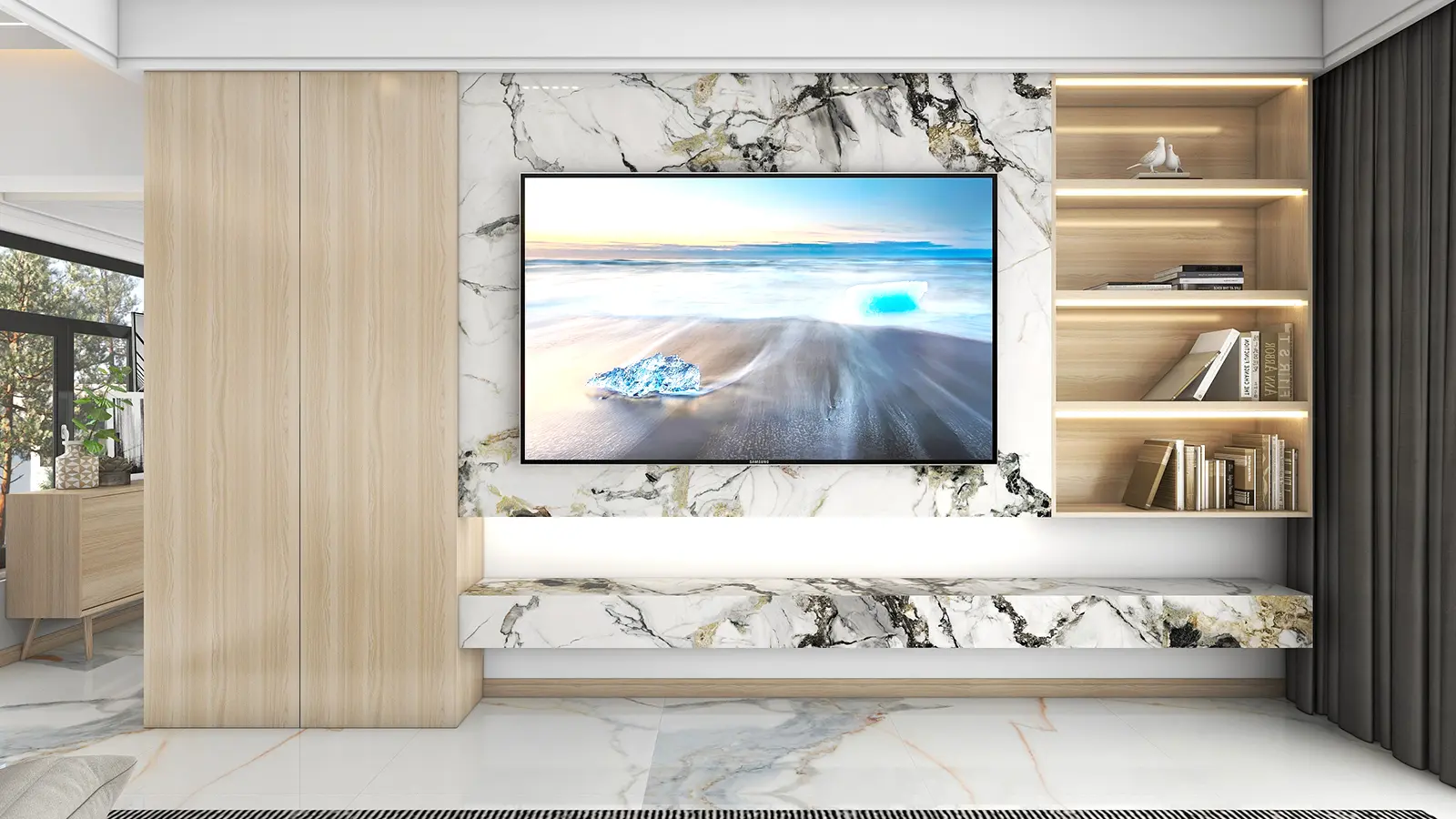
Feature Walls & TV Backgrounds
➡ 160–200 mm fluted slat panels
Delivers depth, texture, and high-end visual impact for statement spaces.
Ceilings
➡ 300–600 mm width | 3–6 mm thickness
Lightweight design reduces ceiling load while minimizing installation time.
Outdoor Projects
➡ 150–219 mm width | 21–26 mm thickness
Engineered for durability, weather resistance, and structural stability.
Regional Preferences in WPC Wall Panel Sizes
Market-specific size trends to guide inventory planning:
- Europe: 170–200 mm flat panels, 3D slat designs (aligned with modern architectural norms)
- North America: 150–200 mm grooved panels (compatible with local construction standards)
- Middle East: 250–300 mm wide decorative boards (preferred for luxury hospitality projects)
- Africa: 250 mm economical series (balance of cost and coverage)
- Latin America: 156–180 mm cost-effective models (adapted to budget-focused markets)
Aligning with regional preferences reduces unsold stock and strengthens customer loyalty.
Why Size Can Differ Between Manufacturers
WPC wall panel dimensions are not universal due to:
- Variations in extrusion mold designs across factories
- Differences in material density and composition
- Brand-specific positioning (premium thick panels vs. budget lightweight options)
- Regional market adaptation by manufacturers
Wholesalers should always request detailed dimension drawings and physical samples to verify compatibility before placing bulk orders.
Conclusion
The global industry standard for WPC wall panels—balancing cost, performance, and market demand—remains:
📌 170–195 mm width × 9–12 mm thickness × 2700–3000 mm length
Manufacturers offer a diverse range of alternative sizes to meet decorative, acoustic, and exterior requirements. For B2B buyers, selecting the right dimensions directly impacts installation efficiency, shipping costs, inventory turnover, and customer satisfaction.
By aligning with regional preferences, project-specific needs, and global shipping optimizations, you can enhance your market competitiveness and drive sustainable business growth.